You know the type.
Somewhere between the game providers and affiliates, there's a PSP stand. A sales rep wants to talk payments. Someone adds you on LinkedIn, and before the conference is over, another iGaming payment provider is in your inbox with a familiar offer: more payment methods, better rates, fast integration.
For operators who hear some version of the same pitch several times a day, the reputation makes sense.
The funny part is that PSPs sell something operators actually need. Deposits have to go through, withdrawals have to reach players, and people want to pay using methods they already know. Once an operator enters several markets, managing all of that gets complicated quickly.
So why do PSP iGaming sales pitches often sound the same?
Payments are infrastructure, but they're frequently sold like any other B2B SaaS product. On a conference floor, that reduces a fairly complex service to a few familiar selling points. The differences between providers usually become clearer later, when real transactions start moving, and operators have to deal with different markets, payment failures, or a sudden problem with a route.
Why do PSPs have this reputation in iGaming?
Many payment companies are trying to reach the same operators and Heads of Payments. At a large iGaming event, the competition for their attention is hard to miss.
The messaging doesn't help. Browse enough iGaming PSP websites or spend a day talking to providers and the claims start to blur together: hundreds of methods, high approval rates, quick onboarding, global reach. Even when the products behind those claims are quite different, the first conversation often sounds remarkably similar.
Many operators already work with several PSPs or local partners too. A new provider isn't competing with an empty payment stack. It's asking the operator to add another commercial relationship, another technical connection, and another company its team will have to work with. The questions you should ask a PSP ambassador become clearer when a merchant starts discussing specific countries.
The wider payments market follows the same pattern. According to Worldpay's Global Payments Report 2026, digital wallets accounted for 56% of global e-commerce spend in 2025. But no single wallet model works everywhere. The apps people use, how they fund them and how those wallets fit into everyday spending vary by market.
So the full information about your stack, solutions, payment methods, and support is much better for conference questions.
Stereotype 1: “Every PSP is selling basically the same thing”
At first glance, they are.
Most offers from a payment service provider for iGaming contain a familiar set of products: bank transfers, eWallets, local payment methods, payouts, and an API. Some providers also offer alternative payment methods or payment orchestration. Put the product pages side by side, and the difference may seem fairly small.
A large method count, however, doesn't tell you whether a PSP is right for a particular business. Take two iGaming operators working across Asia and Africa. Both may need wallets and bank transfers, but the right combination depends on where their players are. Even within one region, there is no standard mix of iGaming payment methods.
This matters even more with high-growth payments, where access to a popular consumer payment method doesn't automatically mean it is available for every merchant or transaction type. Operators need to know whether a method works for their business, whether the route is available in the target country and whether players there are actually comfortable using it.
The route behind the method matters. Banks change their policies and regulators introduce new requirements. A payment option can appear on a provider's general coverage list, but the route itself may not suit the volume or type of traffic an operator needs.
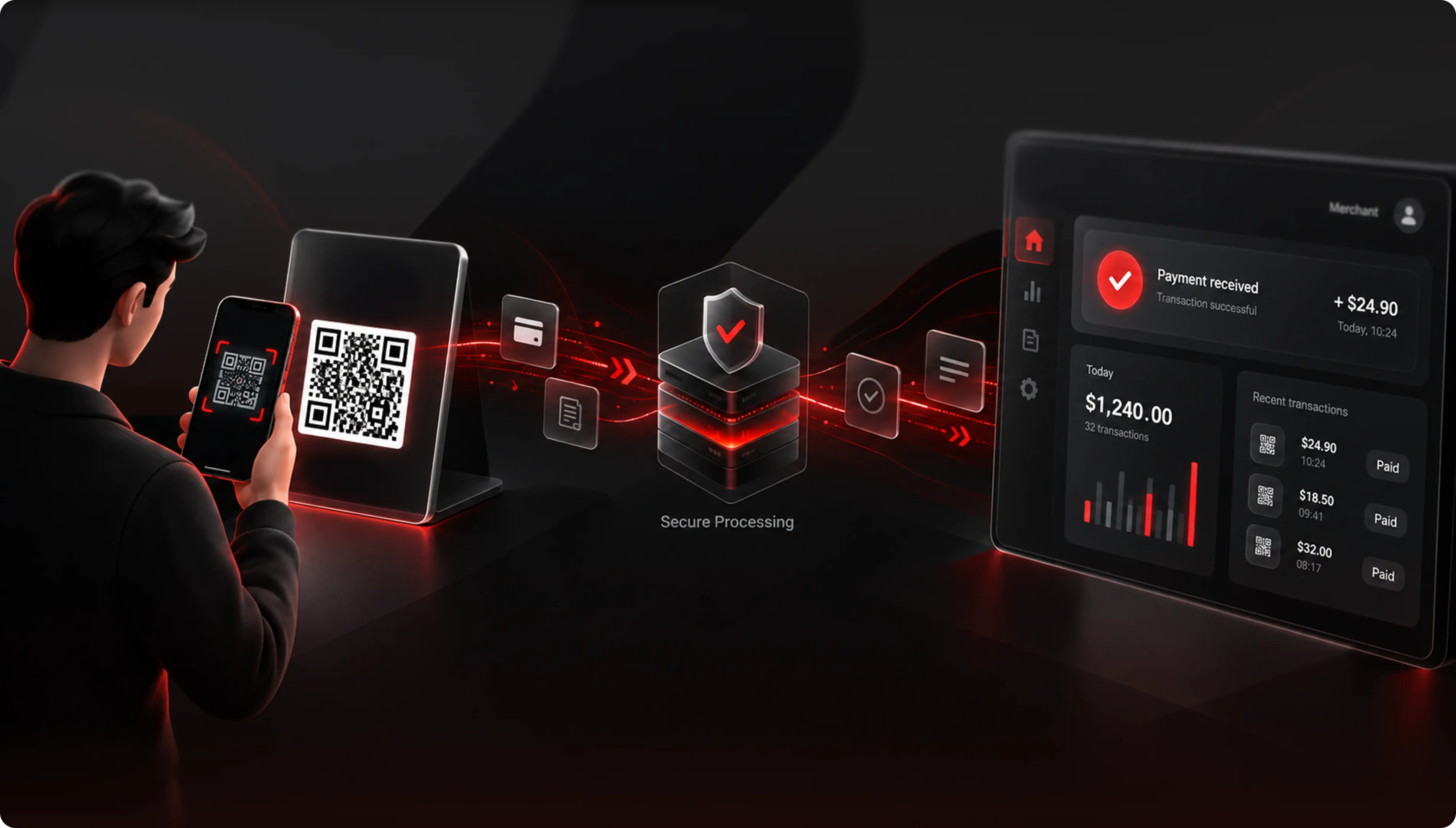
This is why method counts are useful only up to a point. A long list of payment methods is easy to sell. Building local connections that merchants can actually use is harder.
Stereotype 2: “PSPs are middlemen taking a cut”
From the merchant's side, the logic seems obvious. The player has money, and the operator wants to receive it. Then a payment service provider steps in between them, charges a fee, and asks the technical team for another integration.
So why not connect directly?
For some methods and markets, that can make sense. The difficulty comes when the operator adds more countries and more payment methods.
Suppose a business wants UPI in India and M-Pesa in Kenya, then decides to add local wallets elsewhere in Asia. Connecting every method directly means building separate connections and maintaining them afterwards. Someone still has to track transactions, investigate failures, reconcile balances, and handle withdrawals. When a local connection changes, the merchant's team has to deal with that too.
A high-growth payment provider can take on some of this work. One API can give the merchant access to several payment methods without requiring a separate integration for each one. Depending on the provider, the same relationship may also cover transaction monitoring, settlement, fraud checks, and the compliance work around KYC and KYB. When a transaction fails, the merchant has a single place to investigate it rather than piecing together information from several separate systems.
The work involved becomes especially clear with P2P payments.
A small P2P agent network may be manageable with fairly simple tools. But as the number of agents and transactions grows, the operator has to track more information. Transactions can end up spread across chats and spreadsheets. Someone has to check balances and commissions, and mismatched figures can take time to trace back to the original transaction.
SPAYZ.io built its P2P Agent Dashboard around this kind of work. Merchants can see agent transactions and balances in real time, calculate commissions automatically and keep transaction records in one place. Search and filters also make it possible to find a specific operation by Order ID, merchant reference, customer details, amount or status.
That changes the calculation behind the PSP fee. The operator isn't paying solely to move money from A to B. Part of the value lies in how much technical and day-to-day payment work the provider removes from the merchant's team.
Stereotype 3: “The cheapest PSP wins”
Pricing fits nicely into a spreadsheet. The real cost of iGaming payment processing doesn't.
Imagine Provider A offers the lowest processing fee. On paper, the choice looks obvious. Then the operator goes live and discovers that one of its main markets has fewer useful local methods than expected. Failed deposits take too long to investigate. The finance team still spends hours checking transactions manually, and support replies after the immediate problem has already affected the merchant's work.
The cheaper rate starts costing money somewhere else. This doesn't mean a more expensive provider is automatically better. Higher pricing can still come with weak account management, slow support or a rigid product that forces the merchant to change its own processes. Price and service quality aren't interchangeable.
That's why comparing PSPs only by processing fee leaves out much of the cost.
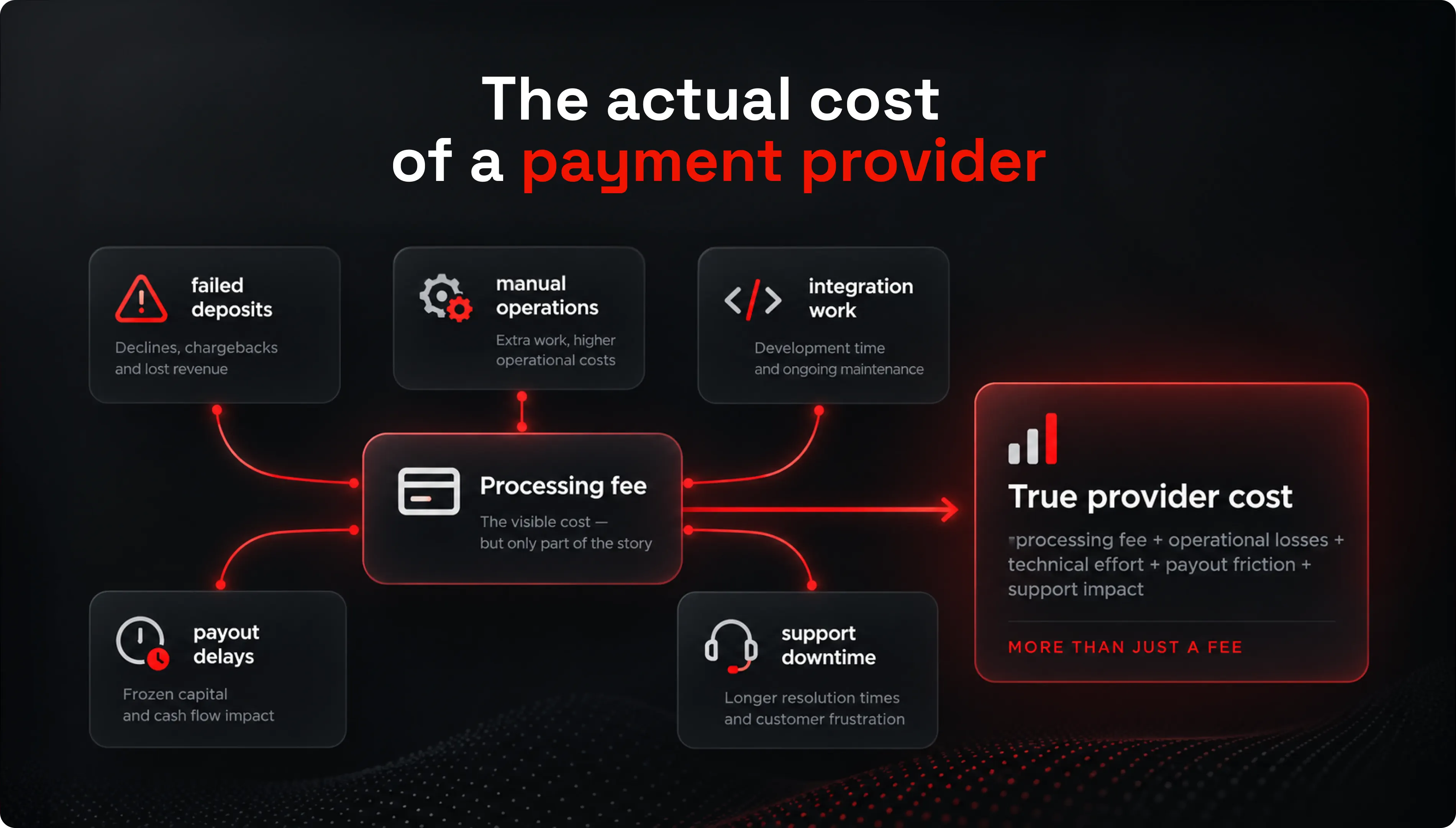
Service belongs in the calculation because payment problems rarely arrive at a convenient time.
There are a few questions to a provider about the work process and tools:
- Who looks after the account once the integration is done?
- Can the provider adjust a flow when the merchant has a specific requirement?
- If a route starts failing on Saturday night, can the operator reach someone who already knows the account instead of explaining the whole situation from scratch?
For a high-volume iGaming business, the answers affect how much work the operator has to keep in-house and how quickly payment issues can be fixed. Sometimes the cheapest provider will still be the right choice. You just can't tell from the processing rate alone.
So, are payment providers the annoying guys at iGaming conferences?
Sometimes, yes. If five companies approach you before lunch with the same "more methods, better rates, fast integration" pitch, the stereotype is understandable. The problem isn't that operators don't want to talk about payments. They just don't need another generic payments pitch.
A useful conversation gets specific quite quickly: when another iGaming payment solutions pitch starts to sound like an actual business conversation.
How SPAYZ.io approaches iGaming payments
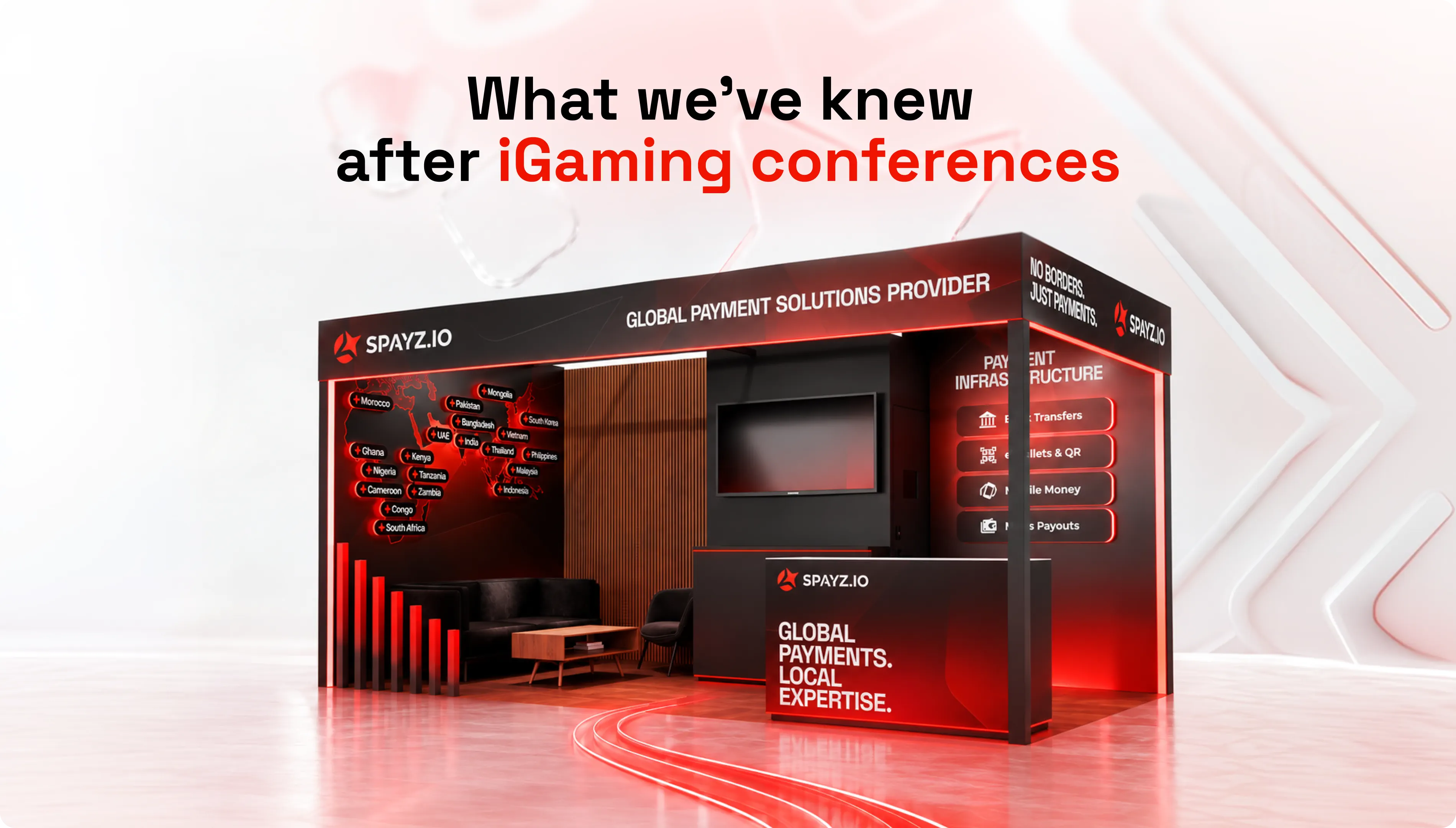
SPAYZ.io works with High-Risk merchants across Africa, Asia, and the MENA. We support 55+ payment solutions across 35+ countries, with availability depending on the country and whether the merchant needs payin, payout or both. For iGaming businesses, available options include bank transfers, online banking, eWallets, mobile payments, QR Code payments, and mass payouts. Merchants can connect several solutions through a single API instead of building a separate integration for every method.
But integration is only part of working with a PSP once payments are live.
Our P2P Agent Dashboard gives merchants a real-time view of P2P transactions and balances. Teams can find individual operations, check transaction statuses and commissions, export records and manage callbacks from the same interface. SPAYZ.io also supports KYC and KYB processes, AML screening, and fraud controls, while real people provide 24/7 support.
If you're comparing providers for iGaming payments or preparing to enter a new market, talk to SPAYZ.io about the countries you're targeting and the methods you need.
We'll tell you what we can support — and what we can't.