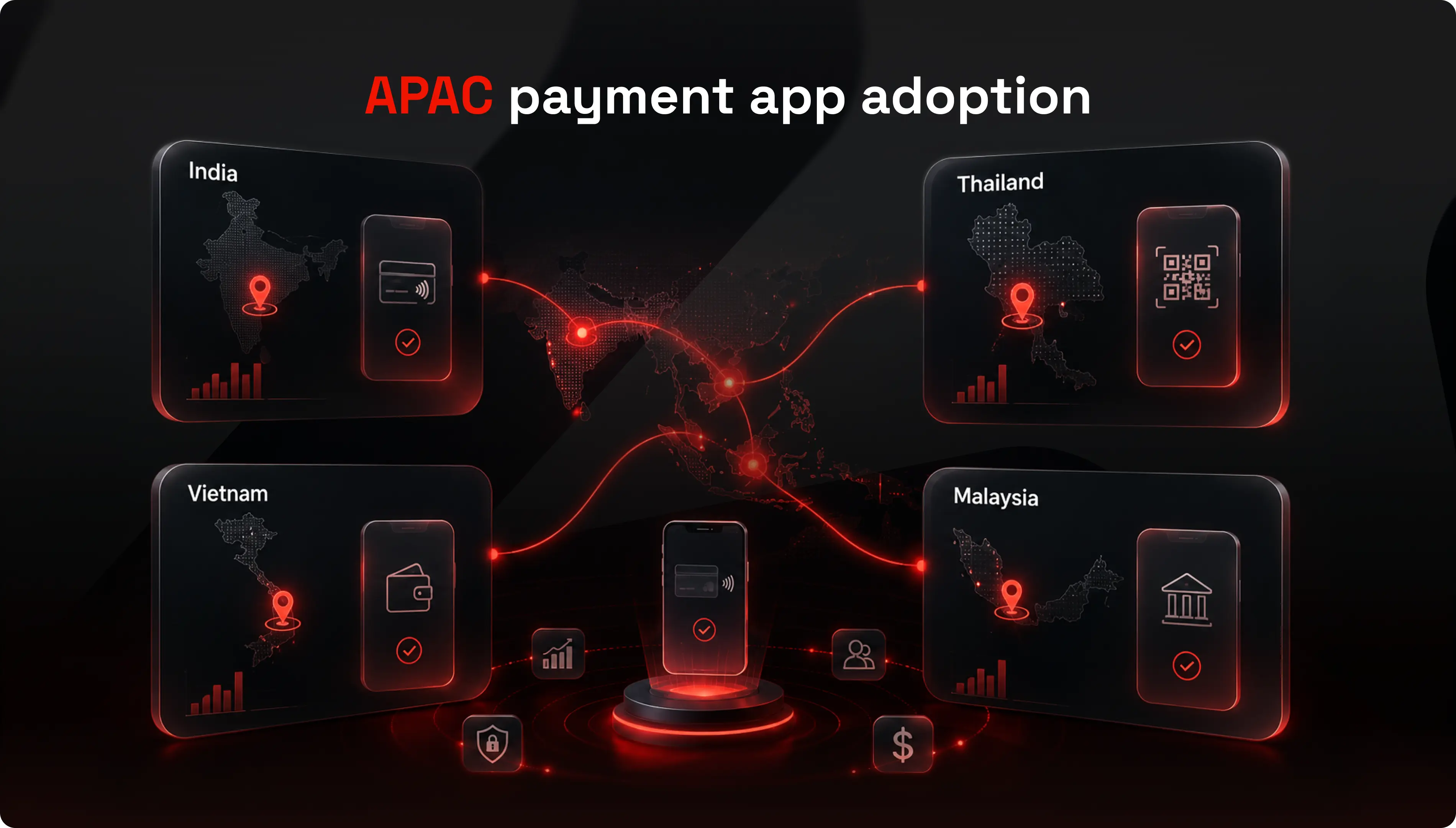
QR code payments in Asia may look almost identical at checkout, but the systems behind them vary from one market to another. A scan can start a bank transfer through UPI in India, a QRIS payment in Indonesia or an eWallet transaction in the Philippines. As QR wallets become a normal way to pay (and domestic QR systems start connecting across borders), merchants have more than checkout UX to think about. They need the right local payment methods for each market and payment infrastructure that can handle payins/payouts and reporting once volume starts coming in.
Why QR payments became so common across Asia
Asia has the right conditions for QR payments because domestic payment systems are built around mobile transactions: users have high smartphone use and established banking apps as their usual payment tools.
QR codes also make acceptance relatively simple for merchants. A business can take an app-based payment without relying on the same physical card infrastructure required for traditional POS acceptance. For customers, there's little new to learn: open an app, scan, and confirm.
National payment rails pushed adoption further. Let’s have a look at different regional examples:
- India built UPI around instant bank-to-bank payments.
- Thailand has PromptPay for alternative payments.
- Vietnam uses VietQR to connect payments across participating banks.
Alongside these systems, digital wallets in Asia have become part of everyday spending.
Worldpay's Global Payments Report 2026 shows how far app-based payments have moved into the mainstream. Payment apps accounted for 89% of POS transaction value in China in 2025, compared with 37% globally. Worldpay also identifies QR codes, mobile-first behaviour, and domestic payment systems as major drivers of high adoption across APAC.
Other Asian markets developed their own models, often around domestic bank transfers, national QR standards or eWallets.
So the category once described as alternative payment methods now includes payment options that are anything but alternative for local customers.
One QR code — very different payment systems
A QR code is the interface. It isn't the payment rail. The same scan-to-pay action can move money directly between bank accounts, through a national QR standard or via an eWallet. Even neighbouring countries use quite different setups.
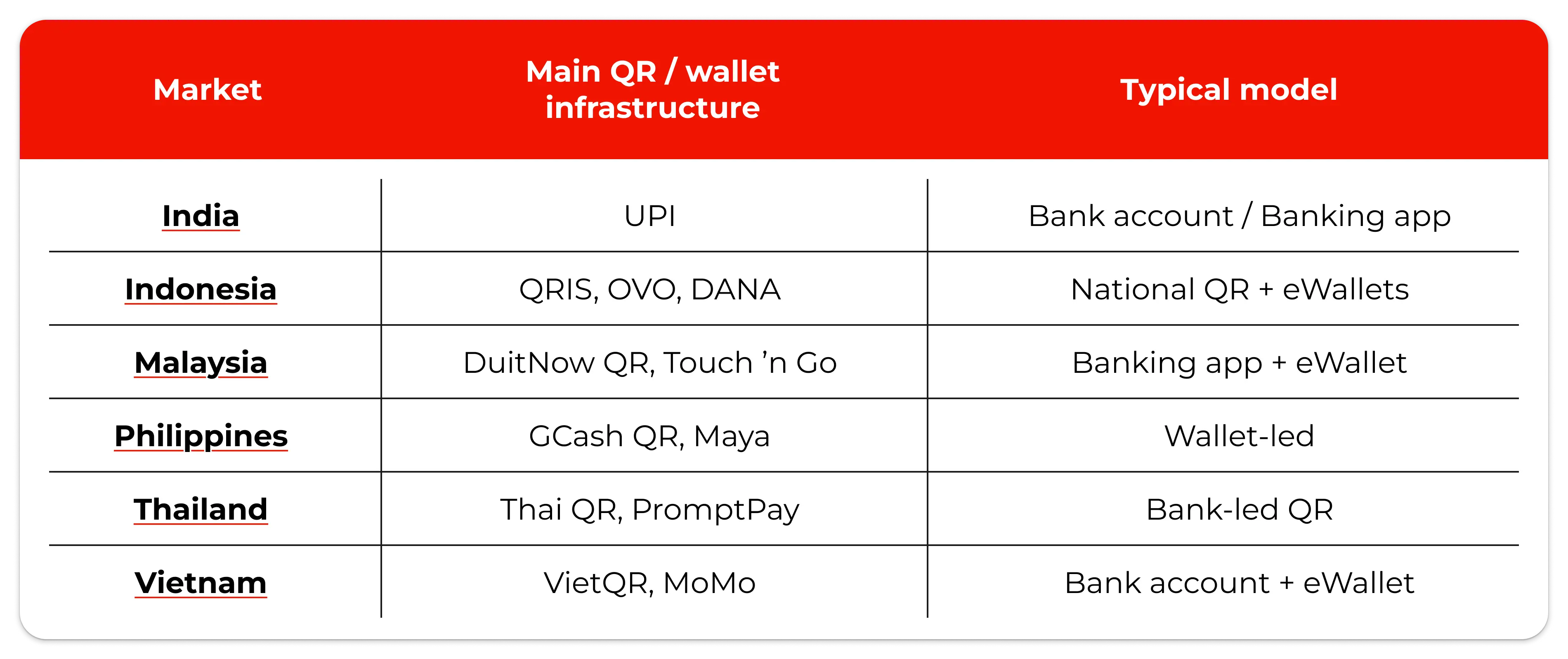
Indonesia is a good example of national standardisation. Bank Indonesia introduced QRIS as a common QR standard for payment providers. Customers can use compatible banking apps and eWallets to pay merchants displaying a QRIS code.
The Philippines looks different. GCash and Maya put eWallets closer to the centre of the payment experience. In India, meanwhile, UPI connects participating banking and payment apps directly to bank accounts.
For a merchant, these differences matter more than the QR image on the screen. Moving from Malaysia into Indonesia means supporting a different set of payment habits and connections. Copying the same checkout and changing the currency won't cover it.
That's the practical side of payment localisation. A payment method can exist in a country without being the one customers prefer.
QR wallets are becoming connected across borders
Domestic QR systems are increasingly being connected across borders. Several ASEAN markets now have bilateral links between their fast-payment or QR systems. A traveller can scan a local merchant QR code and, where the systems are connected, pay through a supported banking app or wallet from their home country.
The IMF reports that eight national QR systems in ASEAN already have cross-border connections. These links include markets such as Indonesia, Malaysia, Singapore, Thailand, and Vietnam.
Usage is growing quickly from a relatively small base. IMF data show that cross-border QR transaction volumes in Thailand grew by more than 300% in 2024 compared with 2023. Malaysia recorded growth of around 550% over the same period.
Connections are also moving beyond ASEAN. Indonesia, for example, has expanded QRIS links to other Asian markets, including China. For customers, the benefit is straightforward. They can increasingly travel and keep paying through an app they already use at home. For merchants, cross-border QR payments add another route alongside cards and other international payment methods.
What QR adoption means for High-Risk merchants
For iGaming and Forex businesses, adding a QR button is easy. Choosing the right method for the market takes more work.
A customer in Malaysia may already use DuitNow QR or Touch ’n Go eWallet. Indonesian users have QRIS and domestic eWallets such as OVO and DANA. In the Philippines, GCash and Maya are established parts of the local payment mix.
Familiar payment options can help with trust at checkout. Users don't have to learn an unfamiliar flow or switch to a payment method they rarely use. But familiarity doesn't tell the merchant how well the method will work operationally.
For High-Risk payments, teams also need to know whether the method supports the required payin or payout flow, how it handles pending transactions, and how much transaction data they can see. A popular payment method becomes much harder to manage if every discrepancy requires a manual spreadsheet check.

These questions apply to eWallet payments, bank transfers, and other Asia payment methods as well. Local adoption tells you what customers want to use. It doesn't tell you whether the payment setup will be easy to run.
Why payment infrastructure matters more than adding another wallet
A long list of logos at checkout says very little about what happens after the customer clicks “Pay”. Payments need routing and tracking; failed transactions need investigation. Now add another country. If a merchant uses one provider in Malaysia and another in Indonesia, that can mean another API, dashboard, and reconciliation process. Entering Vietnam can add another set. The payment mix becomes more local, while the internal setup becomes harder to manage.
Good QR payment infrastructure keeps those two things separate. Customers can use payment methods suited to their market without forcing the merchant to build a completely separate operating process for every country. This is also a useful way to assess a reliable payment provider. Payment method coverage matters, but merchants need to see what happens to their transactions after checkout. Clear statuses and usable reporting make it easier to spot a problem and trace it back to a specific payment.
For a High-Risk payment provider, that visibility matters even more. High transaction volumes and more complex payment flows leave little room for a setup that operations teams can't easily inspect.
The merchant could build a separate connection for every market:
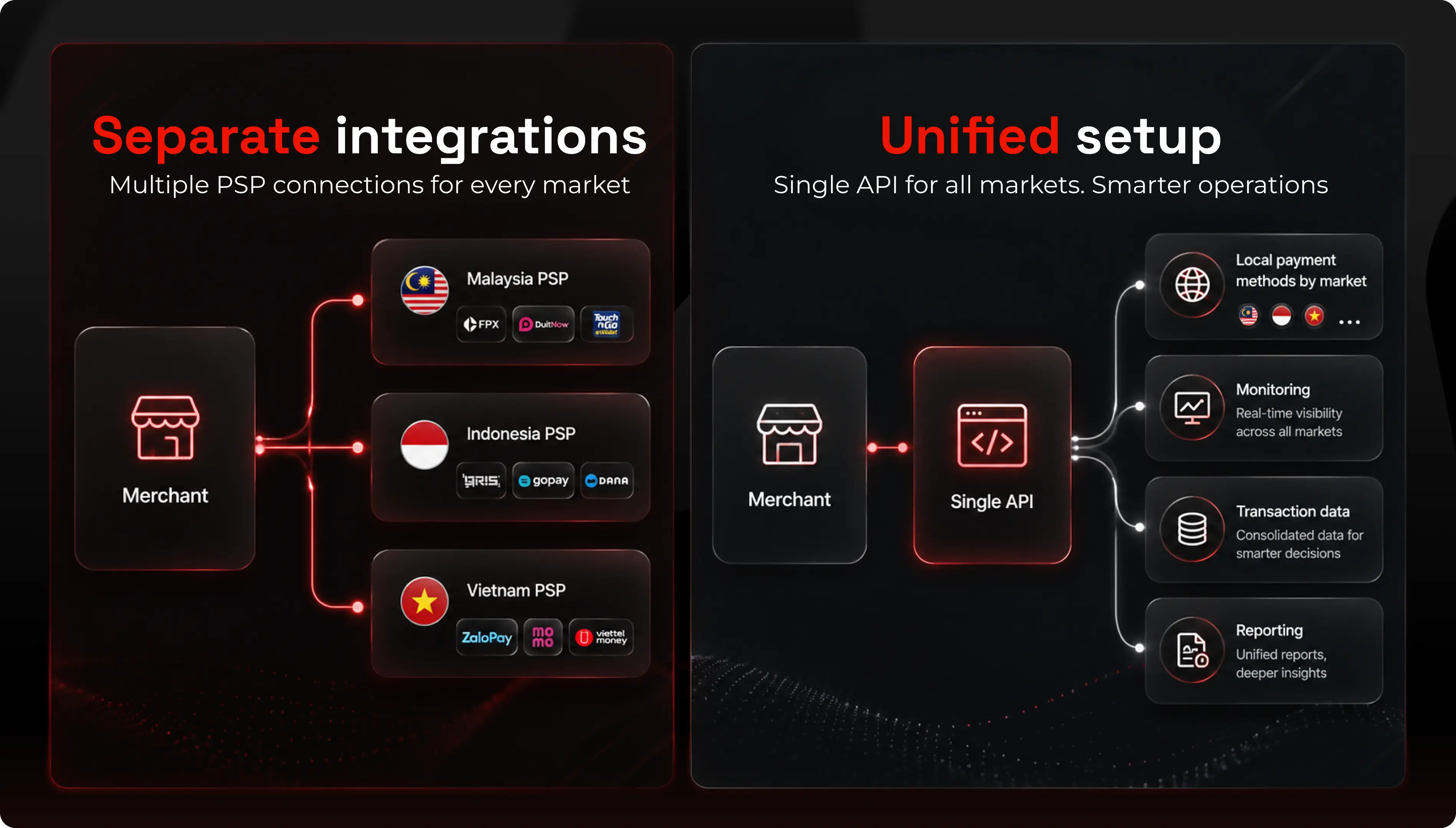
The customer still gets a payment method that makes sense locally. The merchant doesn't have to rebuild its payment setup each time it enters another market.
QR payments are local. Merchant infrastructure doesn't have to be
Customers in Asia already know how they want to pay. The harder job for international merchants is connecting those local habits to payment operations they can manage across several markets.
SPAYZ.io connects High-Risk merchants to mobile payments in Asia and other local methods through one integration, with real-time transaction monitoring and reporting. Explore the payment options available for your target markets and build the payment mix around how customers there already pay. Contact our manager now.