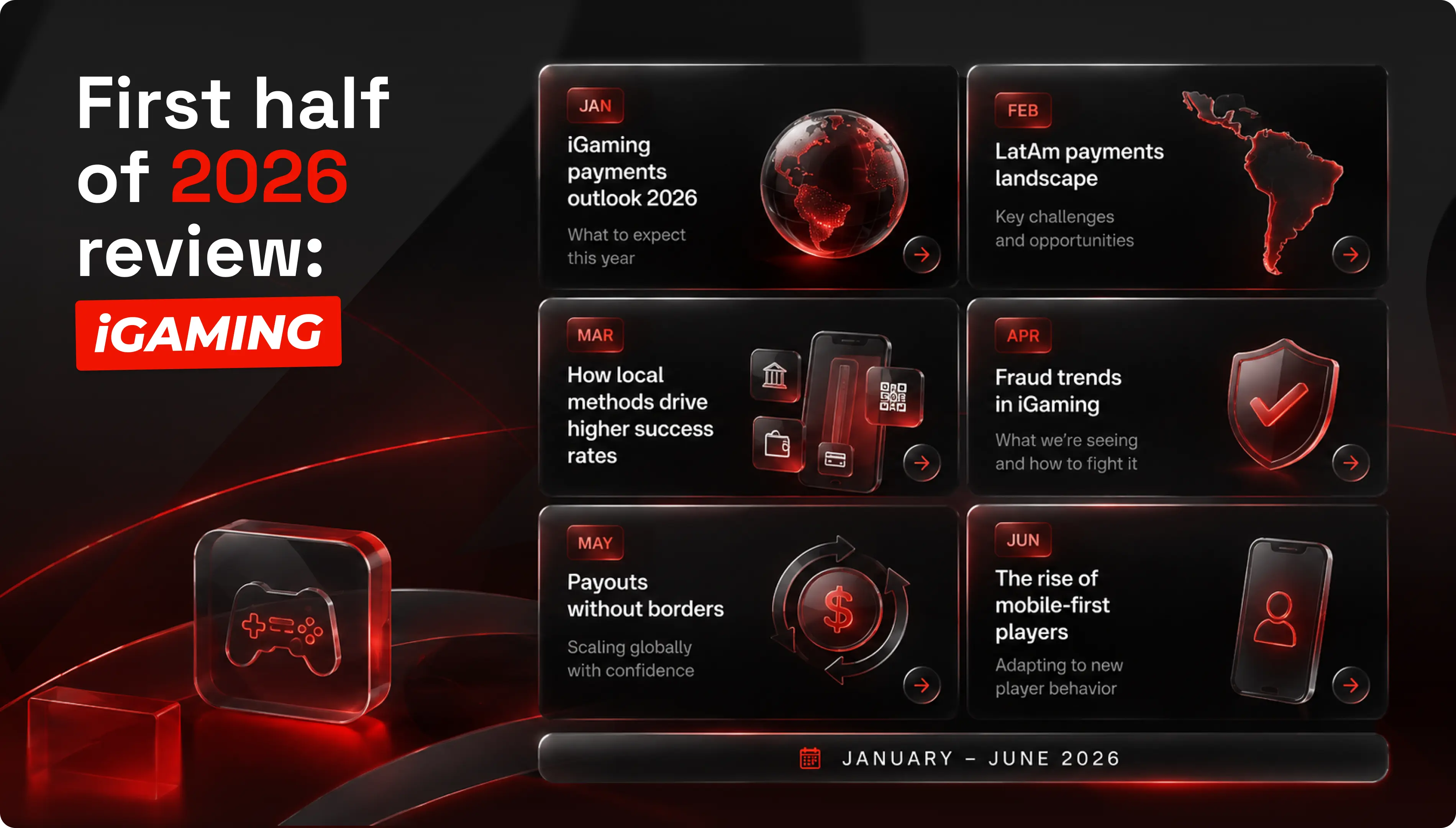
The first half of 2026 has raised the bar for iGaming payments. Merchants still need reliable processing and the right payment methods, but they're asking more from their PSPs: local payment coverage that matches how players actually pay, faster withdrawals, better transaction visibility, and payment setups that can adapt to new regulatory and fraud risks. Across emerging markets, these requirements matter even more as operators expand into countries with very different payment habits and local rails.
What changed in iGaming payments in H1 2026?
Five changes stand out from the first six months of the year:
- Local payment methods are becoming standard in markets where cards have limited reach or people simply prefer other payment methods.
- Merchants are looking at the full payin and payout cycle, including withdrawal speed and settlement terms.
- Transaction visibility is now part of the merchant experience. Payments teams want to investigate failures and monitor active transactions without waiting for manual reports.
- iGaming regulation is moving closer to payments. Banks and PSPs are increasingly involved in enforcement.
- Fraud controls are getting more market-specific. Merchants need to manage risk without damaging payment approval rates.
Payments are now one of the points where gambling regulation gets enforced.
Local payment methods are now a baseline requirement
Supporting a country on paper doesn't mean much if the cashier doesn't match the way local players pay.
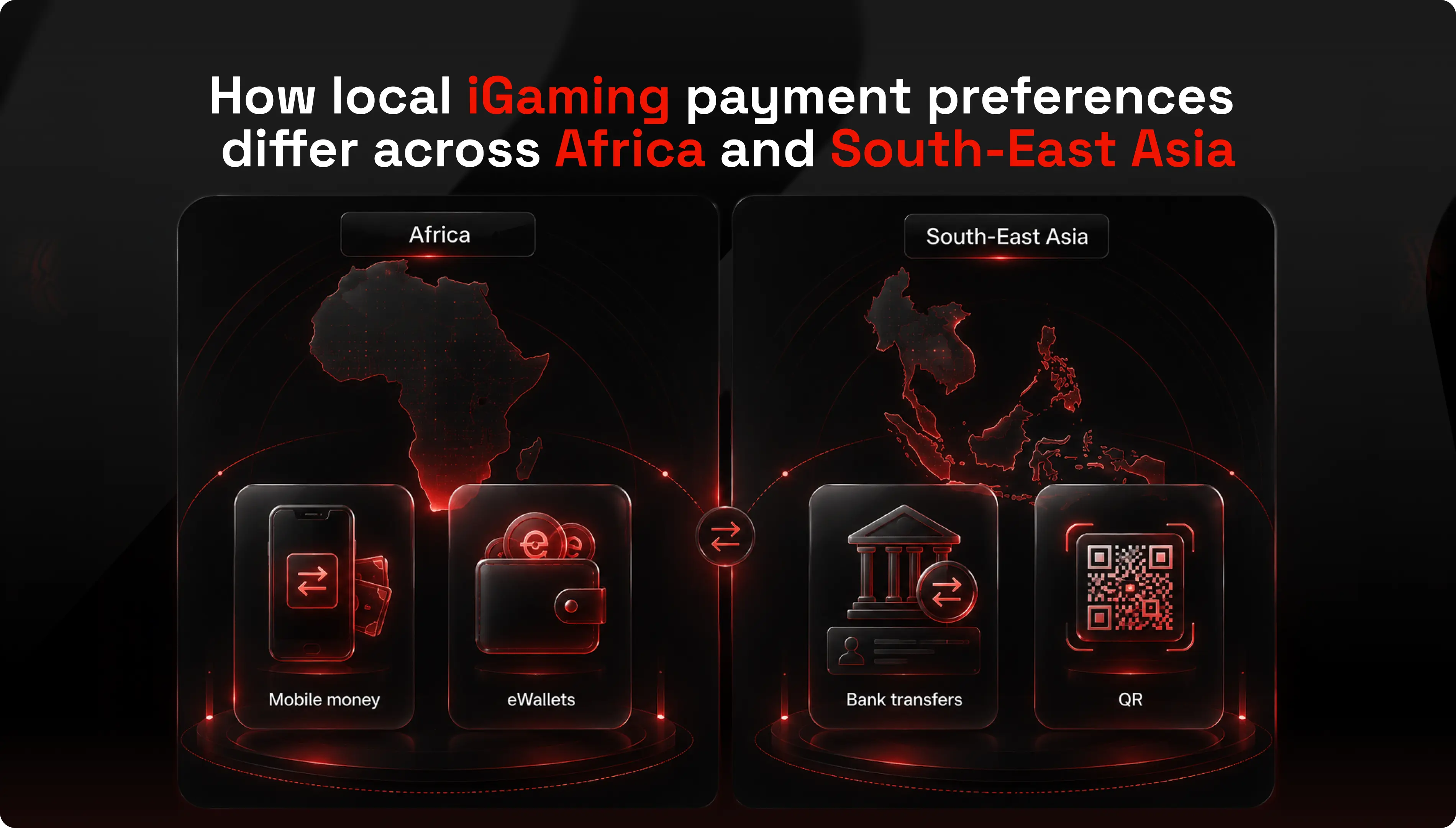
For example, Africa. Mobile money services are widely used for deposits and withdrawals across parts of the continent. Cards still matter in some countries, but there's no single payment mix that works across the region.
South-East Asia looks different again. Local eWallets, QR payments, and bank transfers can be much closer to everyday payment habits than international cards.
Payment preferences also vary within these regions. Mobile money has a strong presence across several African markets, while local wallets, bank transfers, and other alternative rails are more common across parts of Asia. For merchants, this means choosing methods at the country level rather than building one payment mix for an entire region. SPAYZ.io's own 2026 payment research shows the same regional split, with payment preferences closely tied to local infrastructure and user habits.
So payment localisation means more than displaying prices in the local currency. A merchant entering Kenya needs to think about mobile money. Indonesia or the Philippines require a different mix of payment methods. And even within Africa, East, West, and Southern Africa shouldn't be treated as one payments market.
The reason is simple. If players don't see a payment method they recognise at checkout, some won't complete the deposit.
Fast payouts have become part of the player experience
Deposits have traditionally received most of the attention in iGaming payment processing. They sit close to acquisition and first-deposit conversion, so that made sense. But players also notice what happens when they want to withdraw.
Slow or unclear withdrawals can damage trust. It also creates more work for the support team because players start asking where their money is.
That's why merchants are looking more closely at the whole payin and payout flow:
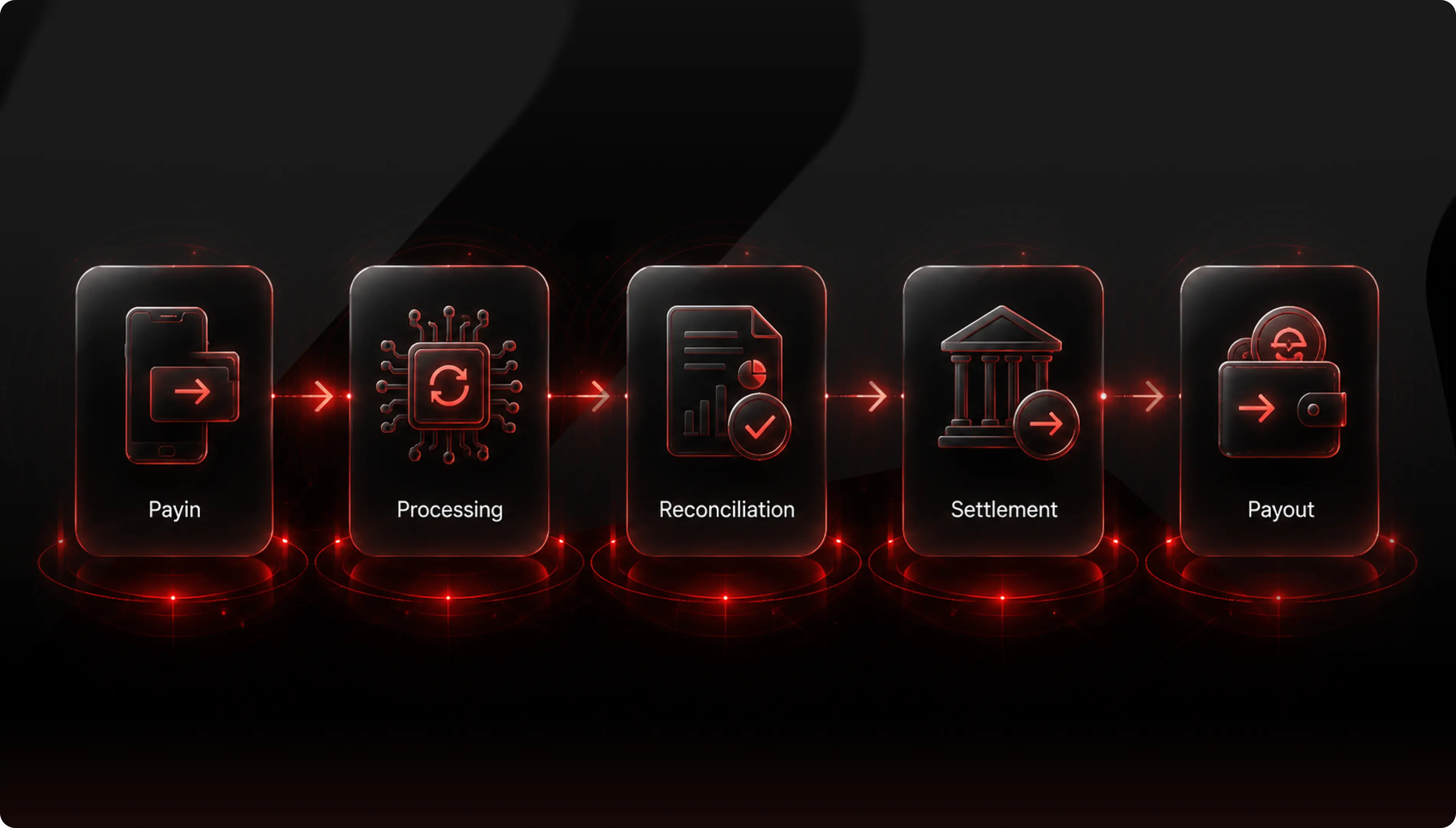
A delay can happen at any point.
Payout speed and settlement speed aren't the same. Player withdrawals and settlement between a merchant and its payment provider are separate processes. They have different timings and conditions. Processing time is only one part of the equation. Settlement terms determine when processed funds actually become available to the merchant. For payment and finance teams, that affects cash flow and how reliably they can plan outgoing payments.
This makes payout performance both a PSP issue and a player experience issue.
Merchants want visibility, not another black box
More markets mean more payments to track. A “failed” status tells the payments team only a small piece of information, such as payment method, routing, account status, or other specific details.
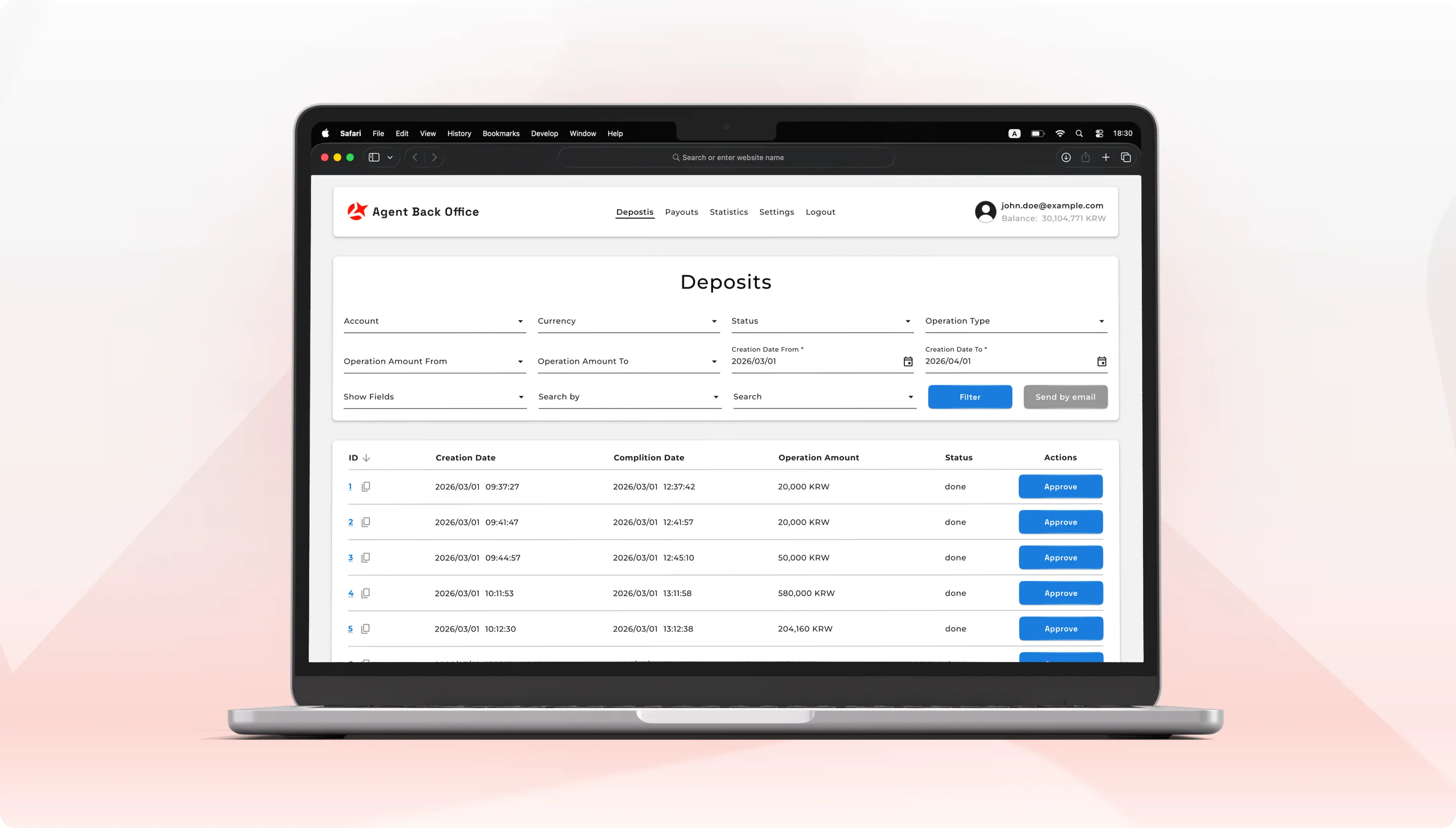
Waiting for a spreadsheet doesn't help much when payments are moving all day. Merchants now expect monitoring tools to sit inside their payment infrastructure. They need to see payment statuses and balances, review individual transactions and reconcile activity.
P2P payments add another layer. Merchants may need to track individual agents, review their transaction history, calculate commissions and keep balances up to date. Managing this through separate spreadsheets or messaging apps makes reconciliation harder as transaction volumes grow.
A dedicated P2P dashboard brings these operations into one system. Agents, transactions, balances, and commissions can then be managed against the same transaction records. For example, the P2P Agent Dashboard from SPAYZ.io helps control everything in one place. This also makes it easier to search for a specific payment when a dispute or support request comes in. The wider point isn't limited to P2P. A PSP can have strong payment coverage and still make life difficult for the merchant if basic transaction data is hard to find.
Regulation is moving closer to the payment layer
The line between gambling regulation and payments has become thinner.
Brazil's June rules show how this works. Payment institutions can be required to restrict transactions linked to unauthorised betting. The country's 2026–2027 regulatory agenda also includes procedures to prevent payments to unauthorised fixed-odds betting operators.
That affects how merchants choose and work with a PSP. If banks and payment providers can be required to restrict certain transactions, licensing and market access can't sit separately from payments. Providers need to understand who the merchant is and what it's processing.
AML and KYC, transaction records and local regulatory requirements are therefore becoming part of everyday payment work.
Expansion gets more complicated too. Entering another GEO can require more than adding a currency or connecting another method. The operator needs to know whether the payment route meets local requirements and what information the PSP will ask for before processing starts.
For a high-growth payment provider, knowing the local payment market now includes knowing its rules.
Fraud controls have to get more specific
Fraud prevention is a balancing act in iGaming. Weak controls let fraudulent transactions through. Go too far in the other direction and legitimate players get rejected. That costs money too. A player whose deposit fails can simply try another operator. So saying that a PSP has an anti-fraud system doesn't tell a merchant very much. Almost every provider can say that.
The useful question is what those controls do to genuine traffic. Payment routing can help when several routes are available. The PSP can account for the player's market, chosen method and current route performance rather than sending every transaction down the same path. Risk checks can then assess the payment itself.
Merchants can see the result in their payment approval rates, decline patterns and fraud data. They also need to investigate individual transactions. If a payment is disputed or flagged, the team needs enough data to work out what happened. A transaction ID, status, and timestamp may be enough for a simple support request. A suspected fraud case will usually need more context.
This is one reason generic fraud rules become less useful as a merchant expands. Behaviour that looks unusual in one market may be normal in another.
What iGaming merchants expect from a PSP in 2026
Merchant requirements are getting more practical.
When comparing an iGaming payment provider, these are the questions worth asking:
- Which local payment methods are available in each target country?
- Can players both deposit and withdraw?
- How long do processing and settlement actually take?
- Can the merchant monitor transactions without asking for a report?
- What information is available when a payment fails?
- How does payment routing work when several routes are available?
- How do fraud controls affect payment approval rates?
- Which AML and KYC requirements apply?
- Can the merchant add another GEO or payment method without rebuilding the integration?
- Who deals with problems when an active payment route stops working?
Payment orchestration also becomes relevant once an operator works across several markets. Managing every method and route separately creates technical work that grows with each new GEO. A single integration can reduce that work. But it only helps if the provider has the local methods the merchant actually needs.
Pricing isn’t only about the processing fee
Price still matters when merchants compare payment providers. But the lowest processing fee doesn't always mean lower payment costs overall.
The difference often shows up after integration. A cheaper provider may offer standard account management, limited support or little room to adjust the setup for a specific merchant. When something changes, a payment route starts underperforming, a new GEO needs to be added, or the merchant needs a custom change — more of that work stays with the merchant's own team.
This is especially relevant in iGaming payments, where payment setups can change quickly across markets. Merchants should also compare the service behind the fee: who manages the account, how quickly support responds, whether the provider can make individual adjustments, and how much hands-on work the merchant receives after launch.
SPAYZ.io takes a more hands-on approach, with dedicated account management, 24/7 human support and payment setups adapted to individual merchant needs. The price reflects the level of service around the processing itself, not only access to a payment route.
What should merchants look for in their payment setup for H2 2026?
Coverage and fees still matter in iGaming payments. But the harder questions now come after integration.
SPAYZ.io supports High-Risk merchants across Asia, Africa, and the MENA, with 55+ payment solutions in 35+ countries. Local and regional methods are available through a single API, with additional tools for merchants managing P2P operations.
If your current payment setup is becoming harder to manage as you add new markets, talk to the SPAYZ.io team.