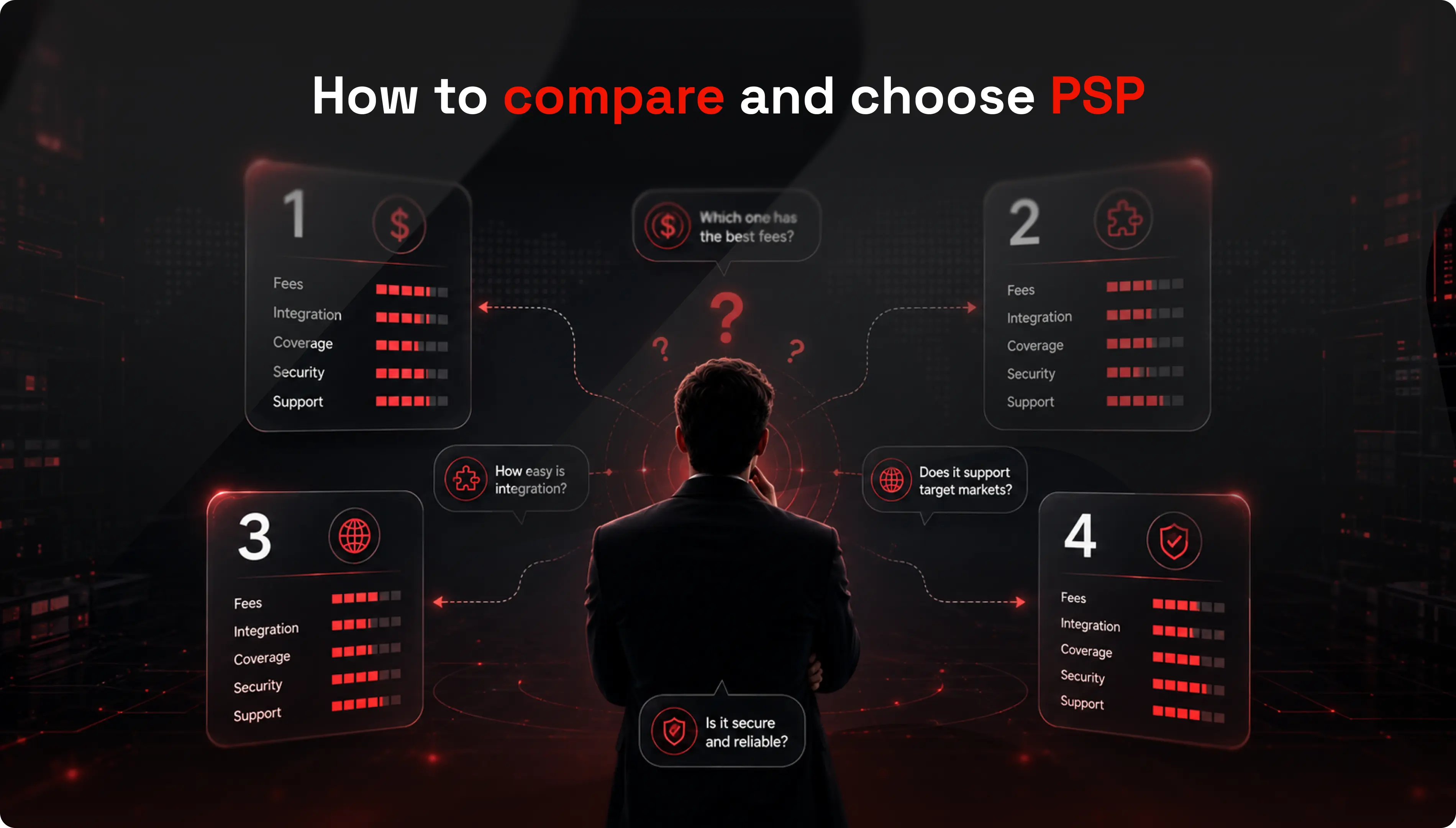
For high-growth merchants, choosing a PSP affects much more than processing costs. The provider becomes part of the payment infrastructure, and replacing it later can mean another integration, new compliance checks and disruption to live payment flows.
A useful payment provider comparison should therefore look beyond fees. The real test is whether a provider can support higher transaction volumes, new markets and changing banking conditions without forcing the merchant to rebuild its payment setup.
What to look at when comparing payment providers
A useful payment provider comparison starts with the parts of payment processing that affect day-to-day operations. For high-growth PSPs, three areas are particularly useful when narrowing down the shortlist: localisation, fraud protection and the actual cost of processing.
Payment localisation
Payment localisation means having the right payment options for the market, not simply a long list of supported methods. UPI matters in India. Mobile money is widely used across African markets. In Southeast Asia, local eWallets, QR payments, and bank transfers can be more relevant than international cards.
Check which methods are available in your target countries, whether the PSP supports local payins and payouts, and what settlement options are available. The SPAYZ.io payment research shows the same pattern across its active markets: preferred methods vary considerably by country, even within the same region.
Fees and the actual cost of processing
Transaction fees are useful for an initial comparison, but they don't show the full cost. FX conversion, payouts, rolling reserves, chargeback handling or additional fraud tools can change the commercial picture.
Approval rates matter here too. A lower processing fee loses some of its appeal if more legitimate payments are declined. When comparing PSP pricing, use the same expected volume, markets and payment mix for every provider.
Fraud protection
For a High-Risk merchant, provider fraud protection must detect suspicious transactions without issuing unnecessary declines.
Look at how transactions are monitored, what KYC and AML checks are used, whether risk settings can be adjusted and how the provider handles false positives. This becomes especially relevant when the same business operates across markets with different customer behaviour and payment patterns.
A quick PSP comparison checklist
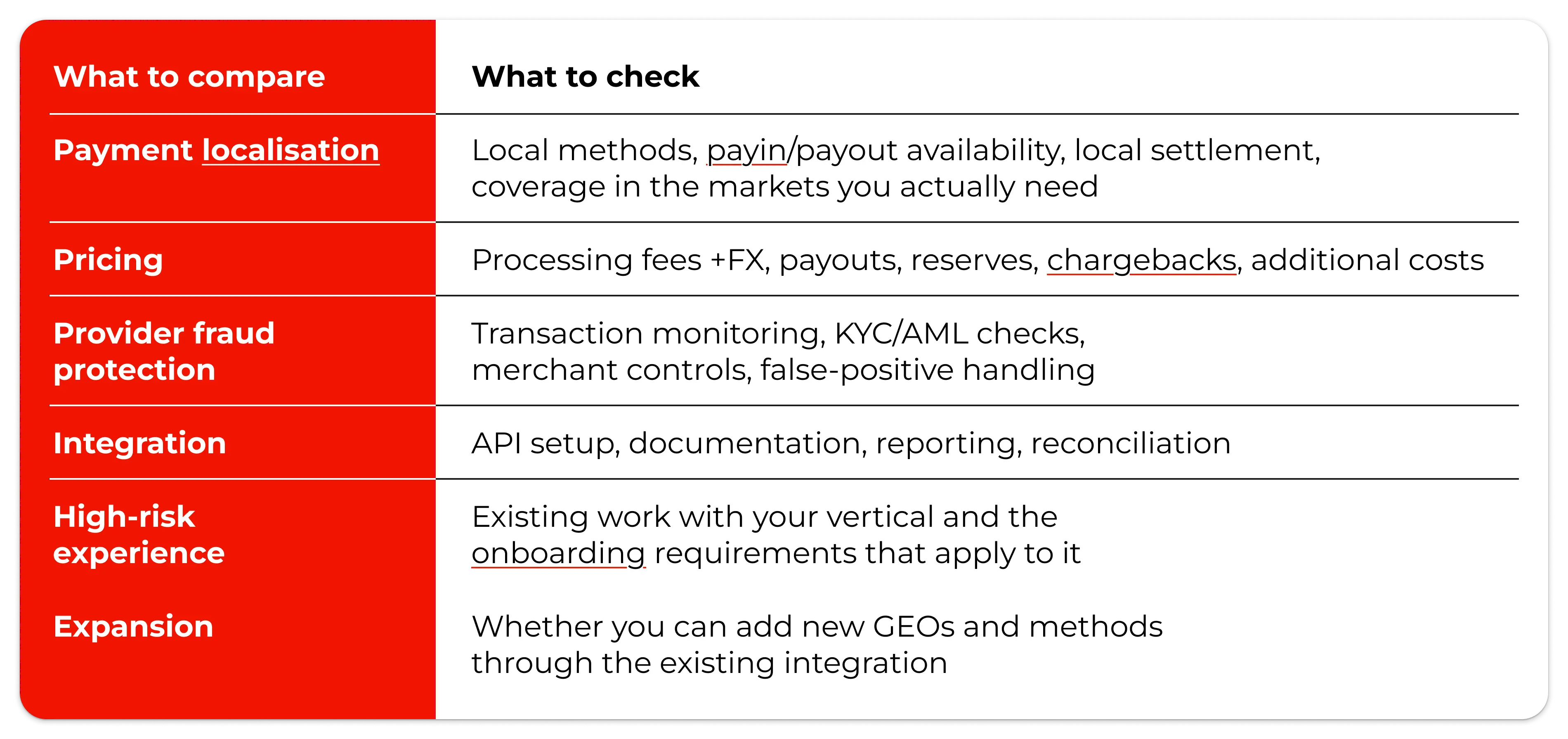
These are the PSP criteria we'll use below to compare providers serving emerging markets and international merchants.
Comparing leading high-growth PSPs: where the differences really are
There is no single provider that fits every merchant. Geography, payment methods, pricing and the level of control over payment operations all change the shortlist.
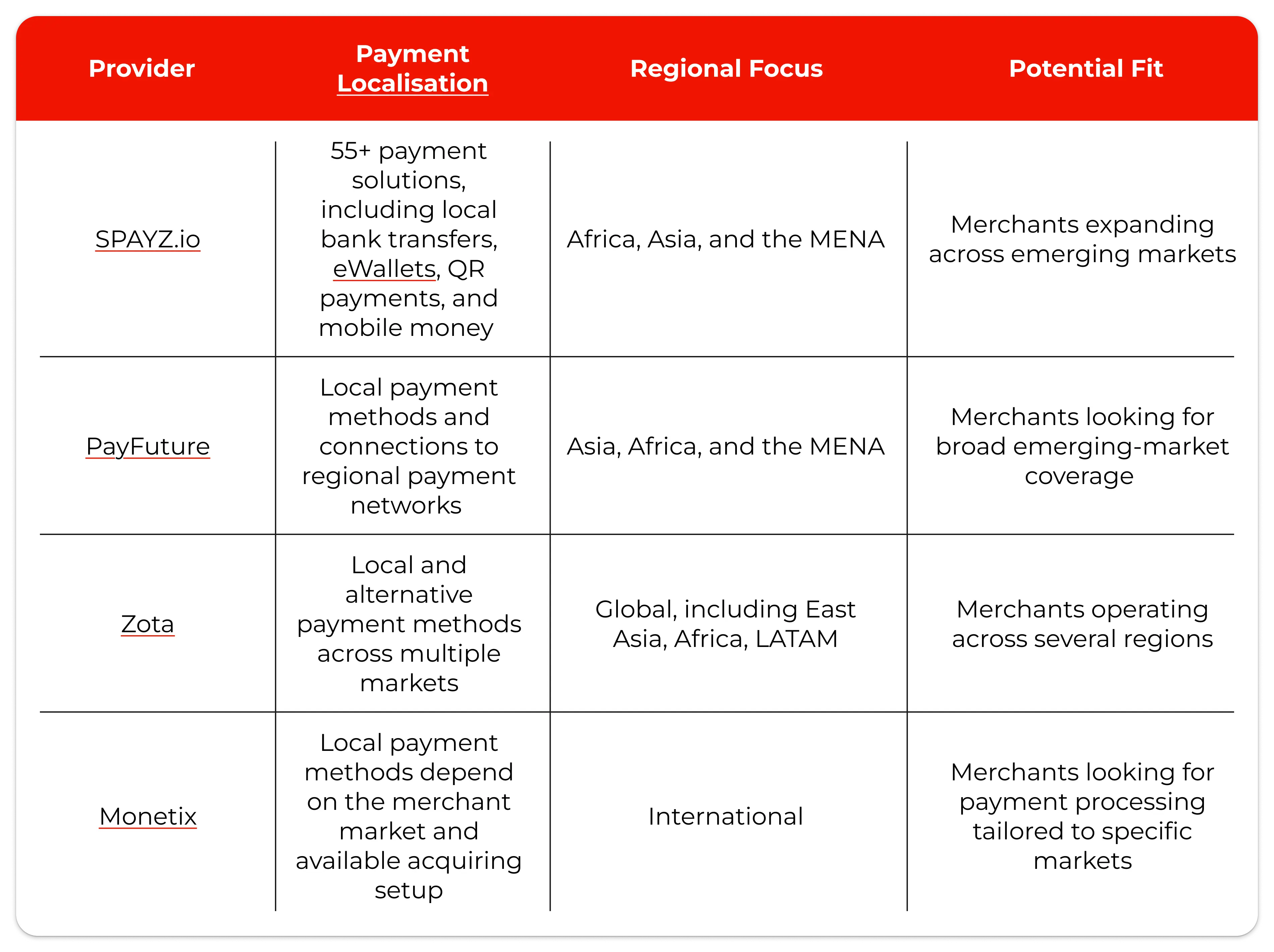
For this payment provider comparison, we look at SPAYZ.io, PayFuture, Zota, and Monetix across the same criteria: payment localisation, fees, provider fraud protection, and API integration.
Payment localisation comparison
The biggest differences appear in regional focus. All four providers support international merchants, but their local payment coverage and priority markets aren't identical.
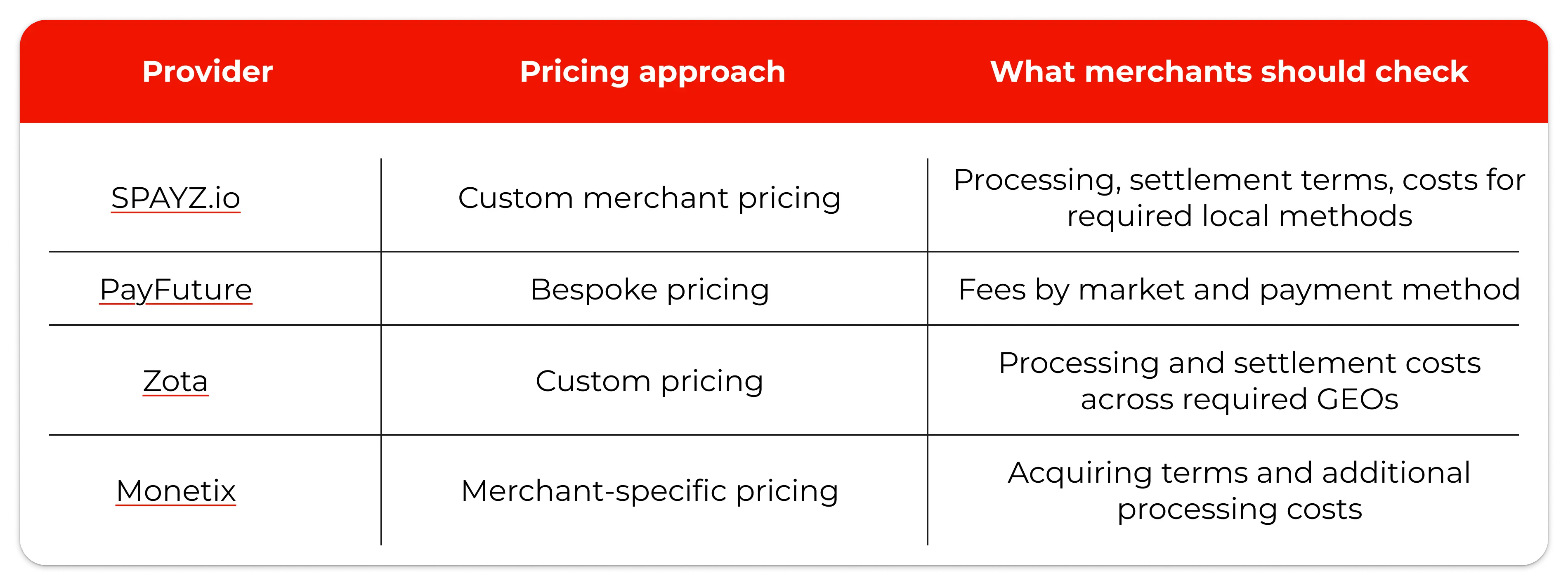
Fees comparison
Public headline rates aren't particularly useful for this group. High-risk payment processing is generally priced based on the merchant profile, GEO, volumes, payment methods, and risk level.
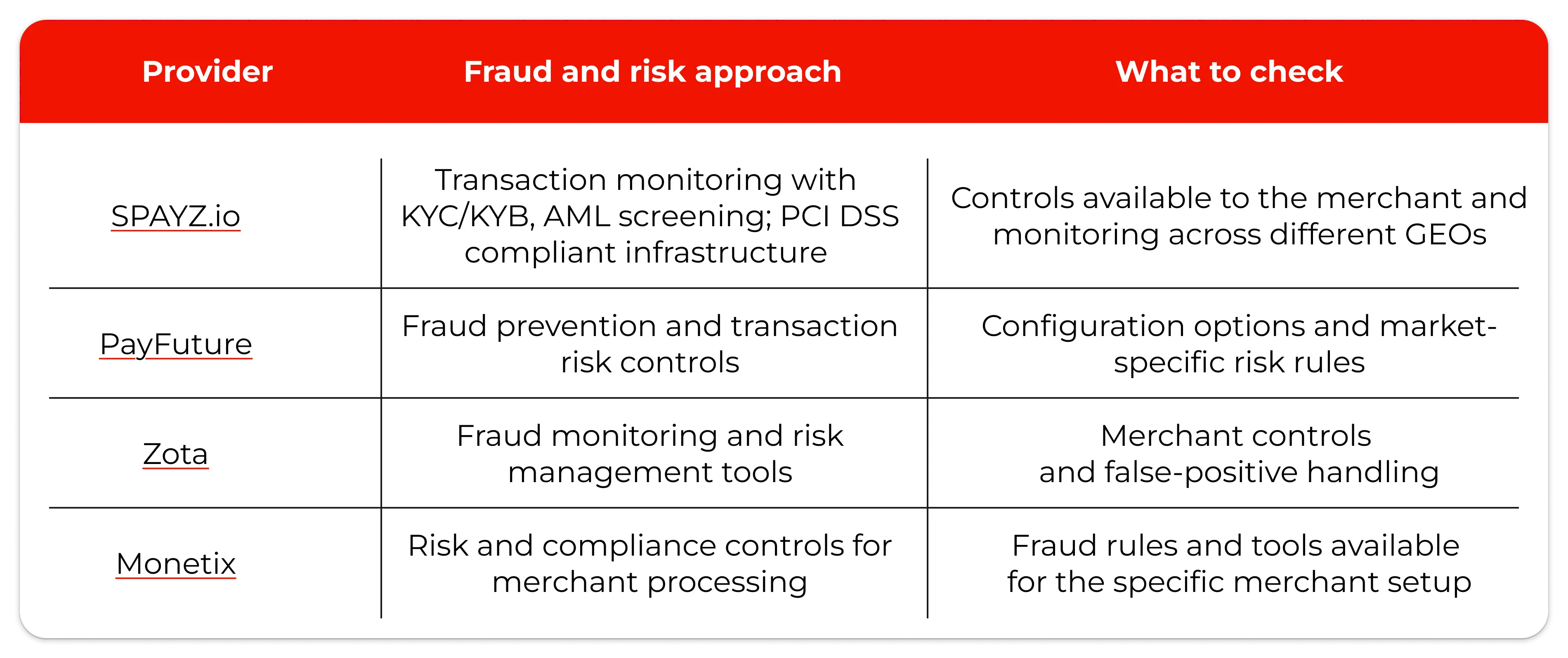
Fraud protection comparison
For High-Risk merchants, fraud controls also need to be considered alongside payment acceptance. Overly strict rules can reject legitimate deposits; weak controls create the opposite problem.
Overall PSP comparison
Once localisation, pricing, and fraud are covered, the remaining practical difference is how easily the provider integrates with the merchant's existing payment setup.
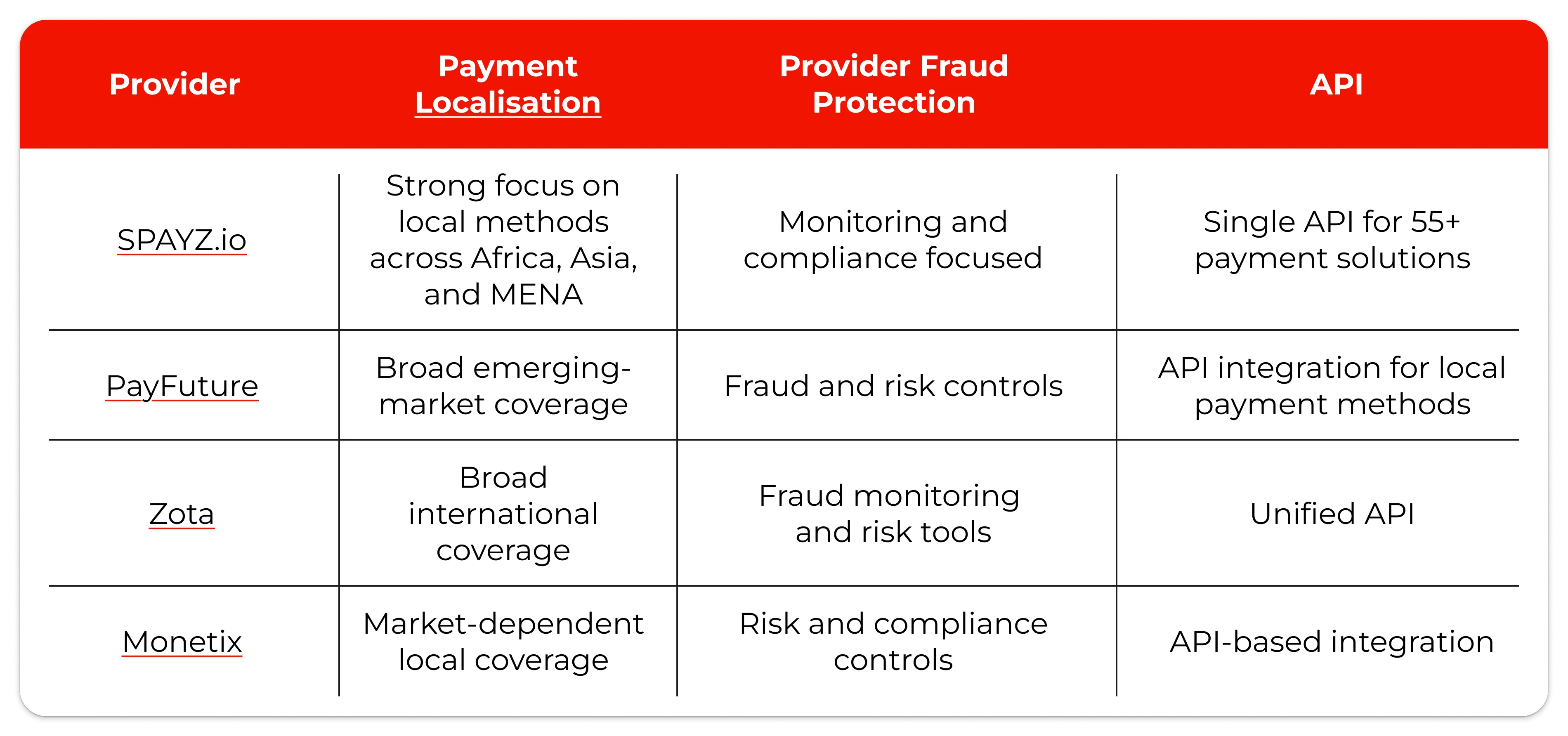
SPAYZ.io uses a single API integration across its payment solutions, so merchants can add supported methods and payment flows without building a separate integration for every GEO. The same setup connects to the platform's operational side, including real-time transaction monitoring and reporting via the dashboard.
Which provider is the best fit?
The shortlist depends on the merchant. A Forex broker entering Southeast Asia has different payment requirements from an iGaming operator expanding across MENA or a business processing mainly in one European market.
Start with the markets and payment methods you need now, then look at where the business is likely to expand. Compare providers using the same merchant profile and expected volumes. Check the full pricing structure, available local methods, fraud controls and what adding another GEO would involve.
FAQ: Choosing a payment service provider
Q: What should you look for when choosing a payment service provider?
A: Start with market coverage, payment localisation, pricing, provider fraud protection, and integration requirements. For emerging markets, the provider's experience with your industry and target GEOs should also be part of the comparison.
Q: How do you compare payment providers?
A: Use the same business profile, target countries, expected transaction volumes, and required payment methods for each provider. This makes the payment provider comparison more useful than comparing advertised fees or the total number of payment methods.
Q: What makes a good high-risk PSP?
A: A good PSP should already understand the compliance and payment requirements of regulated industries. It should also provide suitable local payment methods, fraud controls, and infrastructure to support higher volumes or additional markets.
Q: Why does payment localisation matter when choosing a PSP?
A: Payment preferences vary considerably between markets. Payment localisation gives customers access to methods they already use, such as local bank transfers, eWallets, QR payments or mobile money, rather than relying mainly on international cards.
Q: Is the cheapest payment provider usually the best option?
A: Processing fees are only part of the cost. Settlement terms, FX fees, reserves, payout costs, and payment approval rates can change the overall economics of working with a provider.
Your PSP shortlist starts with your business
No comparison table can choose a provider for you. The final decision depends on your markets, payment mix, risk profile, and expansion plans.
If SPAYZ.io fits that shortlist, we work with high-growth merchants across Asia, Africa, and the MENA region, offering 55+ payment solutions through a single API. Our team can help you check which payment methods and setup fit your target markets before you integrate. Contact our manager!
Disclaimer: This comparison is based on publicly available information from providers’ websites as of August 2026. Product features, supported markets, pricing, availability and onboarding requirements may vary depending on the merchant profile and may change over time. The information is provided for general informational purposes and should not be considered a recommendation or endorsement of any particular provider. Merchants should verify current terms and service availability directly with each provider before making a decision.