Growth in High-Risk industries rarely stalls because demand disappears. More often, payments become the bottleneck.
A merchant launches in a new country and discovers that the preferred local payment method isn't supported. Another sees card approval rates fall after a bank changes its risk policy. A PSP suffers downtime during peak traffic. Customers abandon the checkout, while revenue quietly leaks away.
That's exactly the problem payment orchestration was built to solve.
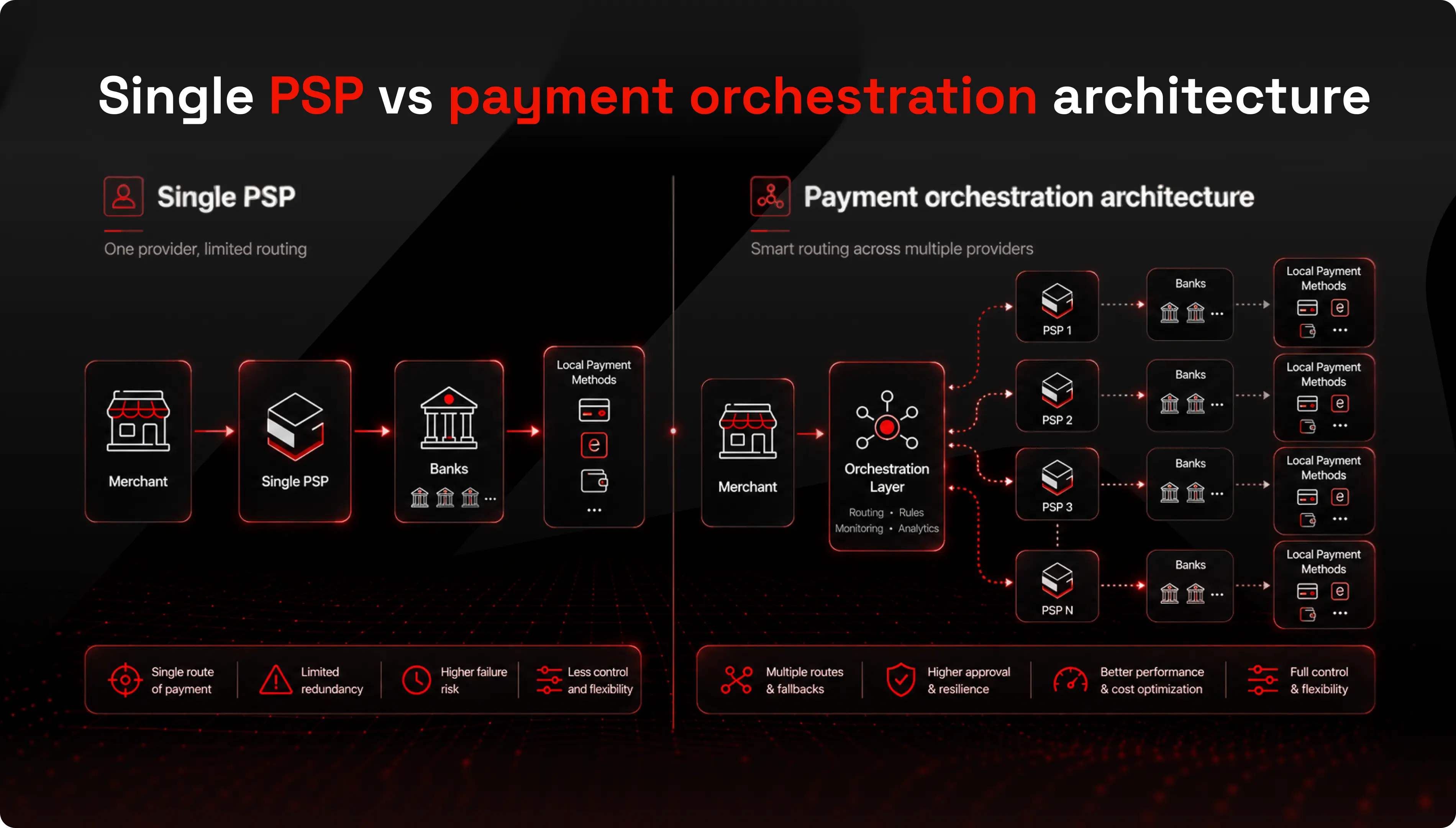
Instead of relying on a single payment provider, merchants gain one integration that connects multiple PSPs, acquirers, and payment methods. Transactions are automatically directed through the most suitable route based on rules you define: geography, payment method, issuer response, processing costs, historical approval rates — everything your business needs.
For businesses operating in iGaming, Forex, Crypto, Nutra, or other emerging markets, this flexibility quickly becomes a commercial advantage rather than simply a technical improvement.
What is a payment orchestration?
Payment orchestration is a platform that sits between your checkout and your payment providers.
Instead of integrating separately with every PSP, acquirer, or alternative payment method, merchants integrate once. The orchestration layer manages the rest.
Depending on business rules, it can:
- connect multiple PSPs through one API;
- perform intelligent routing;
- retry failed transactions through another provider;
- activate local payment methods by GEO;
- balance traffic between acquirers;
- monitor approval rates in real time;
- simplify reporting across payment partners.
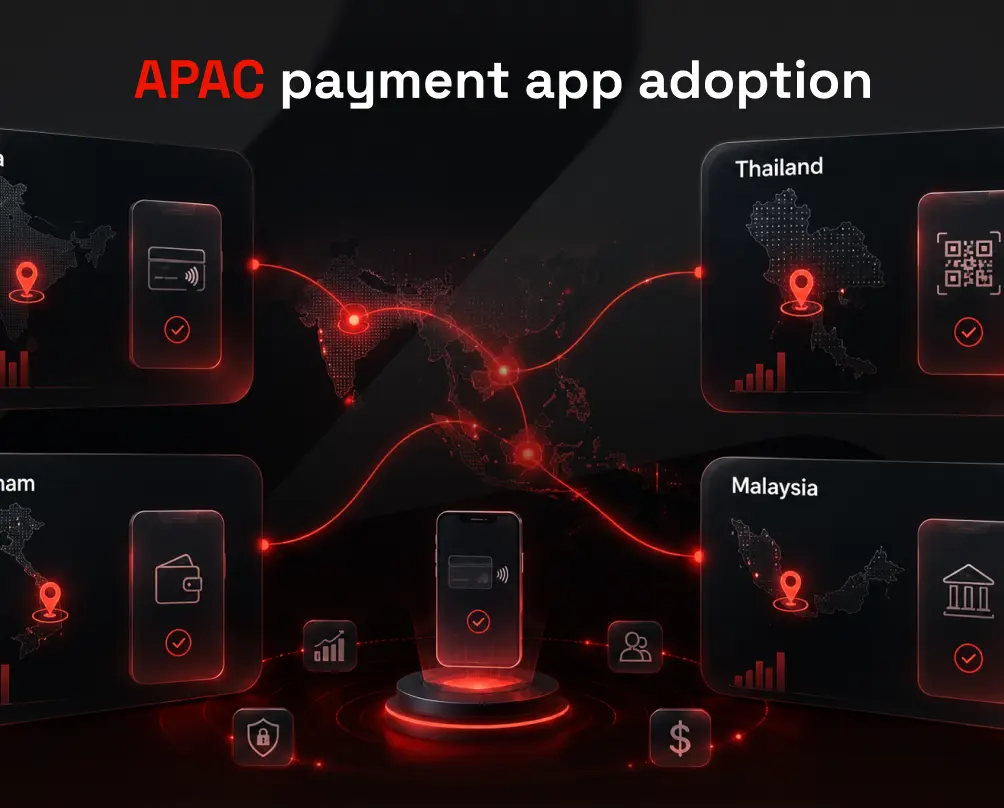
Large enterprise merchants have used similar models for years. Now the same approach is becoming standard across high-growth payments, particularly in businesses expanding into MENA, Africa, LatAm, and Southeast Asia, where payment infrastructure varies significantly between countries.
Why single-PSP setups limit High-Risk business growth
A single PSP works while transaction volumes remain predictable. Different banks apply different risk models. Local payment preferences differ from one market to another, and the payment system provider should be prepared, for example, to find an alternative payment method.
Single-PSP setup can’t provide everything. Common issues include:

Every failed payment reduces the conversion rate. In High-Risk verticals, even a 2-3% drop in approvals can translate into significant monthly revenue losses.
Payment infrastructure therefore becomes part of the growth strategy, and directly affects success rates and trustworthiness.
Four ways payment orchestration optimisation supports growth
Way 1. Intelligent routing
A payment orchestration platform doesn't send every transaction to the same provider. Instead, the platform chooses the best route for each transaction. That decision can depend on the customer's location, card BIN, payment method, transaction size, or previous approval data.
A payment from Brazil, for example, may be routed to a local acquirer rather than an international one. Keeping the transaction domestic often improves authorisation rates.
If the first provider can't process the payment, another can take over automatically. The customer doesn't have to refresh the page or try again.
Way 2. Payment coverage
Card payments aren't enough if you're expanding internationally. In many markets, customers expect to pay with local methods instead: PIX in Brazil, UPI in India, bank transfers across Europe, regional eWallets in Southeast Asia, mobile money in Africa, or stablecoins in crypto-heavy markets.
Supporting each method through a separate integration quickly becomes difficult to maintain. A payment orchestration platform brings them together behind a single integration, with reporting and reconciliation managed in one place.
That makes it much easier to launch in new markets without rebuilding your payments stack every time. And because customers see the payment methods they already trust, conversion rates tend to improve.
Way 3. Smarter payment flows
A customer clicking Pay doesn't guarantee the payment will go through.
That's where payment orchestration makes a difference. Instead of relying on one provider, merchants can route transactions to the acquirer with the strongest approval rates, retry soft declines automatically or switch providers if one starts having issues.
None of these changes is headline-worthy on its own. Together, they recover payments that would otherwise be lost.
For businesses spending heavily on customer acquisition, that's often a better return than buying more traffic. In sectors like iGaming, Forex and Crypto, every recovered payment protects revenue you've already paid to acquire.
Way 4. Faster expansion into new markets
International expansion usually means more than opening a new market. It often requires another PSP, another integration and another round of testing before payments can go live.
With payment orchestration, merchants don't have to rebuild their payment stack every time they add a provider. They extend the existing setup instead, making it easier to support new payment methods and enter new markets as the business grows.
A flexible payment architecture allows merchants to adapt to regional differences without maintaining separate integrations for every market. Growing demand for local payment methods, alternative payments, and digital wallets continues to reshape payment behaviour across emerging economies.
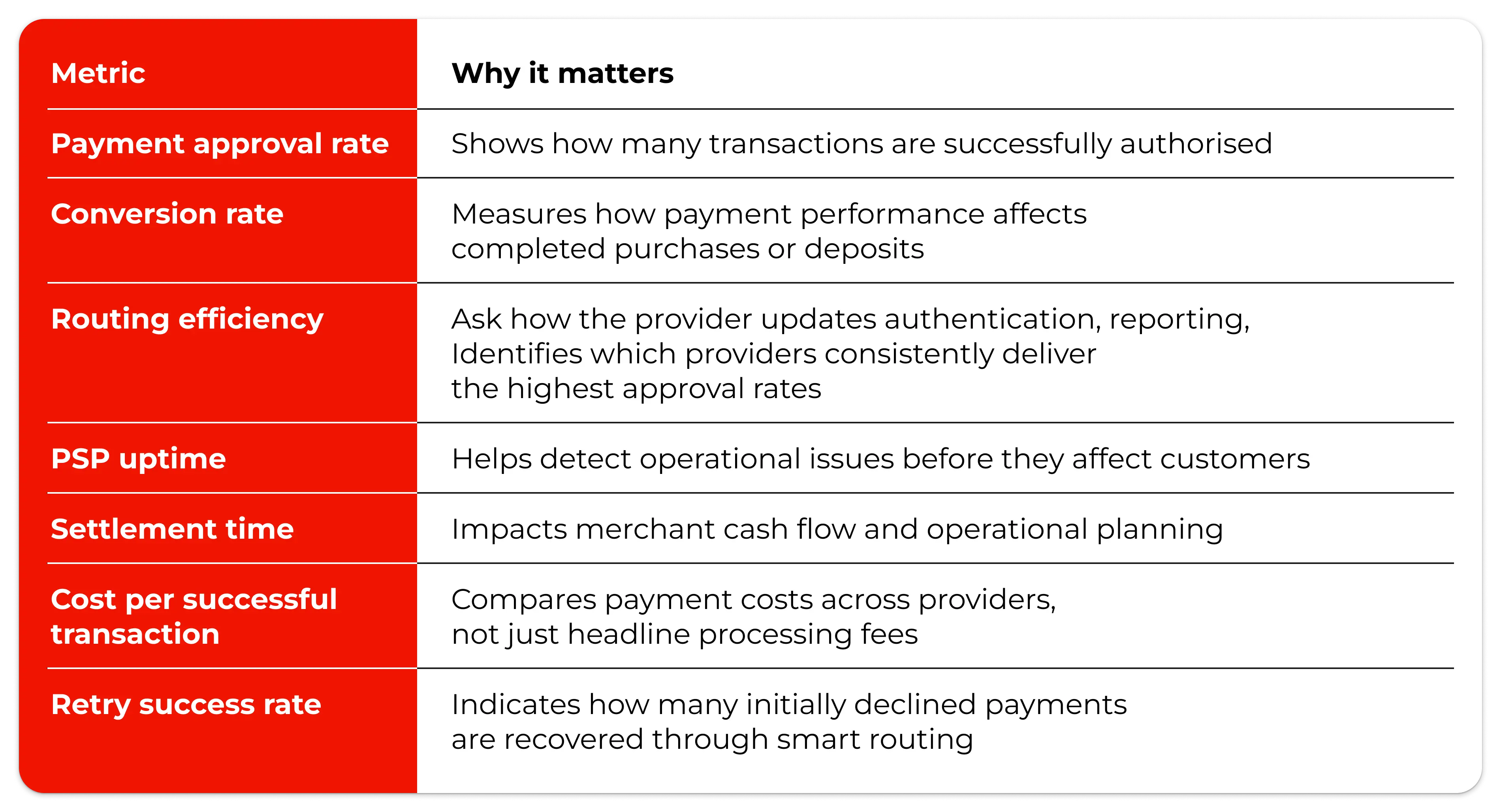
5 metrics that matter for payment orchestration
Implementing payment orchestration is relatively straightforward. Knowing whether it's delivering results takes a different set of metrics.
These are the numbers worth tracking first.
When does a High-Risk business need payment orchestration?
Not every merchant needs payment orchestration from day one. If you're processing a few hundred domestic transactions through a single provider, a straightforward setup may be enough.
The picture changes once your business starts expanding. More markets mean more payment methods and more variables that affect approval rates.
You should start thinking about payment orchestration if you:
- operate in multiple countries;
- work with more than one PSP or acquirer;
- see approval rates vary across markets;
- want to offer local payment methods;
- need a backup when a provider goes offline;
- spend heavily on customer acquisition and can't afford failed deposits.
Businesses in iGaming, Forex, and other emerging markets usually reach this point much sooner than traditional e-commerce. That's why payment infrastructure deserves the same attention as marketing, product, or customer acquisition. Better routing, local payment coverage, higher approval rates — all contribute to sustainable growth.
At SPAYZ.io, we've built our infrastructure specifically for merchants operating in complex payment environments across Africa, Asia, and the MENA. Through a single API, businesses gain access to 55+ local payment solutions, flexible routing, real-time payment monitoring, and the P2P Agent Dashboard, making it easier to scale without rebuilding their payment stack for every new market.
If you're reviewing your current payment setup or preparing to enter a new market, we'd be glad to discuss your payment flow and show how payment orchestration can support your growth. Contact SPAYZ.io’s manager.