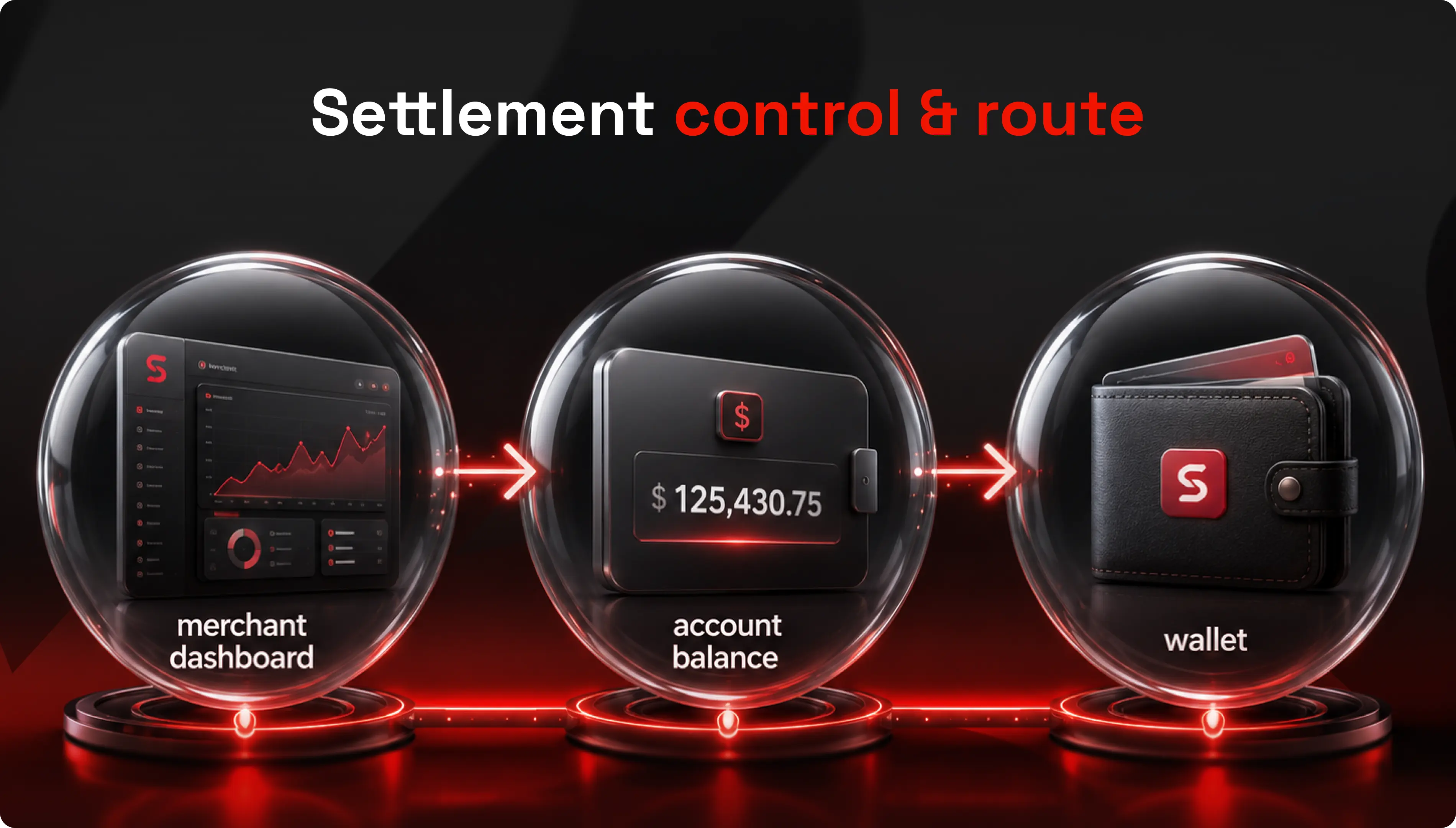
A payment is not really useful to a merchant the moment it is approved. It becomes useful when the funds are actually settled and available to use. That is why settlement speed has such a direct impact on merchant cash flow, especially for businesses managing active payment operations across multiple markets.
For many merchants, settlement still sounds like a technical back-end detail. In reality, it affects daily liquidity, internal planning, payout timing, and the confidence with which a business can make operational decisions. When the settlement cycle is slow or inconsistent, even healthy revenue can feel difficult to access in practice.
Settlement speed for processing
Settlement speed is the time between a successful transaction and the moment the merchant can actually use the money. In simple terms, it is the gap between “payment approved” and “funds available”.
That distinction matters because payment approval and payment settlement are not the same thing.
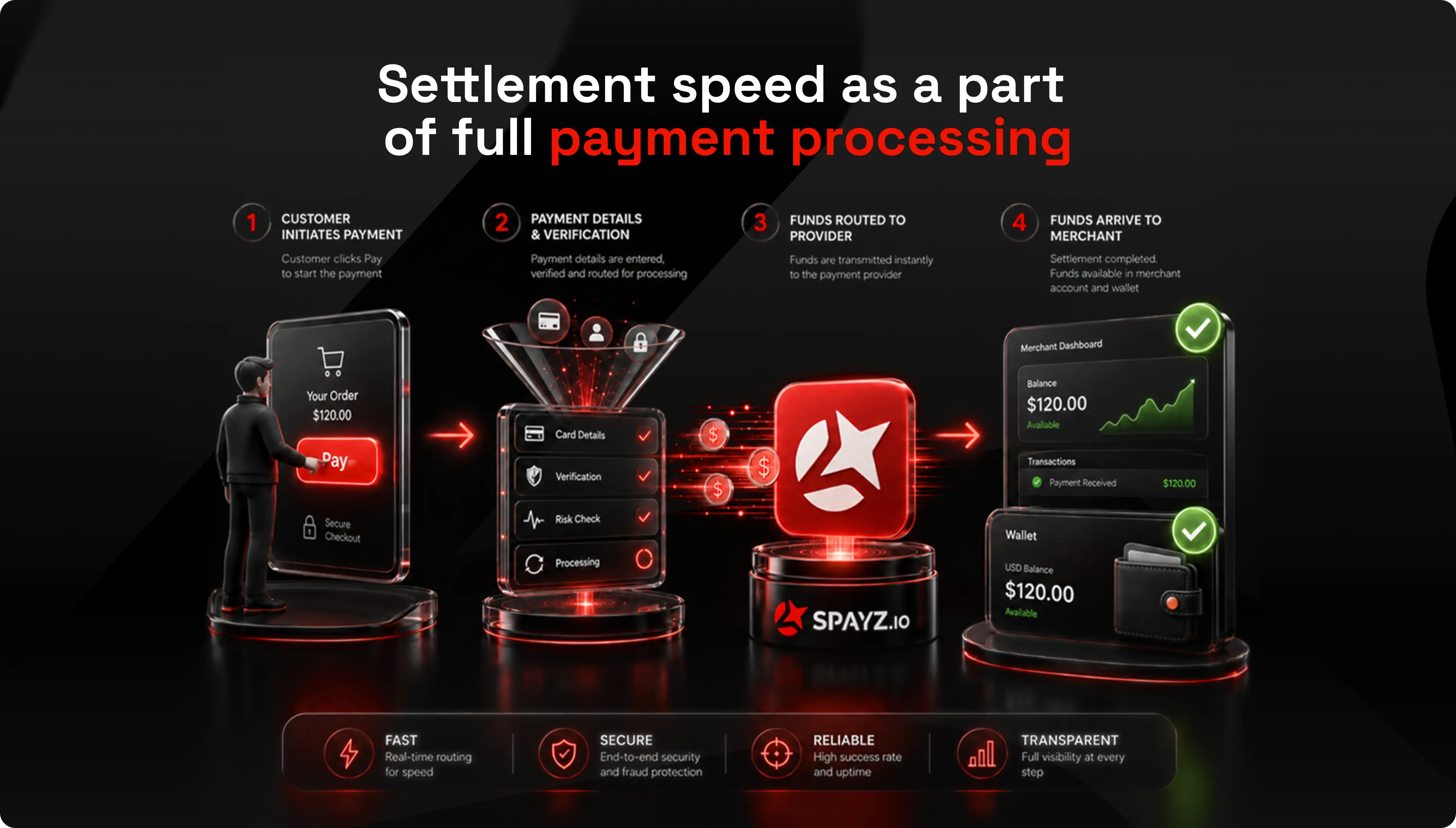
A customer may complete a payment in seconds, but the movement of funds in the background can still take longer depending on the payment method, provider setup, market conditions, and settlement model. Payee funds availability and settlement between payment service providers may be coupled in real time or decoupled through deferred settlement, which helps explain why not every fast-looking payment becomes usable cash at the same speed.
Why and how it affects cash flow
Merchant cash flow depends not only on revenue volume but also on timing. If money reaches the business quickly, teams can cover expenses, plan payouts, and keep operations moving without putting extra pressure on reserves.
When the settlement cycle stretches out, the effect is usually felt across the business:
- Working capital stays locked for longer.
- Finance teams need larger liquidity buffers.
- Supplier or partner payments become harder to time.
- Reconciliation takes more effort when release timing is inconsistent.
- Growth decisions may slow down because available cash lags behind processed volume.
This is one of the main reasons fast settlement matters so much for scaling merchants. It shortens the distance between revenue being generated and revenue becoming operationally useful.
The operational side of settlement
Settlement speed is not only a finance issue. It also affects payment operations, especially when a merchant manages multiple payment methods, corridors, or payout flows simultaneously.
As the point where processed volume becomes usable cash, settlement cycle length, reporting quality, and payout logic directly affect liquidity and reconciliation. That framing is important because merchants do not just need funds to arrive quickly. They also need to understand why a payout arrived at a certain time, what deductions were applied, and how that movement appears in reporting.
Why fast settlement is better
Fast settlement improves liquidity by giving merchants earlier access to money they have already earned. That makes a real difference in businesses where payment volume fluctuates daily, and delays can quickly turn into operational friction.
It also supports better decision-making. When funds settle quickly and predictably, teams can forecast more accurately, reduce uncertainty around available cash, and respond faster when volumes shift. World Bank materials on settlement models show that settlement design is closely tied to liquidity management and the broader safety and efficiency of payment systems, reinforcing why this matters at the merchant level, too.
Where USDT settlement fits
USDT settlement enters the conversation because some merchants seek faster or more flexible settlement structures in cross-border environments. In those cases, the appeal is usually practical rather than theoretical: quicker access to value, simpler movement between markets, and less delay between transaction acceptance and usable funds.
Still, USDT settlement should be explained carefully. It is not a universal fix for every cash flow issue, and it works best when it is part of a broader payment setup with clear reporting, strong operational control, and a settlement model the merchant actually understands.
Control matters as much as speed
A fast settlement cycle is valuable, but only if merchants can clearly see what is happening. Speed without visibility can still create confusion in finance and operations teams.
That is why mature payment infrastructure needs to combine fast settlement with clear reporting, reconciliation support, and real-time transaction visibility. For example, SPAYZ.io build its infrastructure around these operational needs through a single API integration, real-time monitoring, and P2P Agent Dashboard as an easy-to-use back office. All of this supports merchants who need to manage payment operations without unnecessary manual work.
What merchants should check
When reviewing a provider, merchants should look beyond approval rates and method coverage. Settlement terms deserve the same level of attention because they shape liquidity, planning, and the quality of operational control.
A useful checklist for merchants includes:
- Detailed settlement cycle by method or market
- Available speed of settlement
- Type of funds: released on a fixed schedule or a variable
- Format of reporting for balance and PayOuts
- Type of support for payment operations
These questions help reveal whether a payment provider is offering real operational value or simply promising speed at the headline level.
SPAYZ.io is a solution for merchants
If you want to shorten your settlement cycle and get access to a P2P Agent Dashboard, connect with our manager.