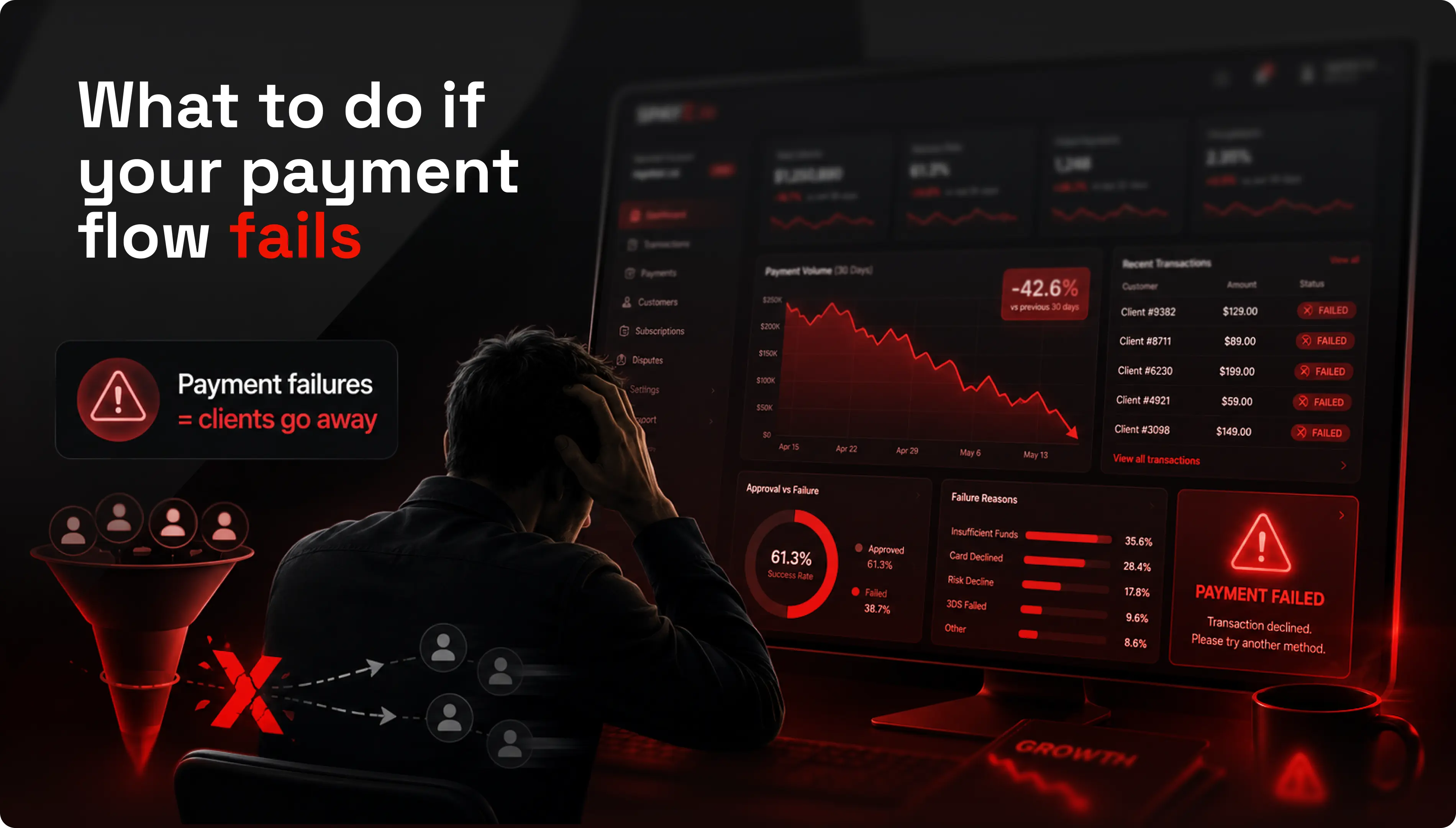
Payment failures in High-Risk traffic offer a significant opportunity for improvement. These challenges can lead to lost revenue and lower conversion rates, but they can be addressed with the right strategies. In sectors like Forex and iGaming, payment success depends on understanding local habits, issuer behaviours, and compliance needs rather than relying on a single provider.
Payments may fail for several reasons, such as unsuitable payment methods, rigid routing, or fraud controls that mistakenly block legitimate users. Merchants in high-growth market payments should adopt smarter strategies, including advanced routing and better visibility into transaction flows, to turn these challenges into opportunities for growth.
Why payment failures happen in payments
Traffic in emerging markets is usually subject to tighter scrutiny than standard e-commerce traffic. Banks, local providers, and payment partners often apply stricter approval logic to verticals with elevated fraud exposure, chargeback sensitivity, non-standard user behaviour, or more complex regulatory expectations.
As a result, even technically valid transactions can fail when the payment setup is misaligned with the actual transaction context.
In practice, the most common reasons behind payment failures are operational rather than purely technical.
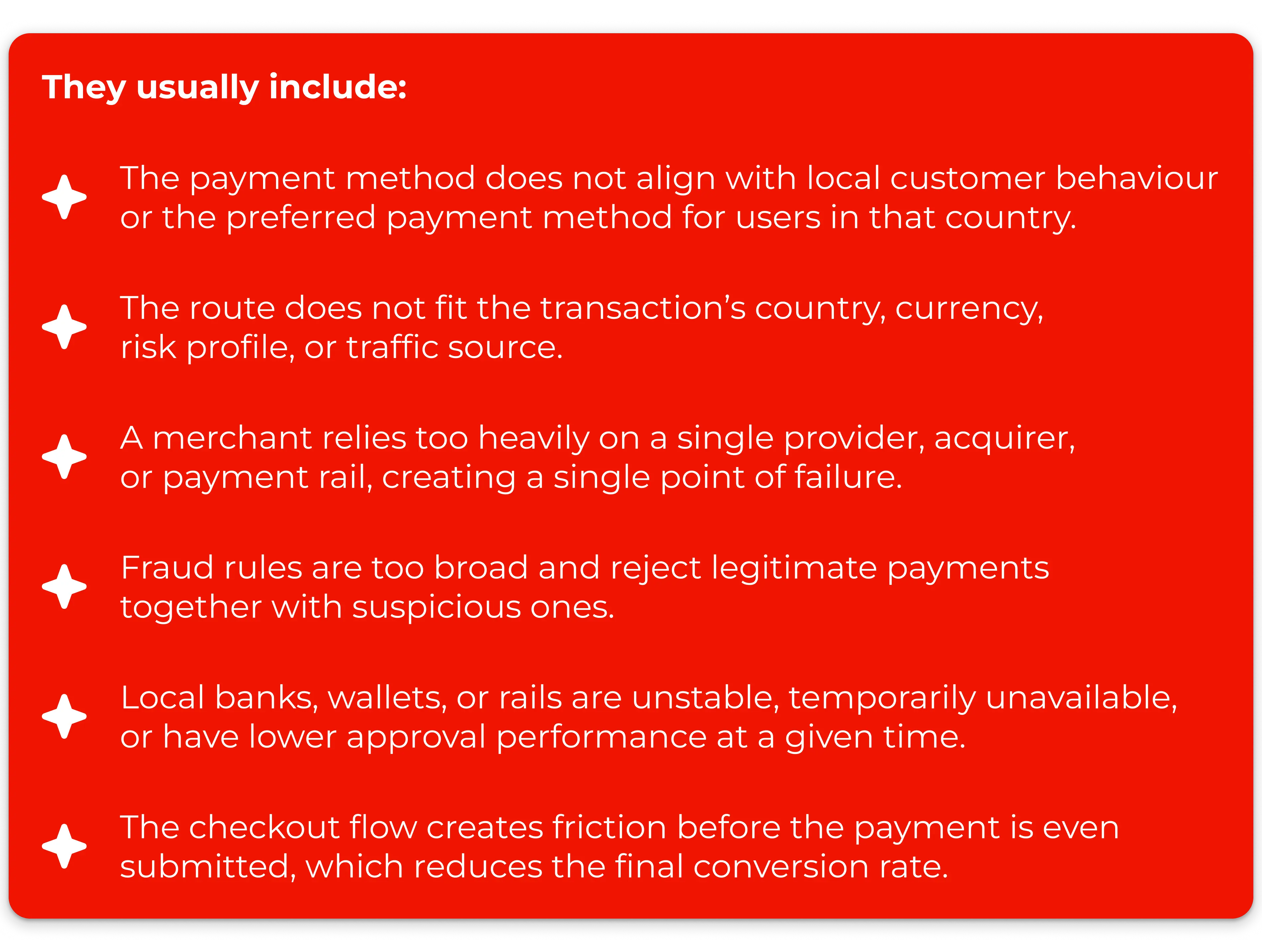
This is especially relevant across diverse markets. In Africa, Asia, and the MENA region, payment success often depends on local rails, m,obile money, bank transfers, ewallets, and market-specific payment behaviour rather than on a one-size-fits-all checkout model. A setup that works in one GEO can underperform badly in another, even with the same offer and traffic quality.
The business impact of failed payments
A failed payment is not only a missed transaction. It can affect the full customer journey, especially in emerging verticals where the first deposit, repeat deposit, or payout experience often shapes long-term retention. If a user cannot complete the first transaction quickly and with a familiar local method, the business may lose that customer before the relationship even begins.
Merchants usually see:
- Lower approval rates and weaker first-time deposit performance.
- More abandoned payment attempts and lower checkout conversion.
- Higher support volume because users ask why the payment did not go through.
- More manual work for operations teams trying to identify whether the problem came from the issuer, the route, the method, or the provider.
- Lower lifetime value because repeat transactions are less likely after a poor first payment experience.
What does routing mean in practice
Routing is the logic that decides where a transaction should go. It determines which provider, payment rail, method, or processing path should handle a payment first based on the transaction profile. In a stronger setup, routing is not static. It takes into account factors such as country, currency, method availability, traffic type, risk profile, and route-level performance.
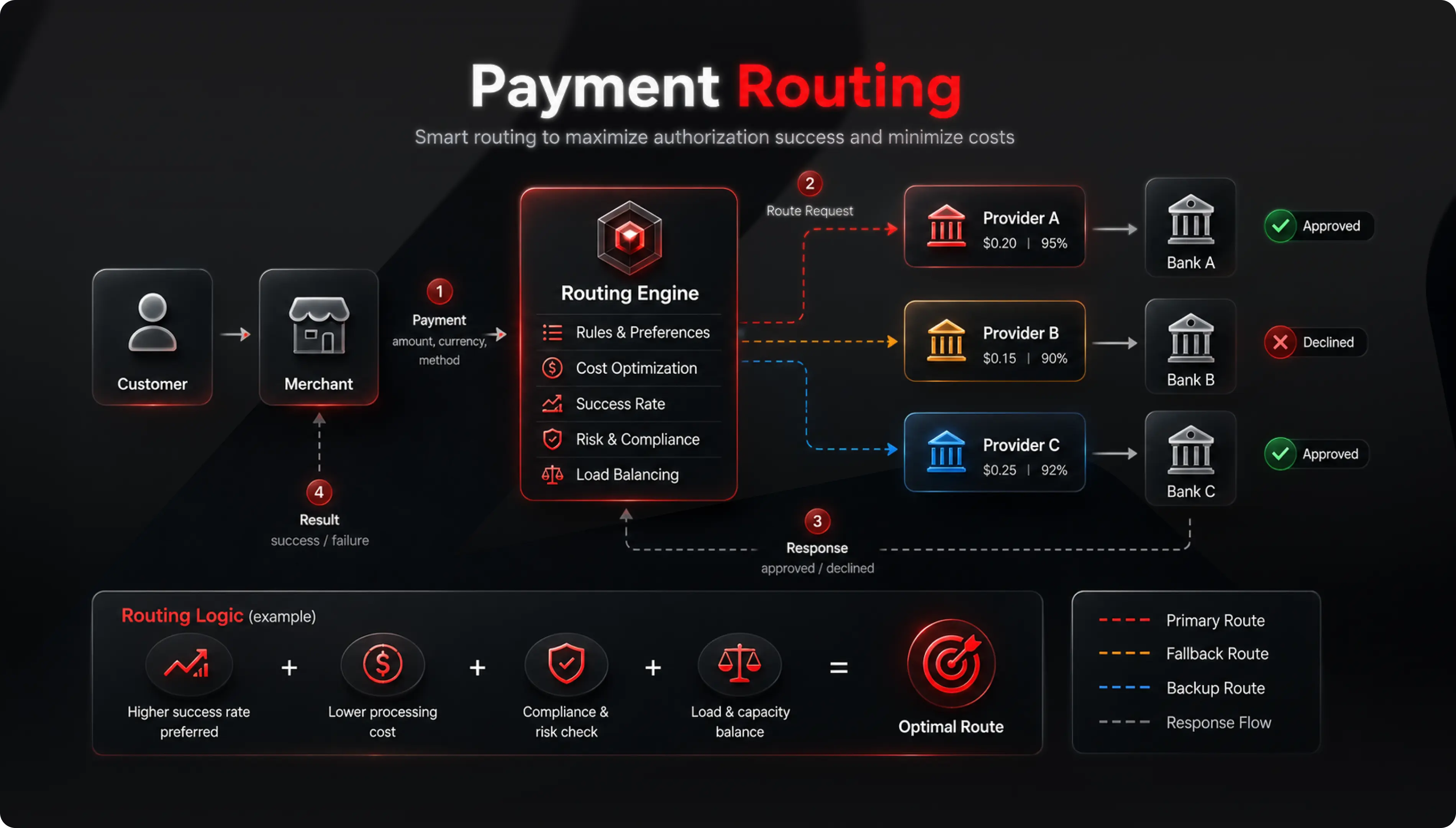
A simple example makes this clearer
A user in a mobile-first market may respond better to a local wallet or QR-based flow than to a generic card-like path. If the merchant offers the wrong method first, the payment may fail, or the user may abandon the process before completion.
Good routing reduces that mismatch by sending the transaction into the path with the highest chance of success for that specific payment context.
Why does cascading improve payment performance
Cascading is the fallback logic used when the first route fails. Instead of ending the payment attempt immediately, the system can retry the transaction on a second path under controlled rules. Route performance can shift quickly depending on local bank behaviour, corridor availability, method stability, and provider-specific rules.
The important point is that effective cascading is not the same as aggressive retrying.
A good setup should determine which failures are worth retrying, define the next route, and prevent duplicate charges or uncontrolled loops. In other words, cascading should protect conversion without creating more friction or compliance risk.
When routing and cascading work together, they solve two different problems at once. Smart routing improves the first attempt by choosing the strongest entry point, while cascading helps recover transactions that fail due to route-level or temporary issues. That combination is often far more effective than relying on one route and accepting every decline as final.
Static routing vs smarter routing
The difference between a weak setup and a stronger one often comes down to flexibility and visibility.
Static routing sends payments through the same path every time, even when route performance changes or the transaction context clearly points to a better option.
Smarter routing adapts the payment flow to the real conditions of the payment.
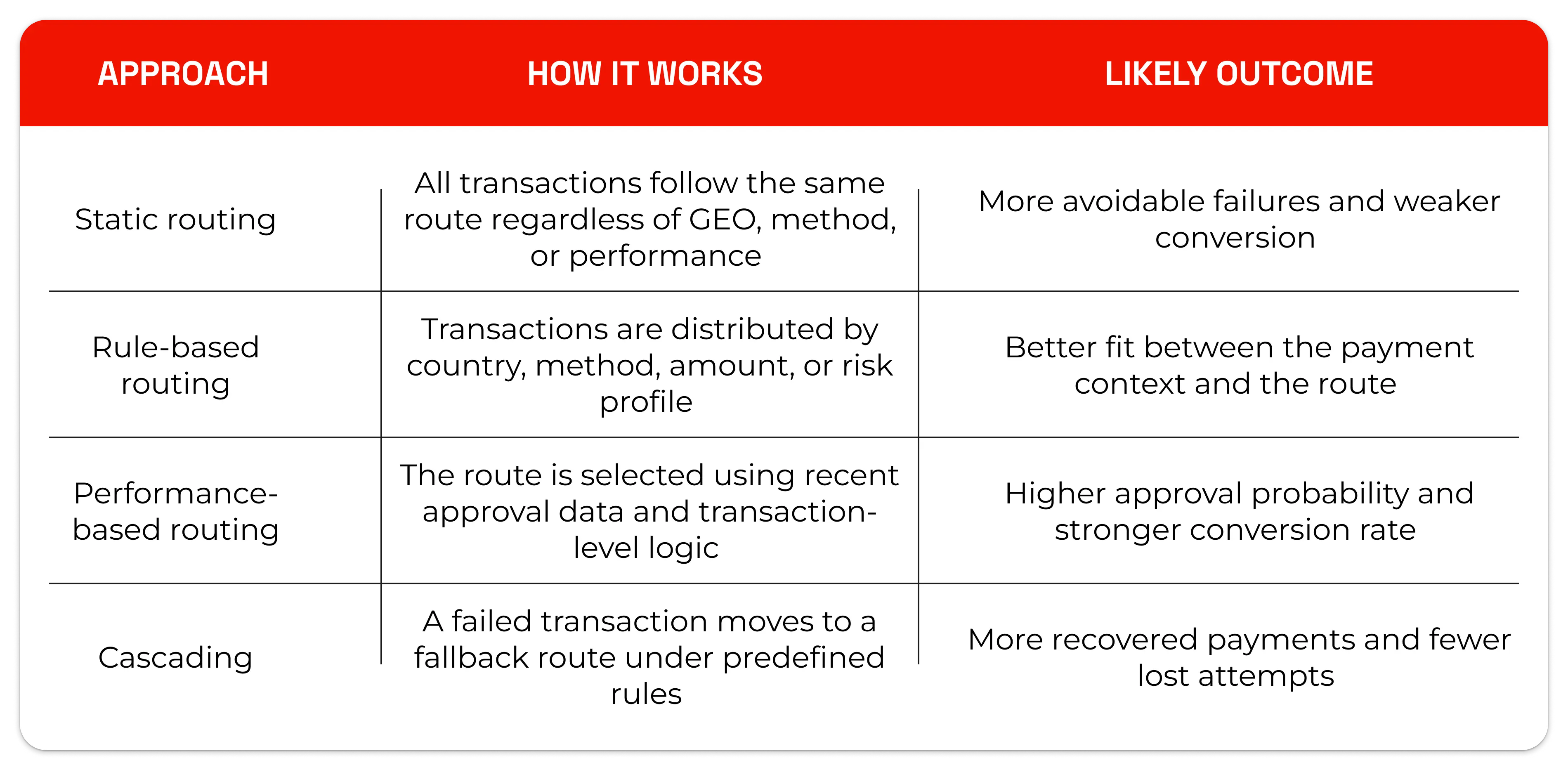
In most cases, the best result comes from combining local method coverage, flexible routing logic, controlled cascading, and clear visibility into where and why declines happen.
Practical ways to reduce payment failures
Merchants do not usually reduce payment failures with a single fix. Improvement comes from several small operational decisions that strengthen the whole payment flow.
The most practical actions include:
- Match payment methods to each market instead of using the same checkout logic across all GEOs.
- Prioritise local rails where local payment behaviour clearly supports them, especially in mobile-first and bank-transfer-led markets.
- Use flexible routing logic rather than relying on a single provider or one fixed path.
- Add controlled cascading for retriable failures so that good transactions are not lost after one unsuccessful attempt.
- Monitor approval rates by country, payment method, and route rather than relying on a single blended KPI.
- Review decline reasons regularly to separate fraud pressure, issuer behaviour, local infrastructure issues, and route-level underperformance.
- Keep checkout friction low so users can complete the payment without unnecessary confusion or extra steps.
- Balance fraud prevention with conversion goals, because over-blocking legitimate users can be as damaging as under-filtering bad traffic.
This approach is especially important for first deposits and repeat transactions. A market may need different payment logic for acquisition traffic, returning users, and payout flows, so a more granular strategy usually produces better performance than a single universal setup.
What payment teams should monitor
Better routing starts with better visibility. If teams can’t see where transactions fail, they can’t improve approval performance in a structured way. Real payment optimisation depends on closely monitoring route-level data and reacting before a local issue turns into a large conversion leak.
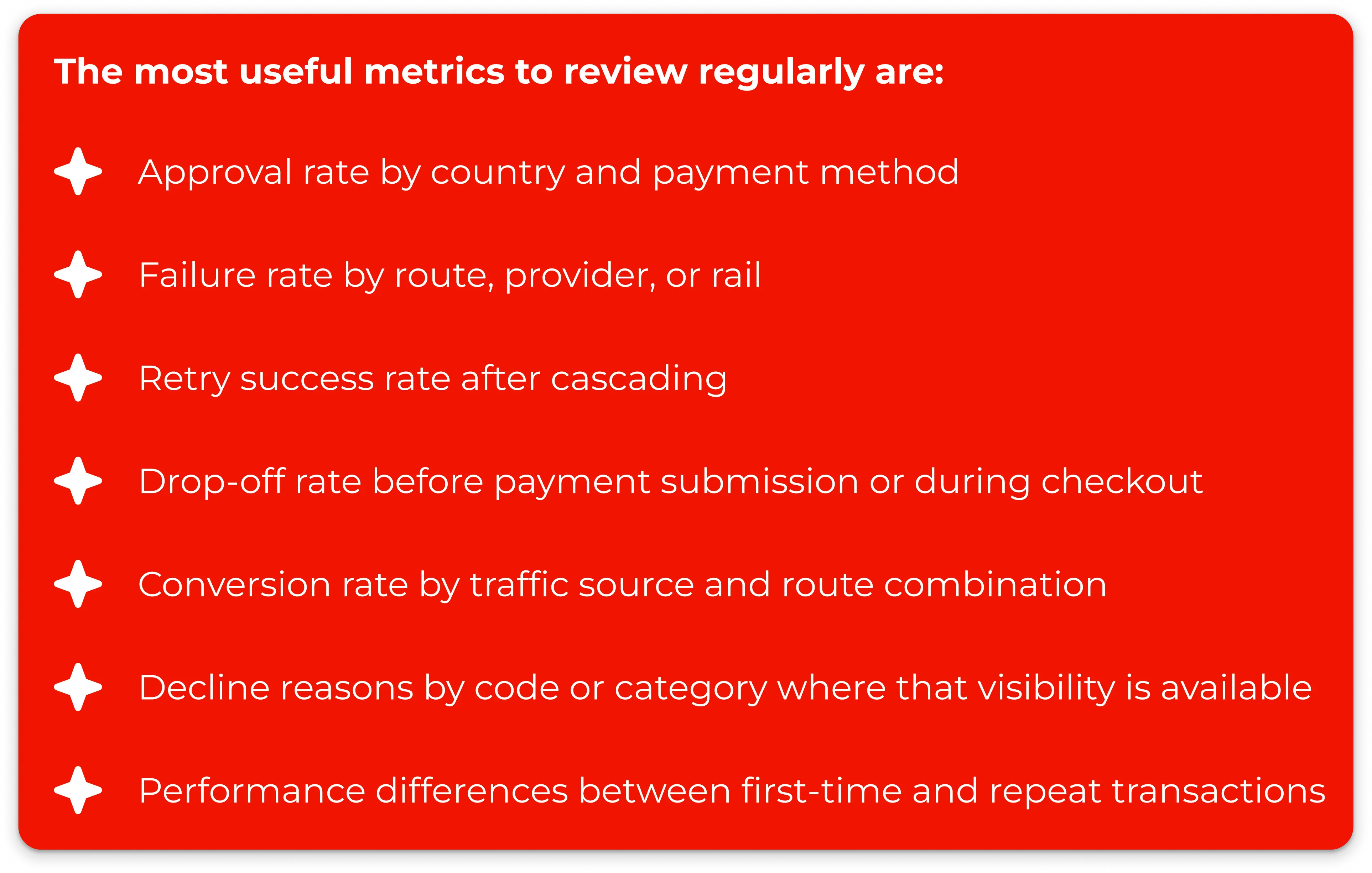
These indicators help teams identify whether the real issue is local method fit, provider performance, risk filtering, route quality, or operational blind spots. Without that visibility, merchants often keep adjusting the wrong part of the payment stack.
How SPAYZ.io supports stronger payment performance
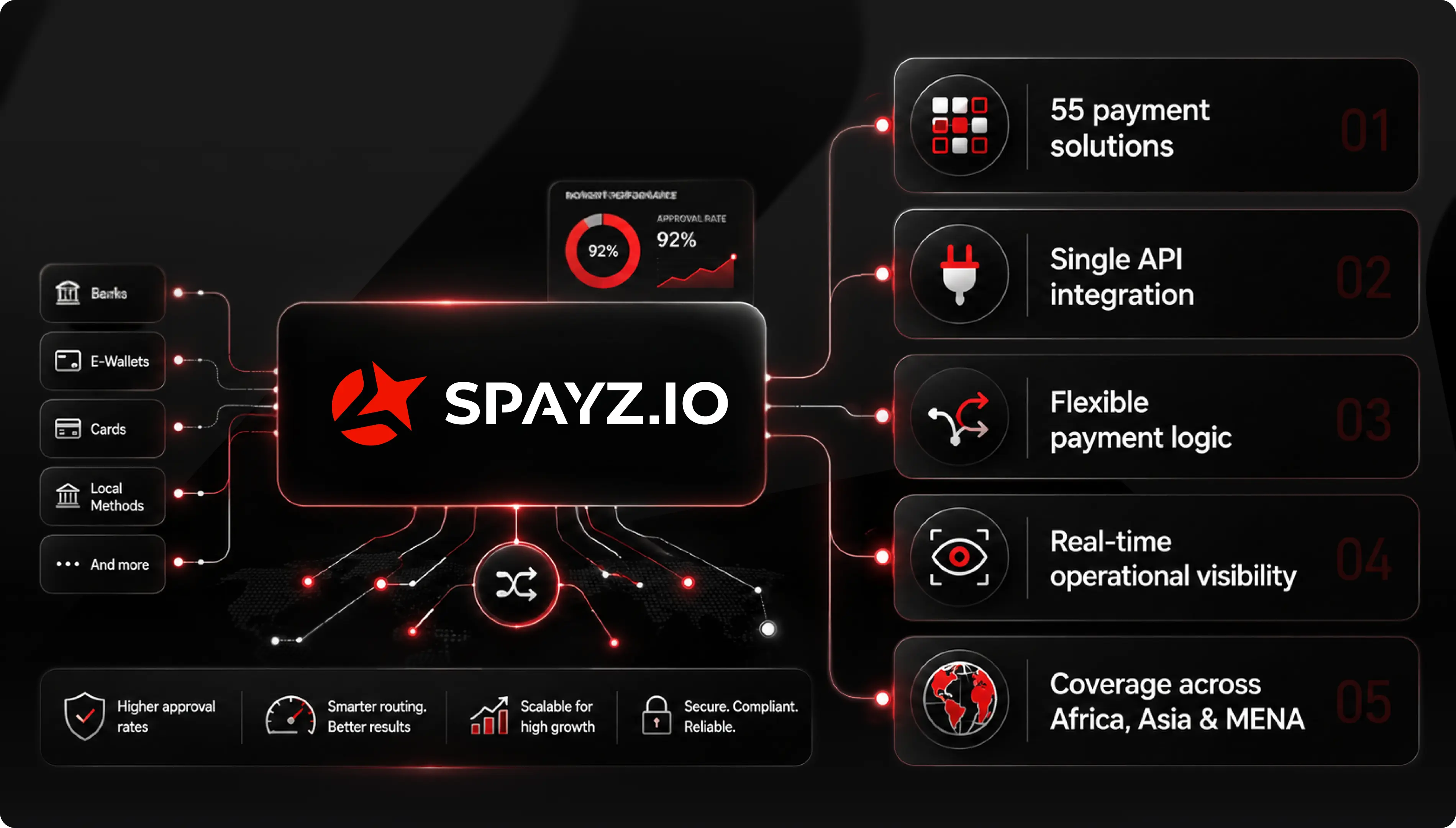
For Forex, iGaming, and merchants from other verticals, the goal is to connect more payment methods and to create a payment flow that fits the market, remains operationally clear, and adapts as route performance changes. SPAYZ.io is a payment infrastructure provider for high-growth businesses across Africa, Asia, and the MENA region, offering 55 payment solutions, a single API integration, flexible payment logic, and real-time operational visibility.
Payment failures in High-Risk traffic will never disappear completely. But they can be reduced significantly when merchants stop treating declines as isolated events and start improving the underlying payment logic.
Let’s reduce your payment failures with SPAYZ.io! Contact our manager to start.