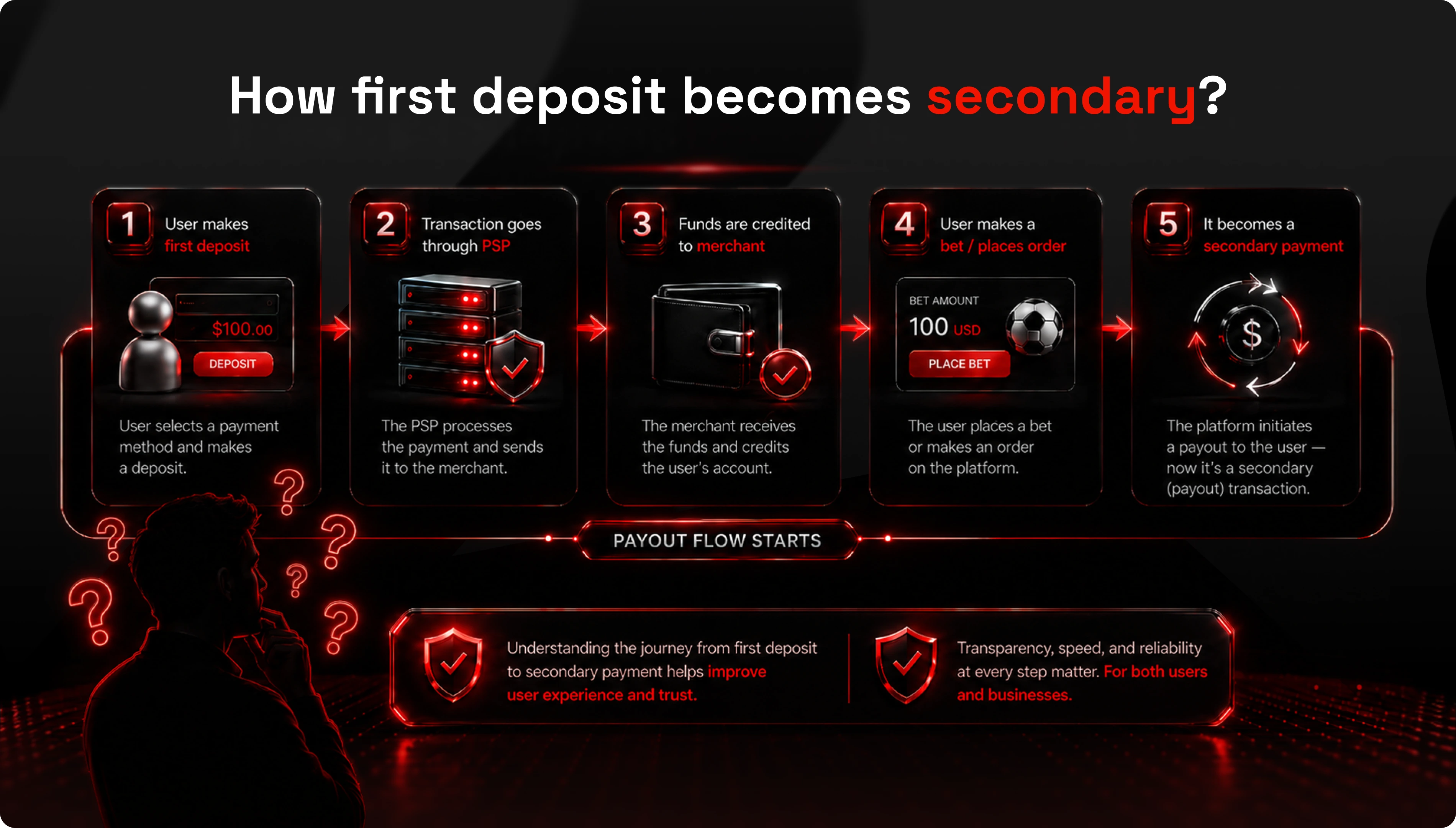
Product and marketing teams spend months improving acquisition funnels with one goal — getting a new player to make a first deposit.
For iGaming operators, that first payment is the point where acquisition costs begin to turn into revenue. Every click, affiliate commission, and bonus campaign depends on whether the player actually completes the transaction.
That is why payment processing deserves more attention than it usually gets. Operators often optimise everything leading to the checkout while treating payments as backend infrastructure. The payment provider becomes part of the conversion funnel the moment the player clicks "Deposit".
A failed transaction or an unfamiliar payment method can undo everything that happened before it. The player rarely compares bonuses at that stage, but they can compare experiences.
How iGaming operators motivate players to make first deposit
Casino and betting brands have spent years refining the psychology behind the first-time deposit (FTD). Most acquisition campaigns rely on a familiar set of mechanics designed to reduce hesitation and create urgency.
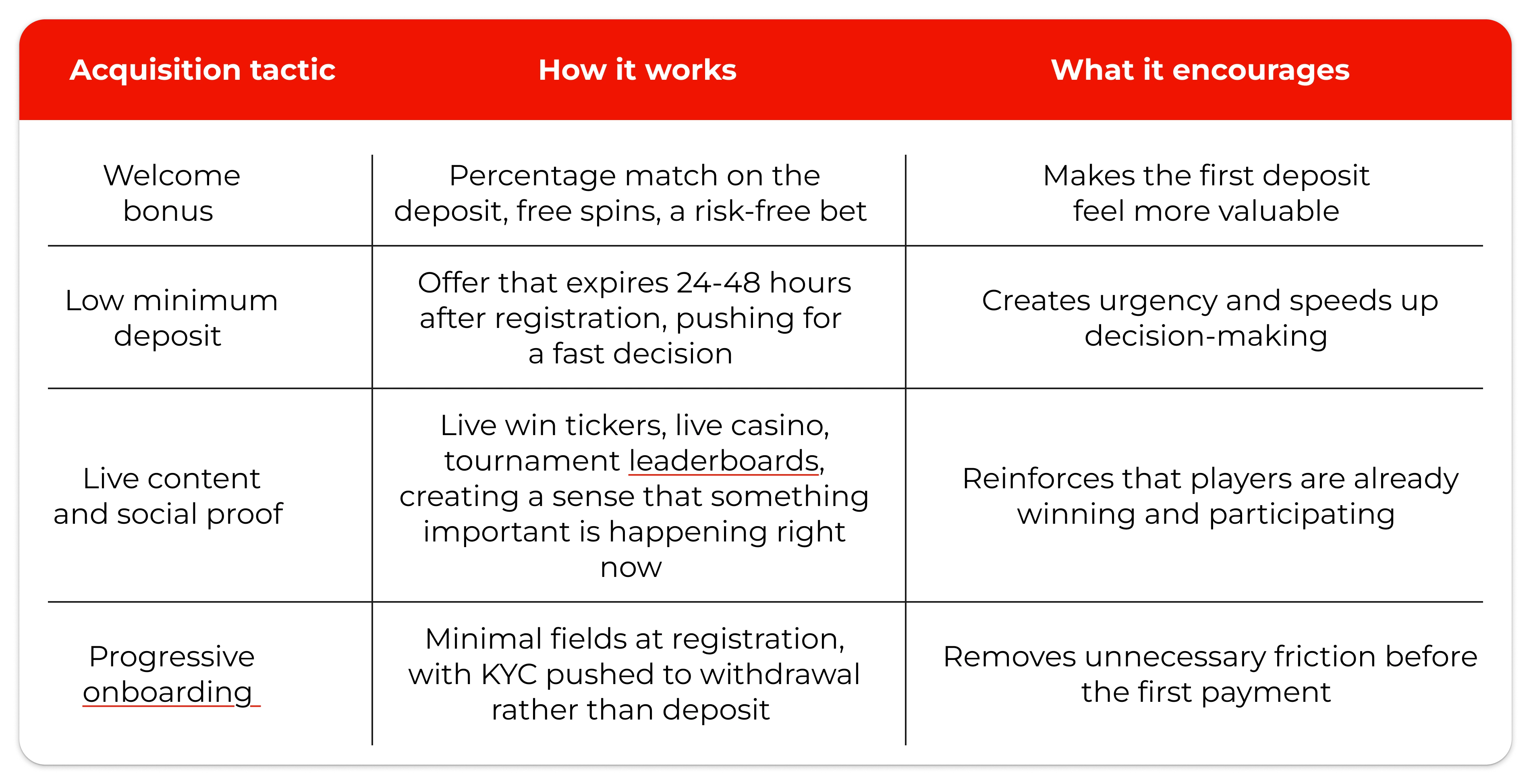
Some platforms offer more. For example, promotional campaigns may offer deposit insurance, where part of the player's first deposit is protected if specific wagering conditions are met. Similar mechanics have been used by major operators in partnership with gaming providers, including promotions that protect up to 70% of an initial deposit.
What it does:
- from a marketing perspective — lower the psychological barrier to paying
- from a payments perspective — the cost of every failed transaction increases
If the player reaches the checkout, activates the promotion and then can’t complete the payment, the operator loses much more than a single transaction. The acquisition budget has already been spent, and the promotional campaign has already done its job, but the opportunity to convert that player into a customer disappears at the final step.
Resume: the fewer interruptions between curiosity and payment, the higher the FTD conversion rate.
The weakest part of the funnel
Marketing teams can optimise almost every stage of acquisition, such as improving advertising performance or simplifying registration. But they can’t directly control the payment itself.
Even if a player reaches the checkout ready to deposit with a welcome offer, and a countdown timer is running, something in this chain can break.
Common payment failures include:
- the expected local payment method is unavailable;
- a bank declines the transaction because of gambling-related MCC restrictions;
- the checkout redirects to an external payment page that takes too long to load;
- the payment is declined without explanation;
- retrying requires the player to enter all payment details again.
When the payment process feels complicated, unreliable, or inconsistent, confidence in operator drops immediately. For players, it doesn’t matter whether the problem came from — the payment gateway or the payment service provider (PSP) — they leave.
Why first-time deposit conversion is actually a payments metric
An iGaming brand's marketing funnel is only as strong as the payment stack behind it. Three factors determine whether player motivation actually converts into a deposit.
Factor 1. Payment method coverage
A player from Southeast Asia, Africa, or Latin America expects to see a method familiar to their market: a local eWallet, bank transfer, mobile payment — not just Visa/Mastercard. A missing relevant method at checkout closes the funnel before the bonus even gets a chance to work.
Factor 2. Approval rate
Even when the right method is available, a share of transactions still get declined by issuing banks due to the High-Risk gambling category. A 10-15% difference in approval rate between providers translates directly into a difference in the number of completed FTDs from the same ad budget.
Factor 3. Time to credit
A deposit credited within minutes rather than instantly already loses part of the audience at the waiting stage — especially players who arrived through an impulsive, emotionally driven trigger, like a countdown bonus or a live bet.
First-time and repeat deposit payment strategies
From a payment processing perspective, first and repeat deposits have different transaction logic, because they solve different business problems.
The first successful deposit marks a shift in both player behaviour and payment processing.
Before the first transaction, marketing and product teams focus on converting new visitors into depositing players. Marketing drives acquisition, traffic quality, and customer acquisition costs, while product teams focus on onboarding, registration flows, and the first-deposit experience. Both functions ultimately share responsibility for long-term player value because acquisition costs only make sense when players continue to deposit over time.
Once the first payment succeeds, the priorities change. The objective is no longer to convince the player to deposit for the first time, but to make every future deposit as simple and reliable as possible.
From a payment perspective, this is also the point where primary and secondary transactions begin to differ.
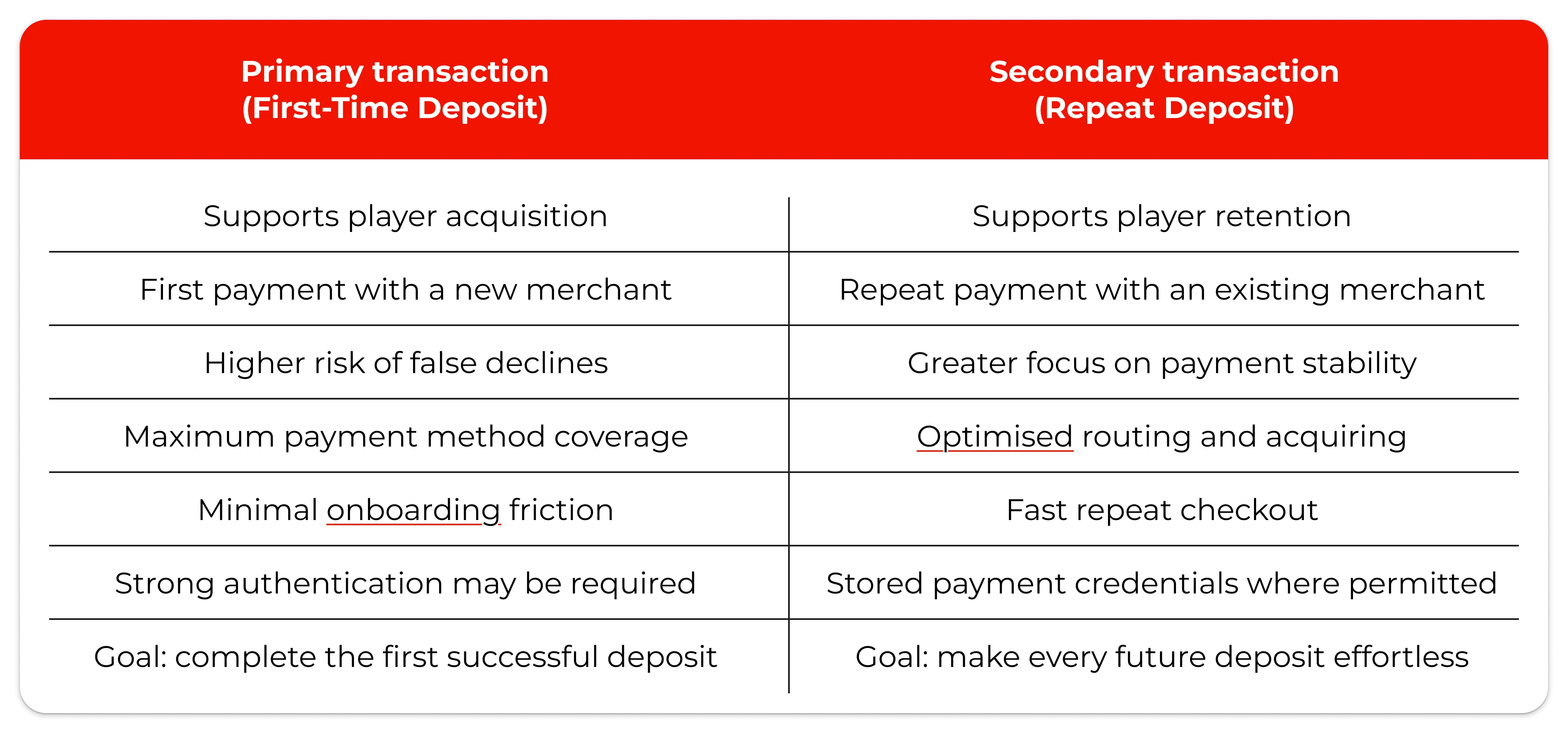
A primary transaction is the first successful payment between a player's card or wallet and a particular operator. Banks evaluate these transactions more cautiously because there is no payment history for that merchant. False declines, additional authentication, or extra verification are more common at this stage.
A secondary transaction is any subsequent payment using the same payment credentials with the same operator. Previous transaction history can improve approval rates, but repeat payments introduce different operational risks, including recurring payment disputes, chargebacks, and routing decisions that often require different acquiring relationships or MIDs.
And that's why payment priorities change immediately after the first successful deposit.
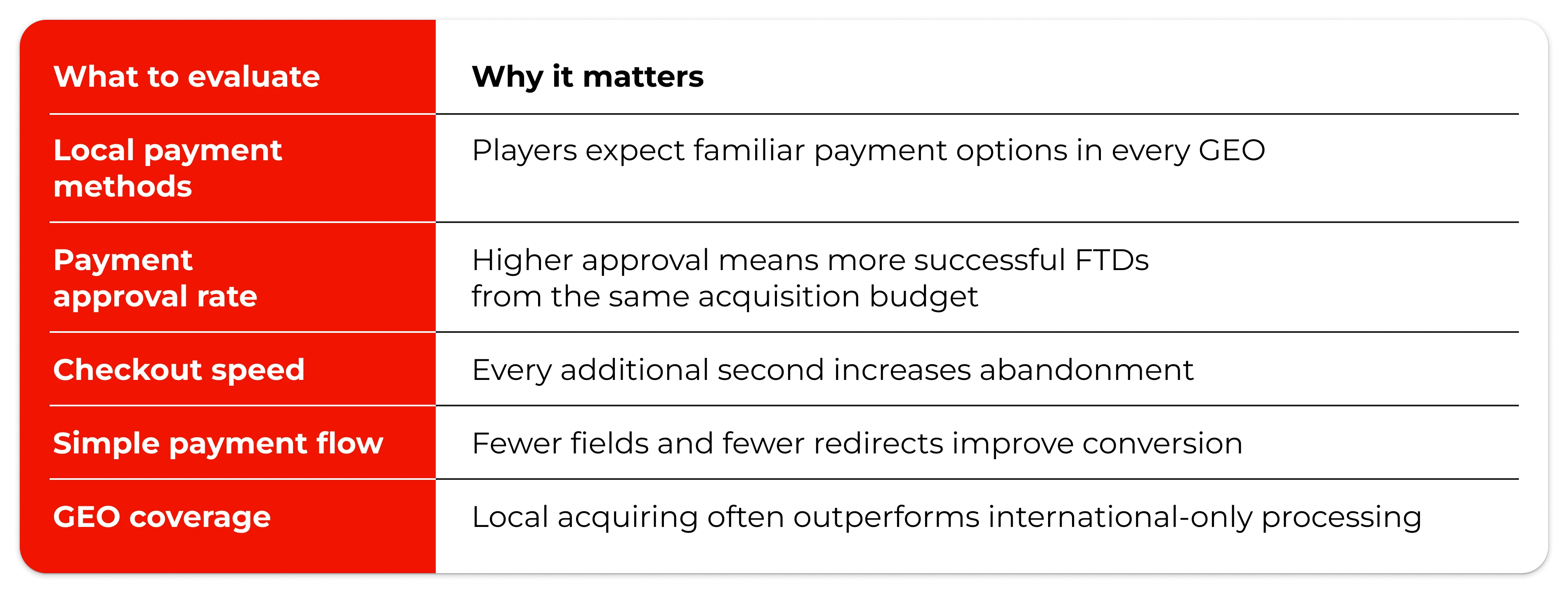
For primary transactions, operators need broad payment method coverage, a short checkout flow and consistently high payment approval rates. Every additional step increases the risk of losing a new player before they complete their first deposit.
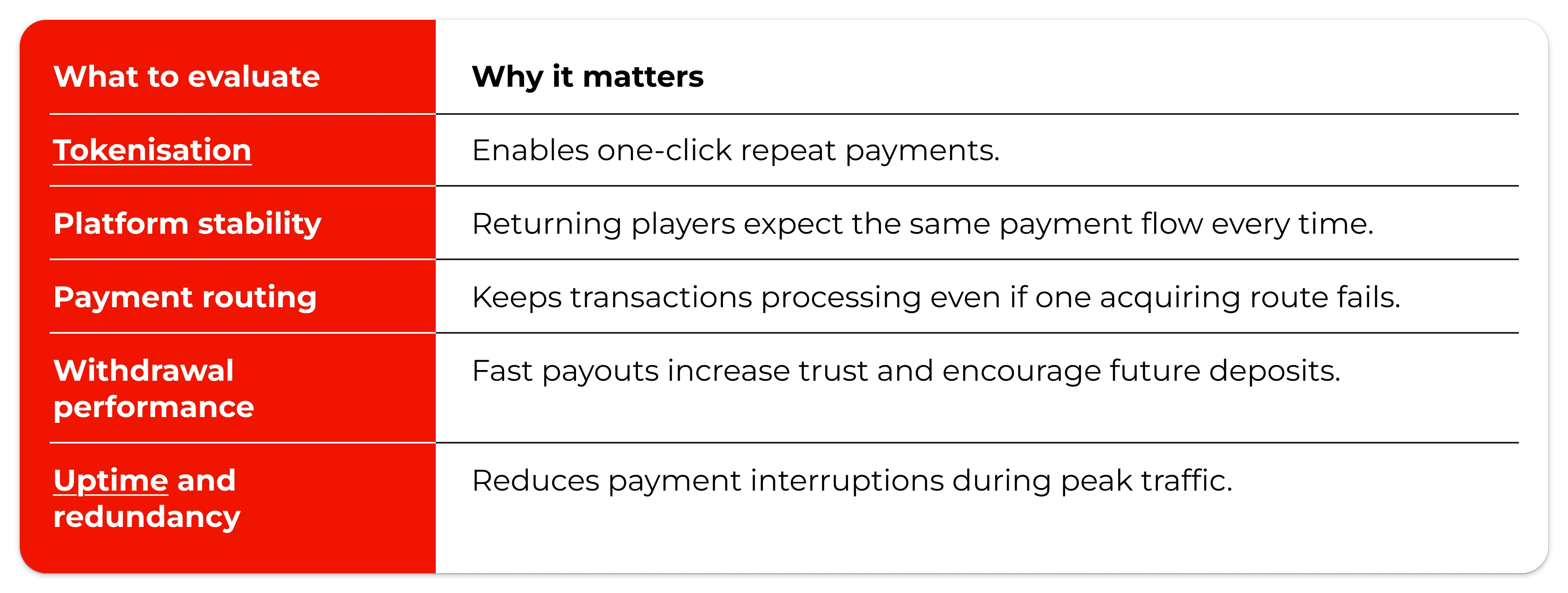
Secondary transactions have a different objective. Players already know the operator and have decided to return. At this stage, payment performance depends less on payment choice and more on routing quality, transaction stability, fast authorisation and frictionless repeat payments.
How to choose a payment provider
For iGaming operators, a payment provider is no longer just part of the backend infrastructure. It directly affects acquisition efficiency, conversion, retention, and, ultimately, revenue.
A payment service provider focused exclusively on expanding payment method coverage may improve acquisition while creating friction later if repeat payments become unreliable.
Likewise, a provider with excellent tokenisation but weak local coverage may retain existing players while limiting growth in new markets.
The strongest iGaming PSPs support both objectives:
- helping players complete their first deposit with minimal friction;
- making every payment afterwards feel even easier than the first one.
What to evaluate before choosing a payment provider
For first-time (primary) deposits
For repeat (secondary) deposits
Marketing and payments should be measured together
Marketing teams often monitor metrics such as:
- Cost per Acquisition (CPA)
- Registration conversion
- Cost per FTD
- Return on Ad Spend (ROAS)
Payments teams usually focus on different indicators:
- Payment approval rate
- Decline rate
- Settlement performance
- Processing uptime
- Chargebacks
These metrics describe the same funnel. A campaign may generate excellent acquisition numbers, but if payment acceptance drops by several percentage points, overall profitability falls with it.
This is why many mature operators no longer evaluate marketing and payments separately, but optimise both as an ecosystem and build payment orchestration.
What you will have in the end
The first deposit doesn't begin much earlier than a player sees a welcome bonus. It begins with marketing features that show the best-of-provider operational system: simplicity, speed, local payment options, bonuses.
For operators competing in regulated and High-Risk payments, small improvements in payment approval rates, payment acceptance, checkout speed, and local payment methods often deliver a greater commercial impact than another creative refresh or another promotional campaign.
Choosing the right iGaming PSP is about finding a partner that can improve first-time deposit conversion, support repeat deposits, and help turn marketing investment into long-term customer value.
SPAYZ.io can help build payment infrastructure for your iGaming business, solving issues with first and subsequent deposits. Contact our manager to explore all features and find the best decision.