For Forex brokers and iGaming operators working with local P2P payment agents, confirming a payment is only part of the process. Each transaction also needs to be matched against the merchant's records, reflected in the correct balance and included in commission calculations. When an agent reports a completed deposit but the merchant's system still shows it as pending, finance teams have to establish what actually happened. That becomes considerably harder when transaction details are spread across spreadsheets, payment reports and chat conversations.
As the number of agents and transactions grows, these discrepancies become more difficult to track. Inconsistent payment statuses, duplicate entries and unclear commission rules can lead to incorrect balances, disputed fees and delays in settlement reporting. Resolving them manually takes time, particularly when teams have to check the same records more than once.
Reliable P2P agent commission management requires a clear connection between payment records, commission calculations and settlement data. Understanding where these records fall out of sync, and how to reconcile them consistently, helps merchants reduce errors and maintain control over their agent networks.
Key takeaways
- Accurate agent commissions depend on consistent transaction statuses and agreed calculation rules.
- Separate spreadsheets and manual confirmations make it easier to miss transactions or count them twice.
- Unique transaction references, exception tracking and settlement checks help identify discrepancies before they accumulate.
- A centralised dashboard can automate routine calculations and give merchants a clearer view of agent activity.
What is P2P Agent reconciliation?
P2P agent reconciliation is the process of comparing transactions handled by local payment agents with a merchant's payment, commission, and settlement records. It helps merchants confirm which payments were completed, how much each agent earned, and whether balances match the underlying transactions. The process also helps identify discrepancies that need further investigation.
Here, P2P agents are local participants in a merchant's payment infrastructure. They handle transactions under an agreed payin or payout arrangement. This is different from ordinary person-to-person transfers or cryptocurrency P2P trading.
For merchants using agent networks, reconciliation is part of everyday P2P payment processing. A customer deposit needs to appear in the merchant's records, be linked to the right agent and follow the agreed commission rules.
How transactions, agent balances, and commissions are connected
Three sets of records need to match:
- Agent operation record: the payment handled or reported by the agent, including its amount, reference and status.
- Merchant payment record: the corresponding payin or payout transaction in the merchant's system.
- Settlement evidence: records showing how the payment was included in settlement.
These records describe different stages of the same payment.
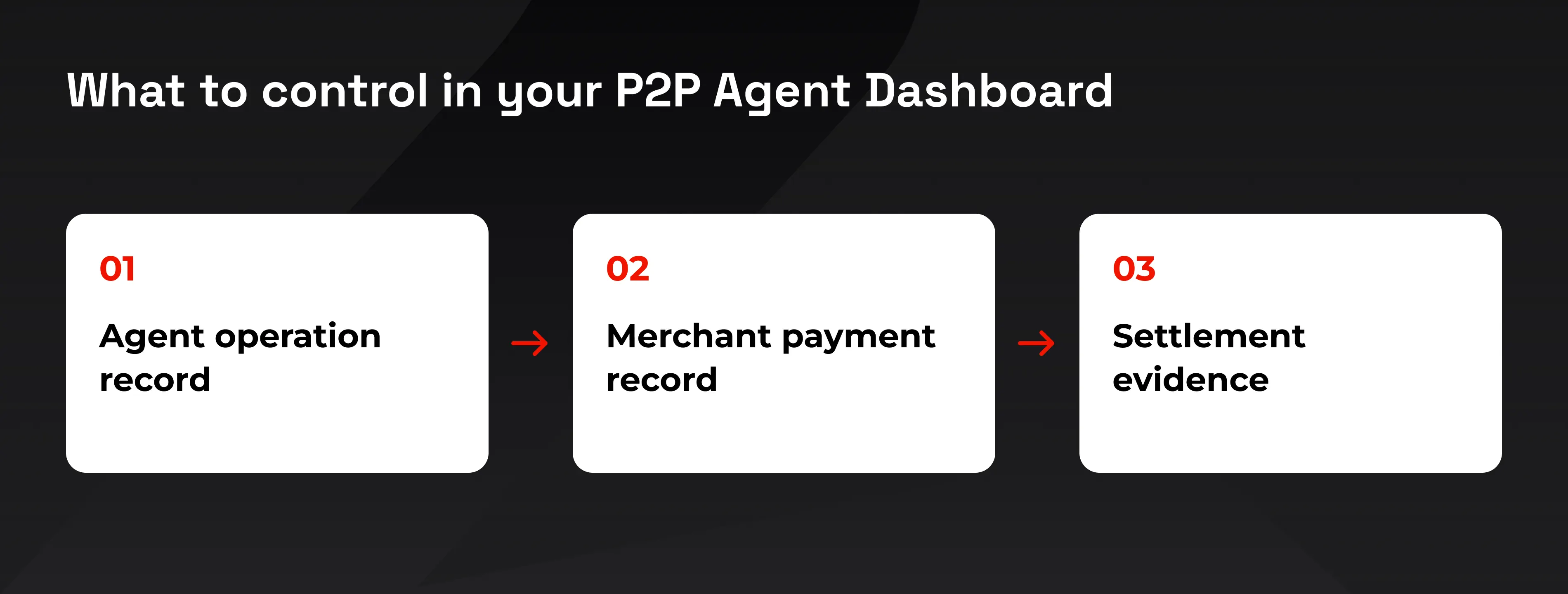
A confirmed transaction may qualify for commission, but that doesn't necessarily mean the funds have settled. Likewise, an agent's earned commission is separate from the amount the merchant expects to receive.
Keeping these figures separate is essential for agent balance management. When something doesn't match, the finance team needs to know whether the problem concerns the payment, the commission or the settlement.
Common P2P payment reconciliation errors
Most payment reconciliation errors come from incomplete records, inconsistent statuses or incorrect commission calculations. The difficulty grows when merchants work with several agents, each handling multiple transactions throughout the day.
Missing transactions and inconsistent payment confirmations
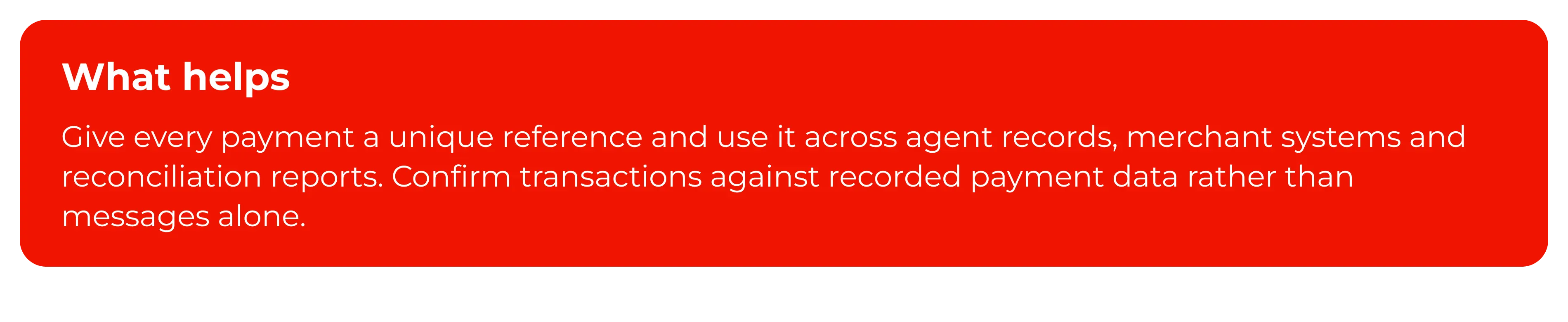
This problem can occur when a payment appears in the agent's records but not in the merchant's system. Or the agent reports it as completed while the merchant still sees a pending transaction. Sometimes the payment is there, but the records use different references. Without a shared transaction ID, finance teams have to manually compare amounts, timestamps, and payment details. This becomes unreliable when several customers make payments of the same amount.
Chat messages and screenshots create another problem. They may help investigate a payment, but they don't replace a recorded transaction status.
Incorrect agent commission calculations
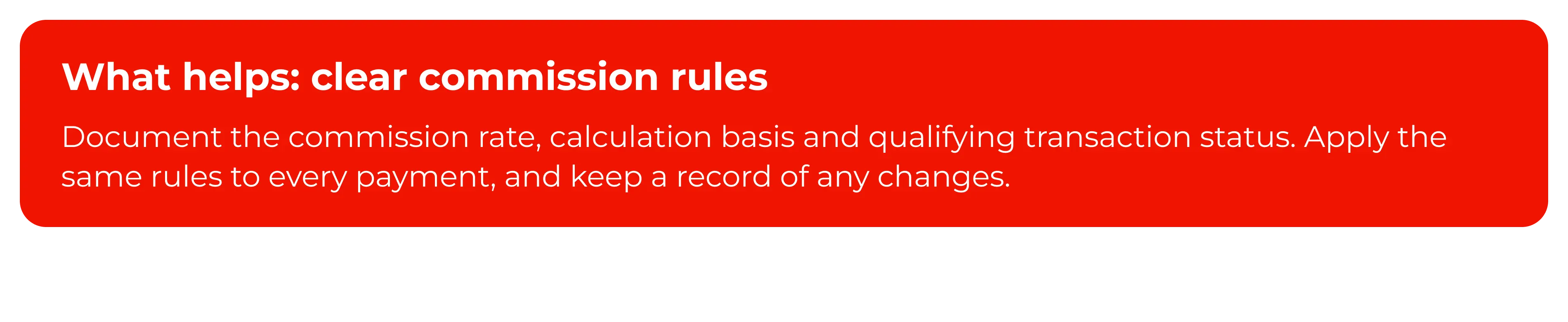
Agent commission management gets complicated when teams calculate fees using different rules. One agent may apply a percentage to the gross payment amount, but another may calculate it after deductions. If the agreed calculation basis isn't clear, the results won't match.
The same problem occurs when someone uses an outdated rate or calculates a commission before a transaction reaches the required status.
Reversed payments need attention too. If an agent has already earned a commission on a transaction that is later reversed, the original entry may need to be adjusted.
Repeated transaction records can also lead to duplicate commission entries.
These differences are a common source of agent commission disputes. The merchant and agent may both have records, but those records tell different stories.
Balance discrepancies, delayed updates, and duplicate records
Agent balances don't always match transaction records, even when the individual payment amounts are correct. This often happens because systems process updates at different times or apply different rules to pending and reversed transactions.
For example, one report may include a payment that another system hasn't yet confirmed, leaving the merchant and agent with different balance figures.
Reporting periods can make these discrepancies harder to identify, particularly when systems operate across different time zones. A payment recorded near midnight might fall into separate reporting days, creating an apparent mismatch even though both records are accurate.
Duplicate entries can cause similar problems if repeated confirmations are recorded as new transactions rather than updates to an existing payment.
The table below shows where these errors tend to come from and how to address them.
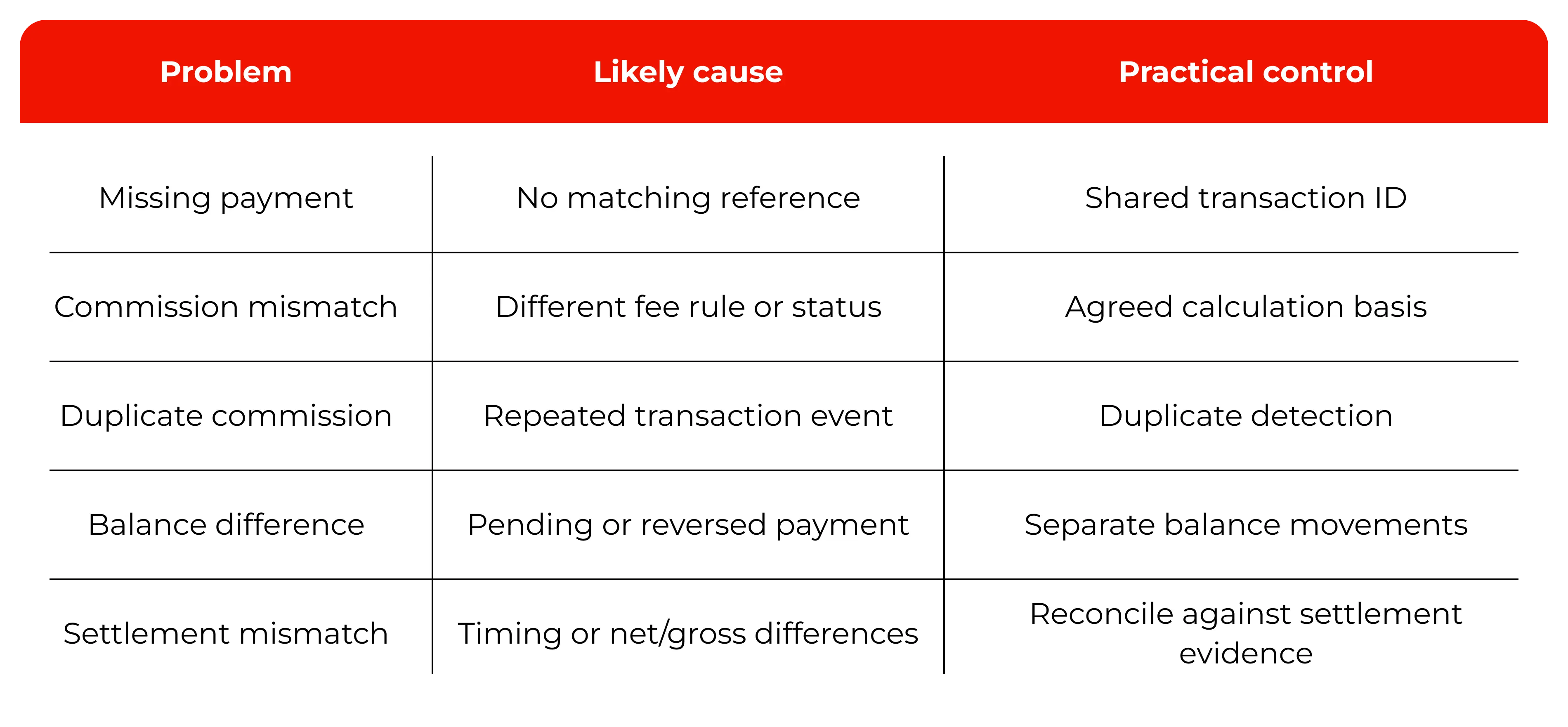
The point of transaction reconciliation is to identify the cause, not simply adjust the figures until the totals match.
What every P2P Agent transaction record should include
A reliable payment reconciliation process starts with consistent records. If the original data is incomplete, automated calculations won't solve the underlying problem.
Build a consistent transaction record
Each payment should contain enough information to identify the transaction, verify its status, and calculate the correct commission.
A recommended set of fields includes:
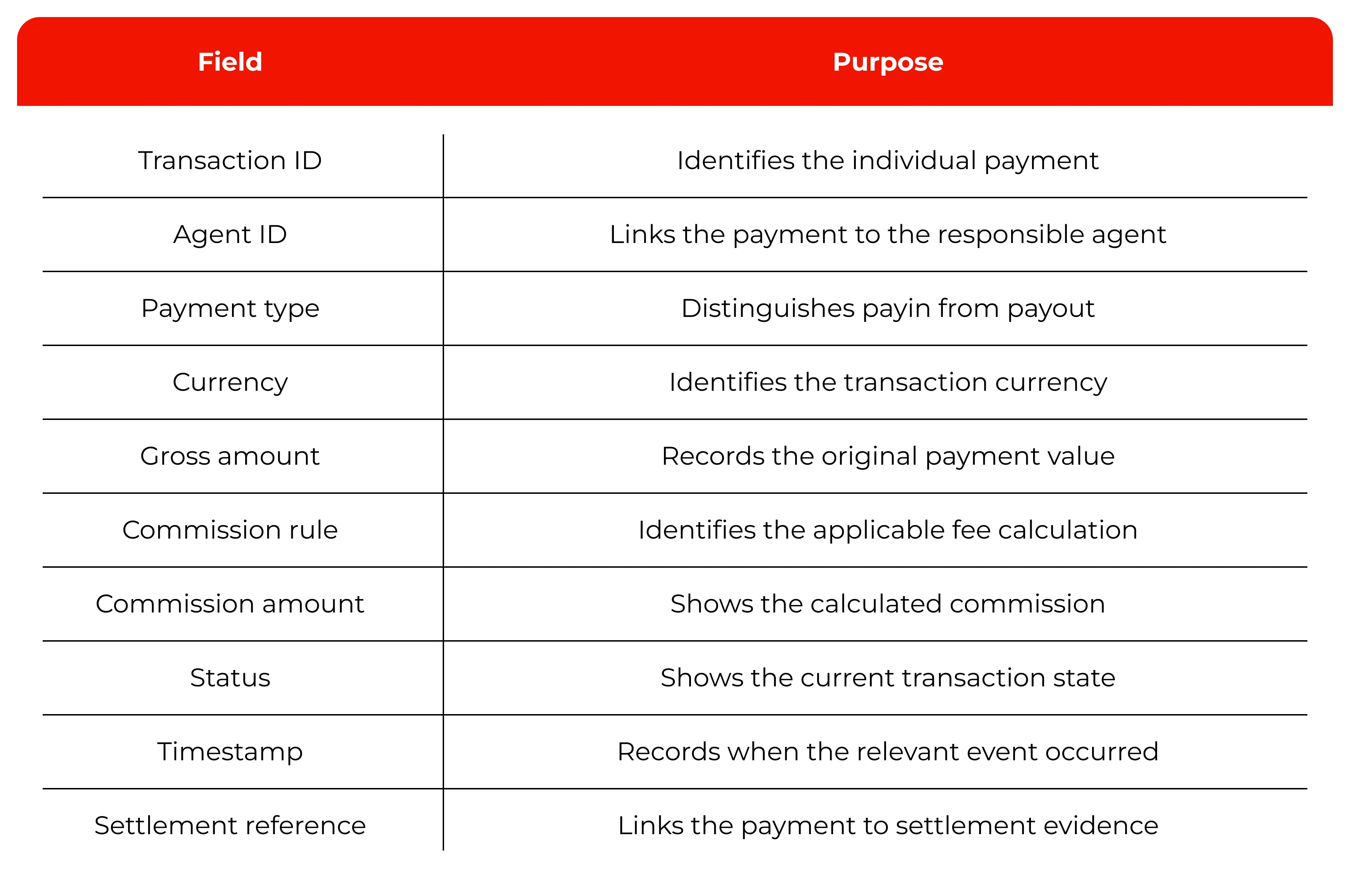
These are recommended fields for payment transaction matching, not a list of mandatory fields in a particular platform.
Define commission rules before transactions are processed
Commission rules need to be agreed before agents start processing payments, so both sides understand how fees are calculated and when they become payable.
This includes the calculation basis, eligible transaction statuses and how changes to commission rates or payment reversals should be handled. If agents work under different rates, each transaction should reflect the terms in effect when it was processed. Having these rules documented makes agent commission tracking more consistent and helps prevent disputes over payment amounts.
Keep merchant balances and agent balances separate
Merchant settlement balances and agent commission balances need to be tracked separately because they represent different financial obligations. While the merchant's balance reflects funds due from payment activity, the agent's commission balance shows the fees earned under the agreed terms.
These amounts may also be updated at different stages of the payment process, as a confirmed transaction can generate a commission before the related funds are settled. Keeping them separate gives finance teams a more accurate view of outstanding payments and prevents expected funds from being recorded as already received.
How to reconcile P2P Agent payments step by step
A reliable P2P payment reconciliation process should make it easy to identify discrepancies without manually reviewing every payment. These 5 steps help merchants check transaction records, verify commissions, and keep settlement reporting accurate.
Step 1. Match transactions using unique references
Compare the agent's records with the merchant's payment data for the same reporting period, using unique transaction IDs to match payments. Check that the amounts, currencies and statuses agree, and flag any missing or inconsistent records for review.
For example, if an agent reports a completed payout while the merchant's system still shows it as pending, verify the transaction status before making any corrections. A shared transaction registry helps both teams work from the same information.
Step 2. Check payment statuses before applying commissions
Commission calculations should follow the transaction's status and the terms agreed with each agent. The main statuses to distinguish are:
- Pending
Payment initiated but not yet confirmed. - Confirmed
Payment meets the required confirmation conditions. - Failed
Payment was not completed. - Reversed
Previously recorded payment was cancelled or reversed.
A confirmed payment isn't necessarily settled, and a pending transaction may not qualify for commission. If a transaction is reversed, review any related commission and adjust it according to the agent agreement.
Step 3. Validate commissions and balance movements
Check that each commission matches the agreed rate, calculation basis and eligible transaction amount.
For example, an agent processing a confirmed £1,000 payment at a 1.5% commission rate should earn £15, assuming the fee applies to the gross amount.

If the recorded commission differs, check whether the correct rate was applied or whether an adjustment has been included. Commission entries should also match the agent's balance movements, with any corrections recorded separately.
Step 4. Reconcile settlement totals and investigate exceptions
Compare the reconciled transactions with settlement records, accounting for applicable fees, adjustments and reporting periods.
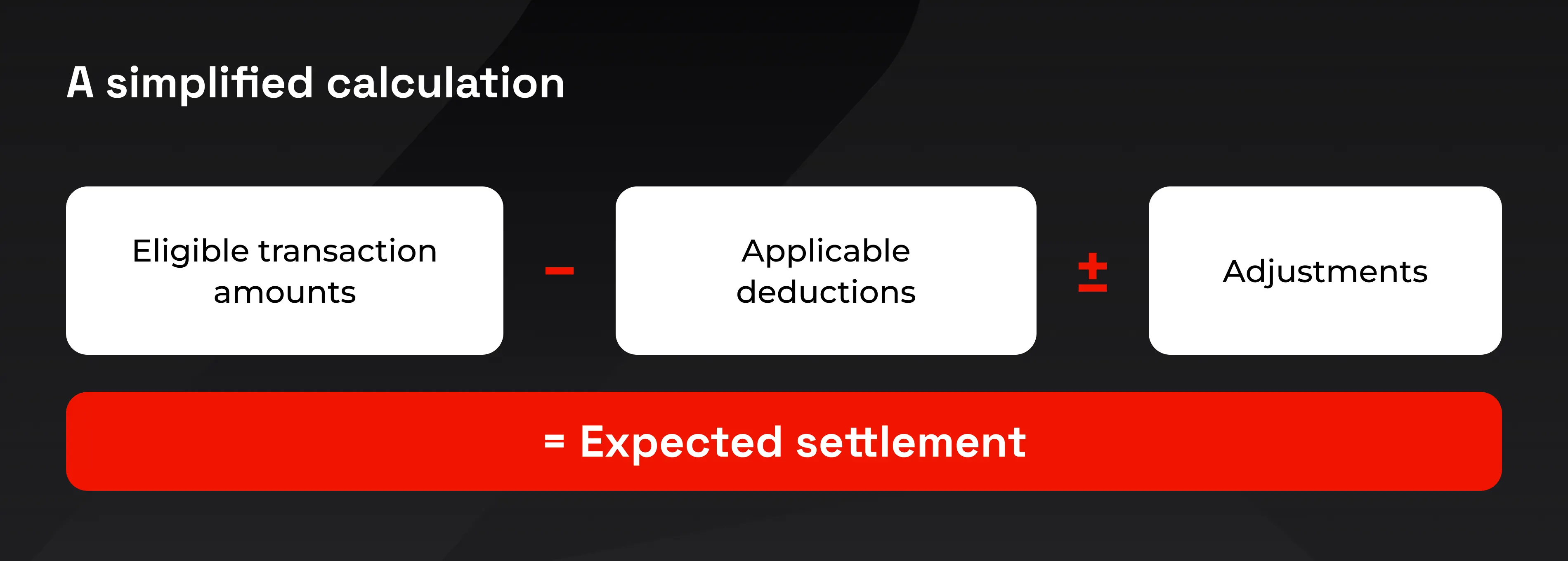
The exact calculation depends on the payment arrangement. If the totals differ, check whether the cause is settlement timing, an excluded transaction or an incorrect deduction. Every discrepancy should be traceable to a specific payment or adjustment.
Step 5. Record Corrections and Produce a Reconciliation Report
Document unresolved discrepancies, assign responsibility for each case and record any adjustments without overwriting the original transaction history.
The final report should show matched payments, commission corrections, settlement differences and outstanding exceptions. Reviewing these records regularly helps identify recurring issues with particular agents or payment routes, so teams can address their causes rather than repeatedly correcting individual transactions.
Manual spreadsheets vs centralised P2P Agent management
Spreadsheets can work when a merchant has a small agent network and relatively few transactions. But manual payment reconciliation becomes harder as the business grows.
As merchants work with more agents, keeping spreadsheets and payment confirmations up to date becomes increasingly difficult, especially when transaction statuses change after reports are exported. Finance teams can end up spending more time gathering and cross-checking records than investigating actual discrepancies. A centralised P2P agent management system helps reduce this workload by keeping transaction data, confirmations and balance records in one place.
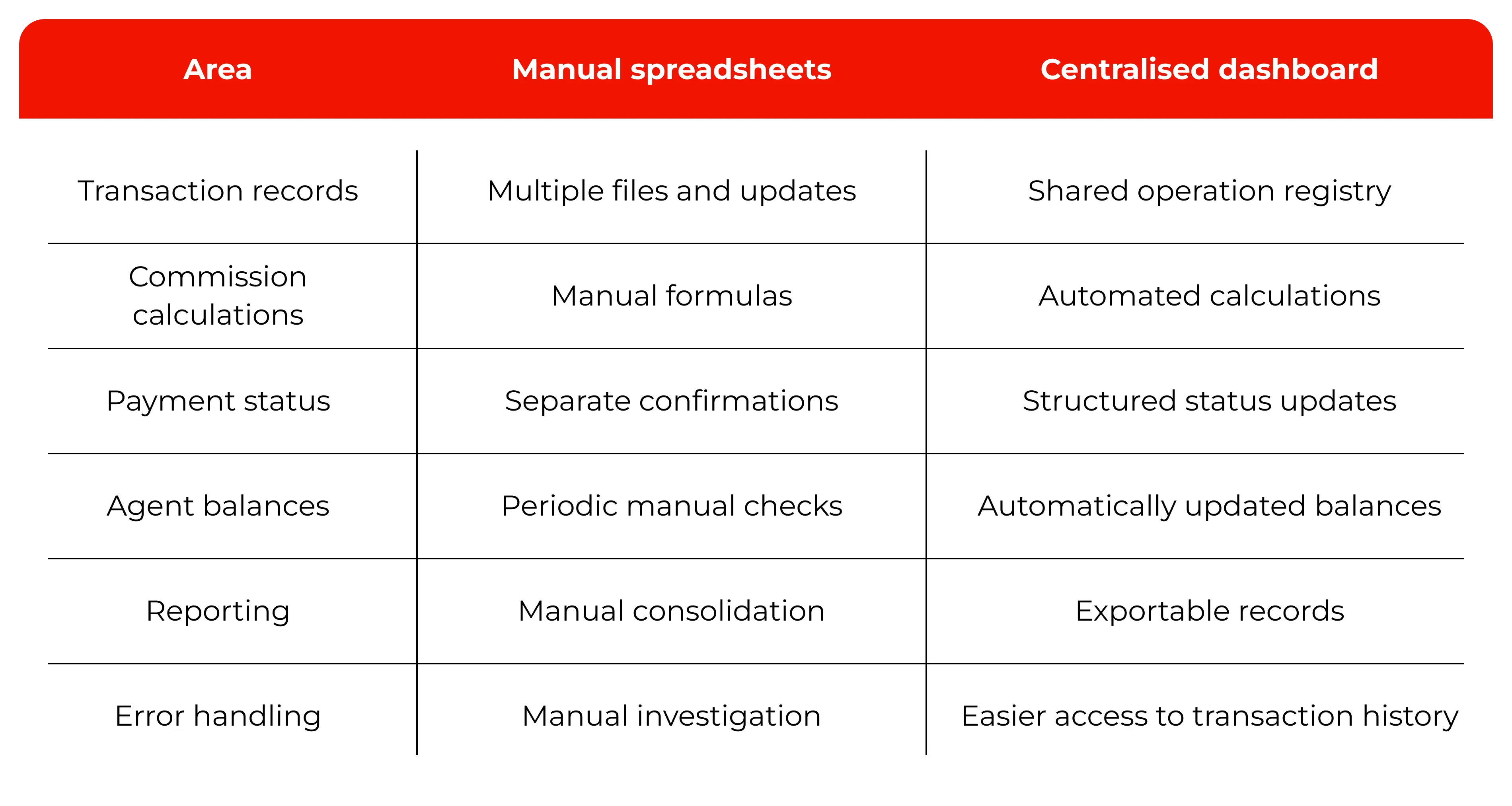
The main advantage of payment reconciliation automation is having transaction records, commissions and balances managed within the same system, which reduces the need for duplicate data entry and manual checks. While teams still need to investigate disputed transactions, incorrect source data and settlement differences, centralised records make it easier to identify where discrepancies occur and resolve them without working across multiple files.
How SPAYZ.io P2P Agent Dashboard helps reduce reconciliation errors
Merchants working with local payment agents need to see what's happening across their network. That includes which payments have been recorded, their current status, what each agent has earned, and how balances have changed.
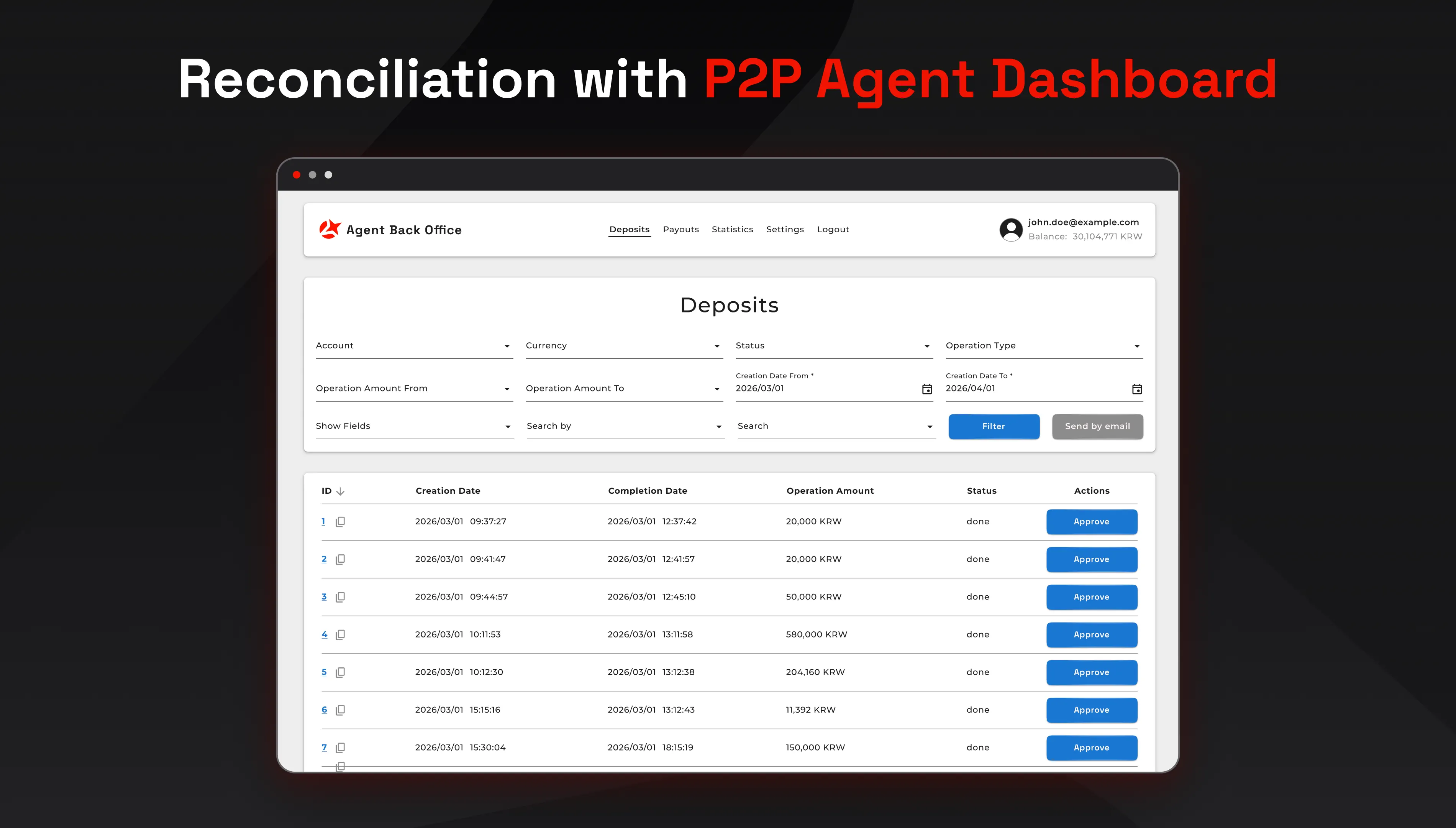
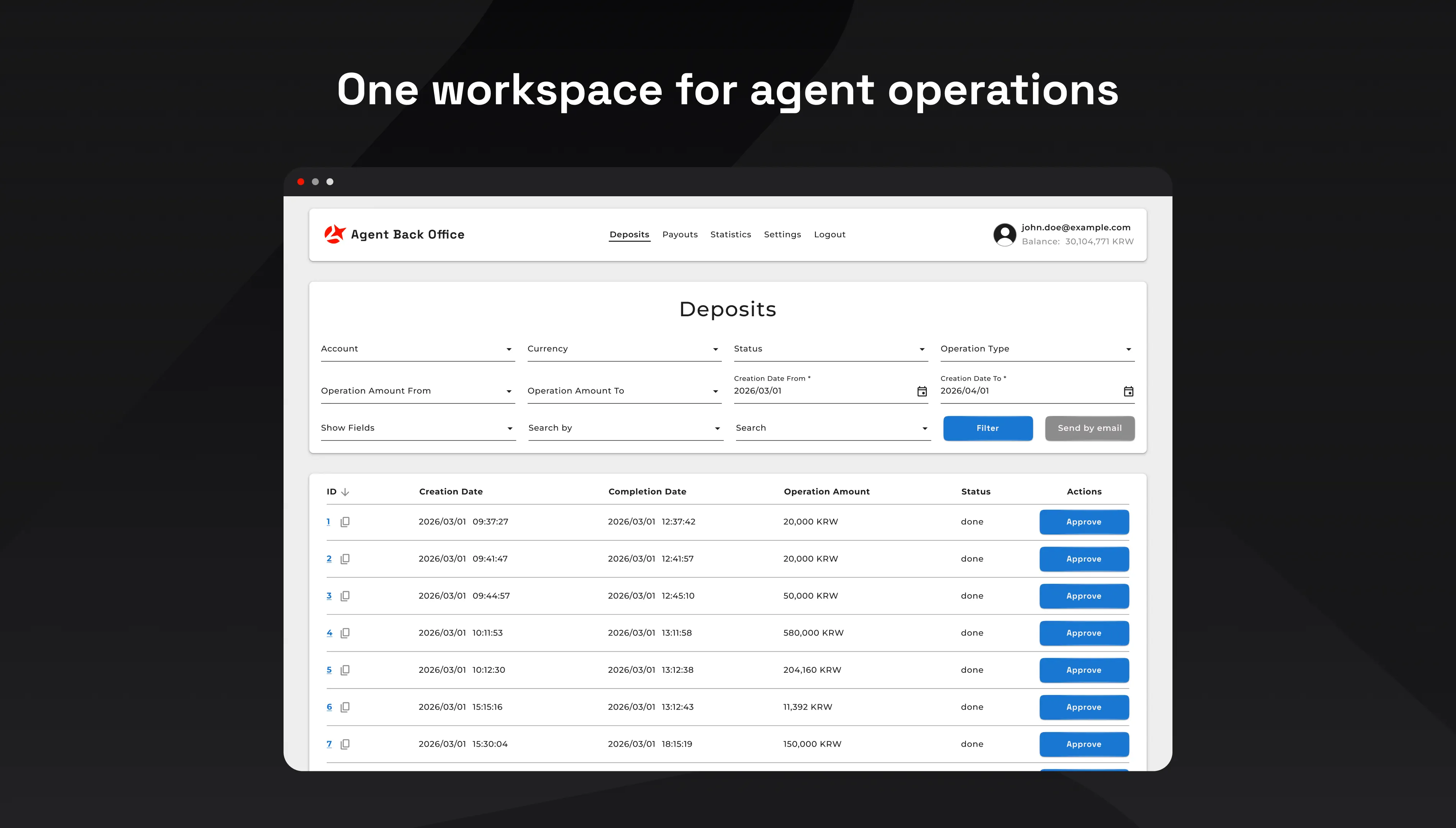
SPAYZ.io's P2P Agent Dashboard brings these operations into one workspace.
Three features are particularly useful for reconciliation.
A Unified transaction registry
Agents record their operations in the dashboard, while merchants receive callbacks and can track transaction statuses in one place. This gives payment teams access to transaction histories without cross-checking spreadsheets or requesting confirmations from individual agents, making discrepancies easier to investigate.

Automatic commission calculation and balance updates
The P2P Agent Dashboard supports automated commission calculation and balance updates based on recorded transactions. This reduces manual work and helps merchants keep agent commissions and balances consistent, even when managing multiple agents with different commission terms.

Clearer settlement records and reporting
The dashboard provides separate commission tracking for merchants and agents, alongside an exportable transaction registry. Finance teams can review payment histories, verify commissions and compare transaction data with settlement records without collecting information from multiple sources.
If you'd like to use the P2P Agent Dashboard for your payment operations, contact the SPAYZ.io team. Our managers can walk you through the platform, explain how it works and discuss how it could fit your current payment setup.
FAQ: What Is a P2P Agent Dashboard?
Does a confirmed P2P payment mean the funds have settled?
Not necessarily. A confirmed transaction has reached the confirmation state defined by the payment system. Settlement is a separate stage that determines when the corresponding funds are transferred or made available.
Merchants should track both stages. Otherwise, a confirmed payment could be included in the settled balance before the funds have arrived.
How should reversed payments affect agent commissions?
That depends on the agreement between the merchant and agent. If a reversed transaction no longer qualifies for commission, the original commission may need to be cancelled or adjusted.
The correction should reference the original payment and remain visible in the records. That way, the finance team can explain the resulting balance change without losing the transaction history.
How often should merchants reconcile P2P Agent balances?
It depends on transaction volume, settlement cycles and risk. Merchants processing large numbers of payins and payouts may need continuous transaction monitoring and daily reconciliation checks. Smaller operations might use a different schedule.
Can a P2P Agent Dashboard replace manual reconciliation spreadsheets?
It can replace much of the routine work involved in recording transactions, calculating commissions and monitoring agent balances.
A centralised P2P Agent Dashboard keeps transaction histories together and automates calculations that would otherwise require separate spreadsheets.
Finance teams still need to investigate exceptions and verify settlement records. The difference is that they have the information available in one place instead of collecting it from several sources.
H2: P2P Agent Dashboard — your step to an automated future
As P2P agent networks grow, keeping commissions and balances accurate becomes increasingly difficult when transaction records are spread across different systems. Even with clear reconciliation procedures, manual checks take time and leave room for errors, particularly when payment statuses change or settlements require adjustments.
A P2P Agent Dashboard makes this process easier to manage by bringing transaction monitoring, commission calculations and balance tracking into one platform. Merchants get a clearer view of their agents' activity, while finance teams can spend less time gathering records and more time resolving discrepancies. For Forex and iGaming businesses handling frequent local payments, that means better operational control without adding more manual work as transaction volumes increase.