A smooth registration process means little if a trader struggles to fund their account. When a familiar payment method isn't available, or a transaction fails without a clear explanation, the broker risks losing a potential customer before they've even placed their first trade.
The withdrawal experience can have an equally lasting effect. Traders want to know when their funds will arrive, and unexpected delays can make them reluctant to deposit again. For Forex brokers, Forex deposits and withdrawals directly influence first-deposit conversion and trader retention, making the payment experience an important part of the customer relationship.
Key takeaways
- A completed first deposit tells brokers more about account activation than registration numbers alone.
- Local payment methods can make funding easier, provided they're available to the broker and its customers.
- Withdrawal approval and actual receipt of funds are different stages. Traders need to understand both.
- Payment success rates only tell part of the story. Repeat deposits and withdrawal-related support requests can reveal problems affecting retention.
Why the first Forex deposit matters
A completed registration doesn't guarantee a funded account. Traders still need to get through the payment process, and that's where some potential customers drop off.
Brokers should track Forex deposit conversion separately from sign-ups, looking at how many traders start a deposit and successfully complete it. If verified users regularly abandon the payment screen, the problem may have little to do with customer acquisition.
Consider someone trying to deposit $250 before opening a position. Their preferred local payment method isn't available, so they try a card instead. The bank declines the transaction, and the screen displays a generic error message. What happens next depends partly on how the broker handles the failure. A clear explanation, an eligible alternative or a warning against retrying a pending transfer can help the trader move forward.
These are relatively small changes to trading account funding, but they can remove unnecessary steps without compromising required security checks.
Offer payment methods that fit the trader's market
The choice of Forex deposit methods should reflect how customers actually pay in each market. Bank transfers may be familiar in one country, while mobile wallets are part of everyday transactions in another.
According to the World Bank's Global Findex 2025, account ownership in Sub-Saharan Africa reached 58% of adults in 2024, compared with 49% in 2021. The region also has the highest use of mobile-money accounts worldwide.
These figures aren't specific to Forex trading, but they help explain why a card-only payment experience may be poorly suited to some markets.
A payment method may be widely used for everyday transactions but still be unavailable for Forex trading. Even when it's supported, brokers need to consider how easily customers can complete a deposit. For example, manually copying bank details between apps adds friction and increases the chance of errors. Testing the payment flow with local accounts and monitoring deposit completion rates can help brokers identify which methods work best for their traders.
When selecting payment methods for Forex brokers, the number of supported options matters less than whether customers can use them. Transaction limits, fees and the actual payment flow deserve attention.
The same applies to local payment methods for Forex. A method that works well in one market won't necessarily offer the same experience elsewhere.
Withdrawals shape whether traders trust the next transaction
When traders request a withdrawal, they want to know when their money will arrive. An unclear timeline can quickly lead to frustration, particularly when a request appears approved, but the funds haven't reached their account.
Brokers should explain available Forex withdrawal methods, any restrictions, and the verification requirements before customers submit a request.
Processing times also need some context. A broker might approve a withdrawal on the same day, while the receiving bank takes several more days to credit the funds. For example, IG's UK withdrawal guidance, updated in September 2026, explains that eligible card withdrawals may be processed on the same working day but take up to five working days to arrive, depending on the bank. That's an example of one broker's process, rather than a standard timeframe across the industry.
A published Forex withdrawal processing time should make this distinction clear. Status updates such as under review, approved, sent, and completed are more useful than leaving a request marked pending without further explanation.
Verification can add another complication. Some Forex withdrawal delays arise because brokers need additional documents or must complete security checks. Requesting the necessary information early, where permitted, can prevent avoidable delays later. If a withdrawal takes longer than expected, traders should be able to check its status without contacting support every time.
Where payment friction affects retention
Problems with Forex payments can affect whether traders continue using a platform. A failed first deposit may prevent a customer from getting started, while an unexpected withdrawal delay can make them less willing to fund their account again. Both situations create friction that brokers need to understand, especially when similar issues recur.
Although trading results and market conditions also influence trader retention, payment-related problems can be tracked separately. Looking at where transactions fail or take longer than expected helps brokers identify areas for improvement. The table below outlines common issues, their potential effect on traders and the metrics worth monitoring.

Highlight where traders receive confirmation, encounter delays or need additional information.
How Forex brokers can improve the payment journey
The most useful improvements often come from testing the payment process as a customer would.
Try making a deposit on a mobile phone using a supported local account. Then go through the withdrawal instructions as a first-time user. A process that looks straightforward to an internal payments team may confuse someone seeing it for the first time.
A few areas deserve particular attention:
- Payment availability
Show methods that customers can actually use based on their country and account eligibility. - Clear costs
Display applicable fees and currency conversion details before the trader confirms a payment. - Transaction status
Explain whether a payment has failed or is still processing. This helps prevent unnecessary repeat attempts. - Withdrawal instructions
Make verification requirements and expected timelines available before traders request their money. - Customer support
Give support teams access to transaction references so they can investigate individual cases without asking customers to explain the entire payment process again.

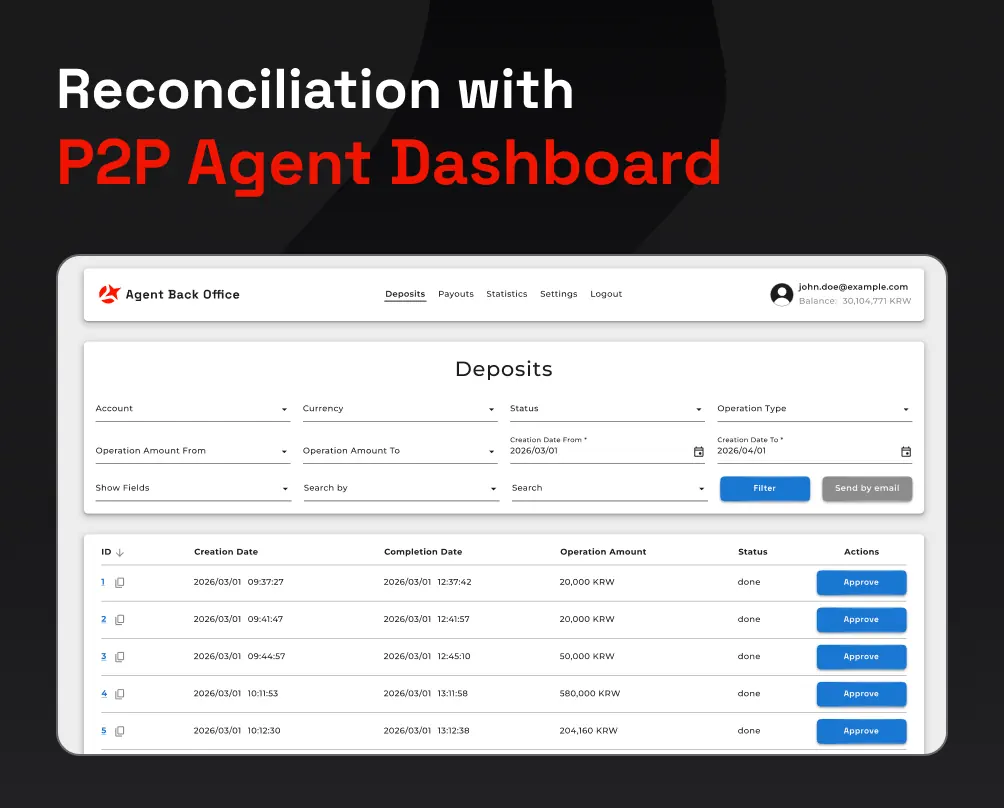
For brokers using P2P agent networks, reliable transaction records can also make a difference. When agents and payment teams can see the same information, they need less to reconstruct transactions from messages or screenshots.
From the trader's perspective, the priority is straightforward. They want to know what's happening with their money and what they need to do next.
Measure the experience beyond payment approval
Payment approval rates don't always reflect the full trader experience. A transaction may be successful but still involve unnecessary steps or delays, which is why brokers should also monitor first-deposit completion, how long it takes for funds to reach trading accounts, and how long withdrawals take to arrive.
To better understand trader retention, brokers can compare repeat deposits within 30 days of a withdrawal, taking payment methods and processing times into account. Combined with trading activity and support data, these insights can help identify recurring issues and where improvements are needed.
A reliable payment experience starts with infrastructure that supports traders across different markets. If you're looking to improve your Forex payment operations, contact the SPAYZ.io team to discuss payment solutions for your business.
FAQ about Forex deposits and withdrawals
Why can a Forex deposit remain pending after a bank confirms payment?
Bank confirmation and the broker's account update don't always happen at the same time. Traders should be able to see the transaction status and reference number before attempting another payment.
Can a trader withdraw using a different payment method?
Sometimes, depending on the broker's rules and applicable regulations. Some brokers require withdrawals to return to the original funding source or request further verification. IG's withdrawal guidance provides an example of these restrictions.
Should Forex brokers display amounts in the trader's local currency?
Where currency conversion applies, brokers should show the relevant exchange-rate information and any known fees before payment authorisation. This helps traders understand the amount they'll pay or receive.
Which metric helps brokers understand the link between withdrawals and retention?
Repeat deposits after withdrawals can provide useful insight. Compare customers by withdrawal processing time and payment method, while accounting for differences in trading activity. This helps identify possible relationships without assuming that payment delays are the only reason traders leave.