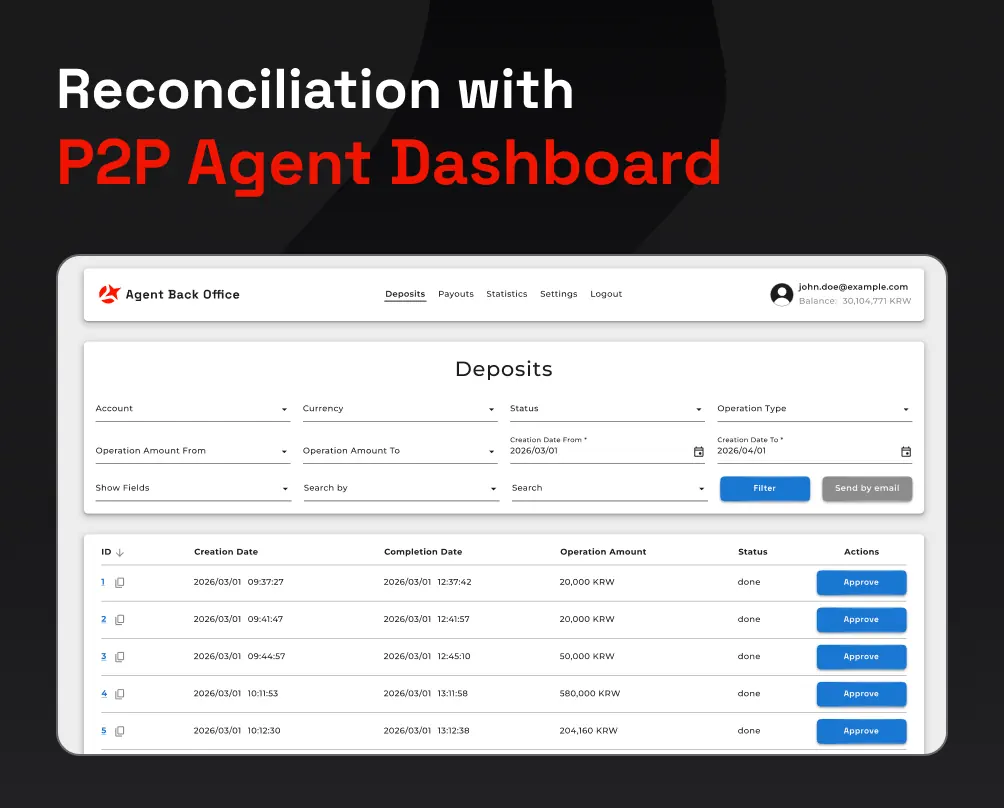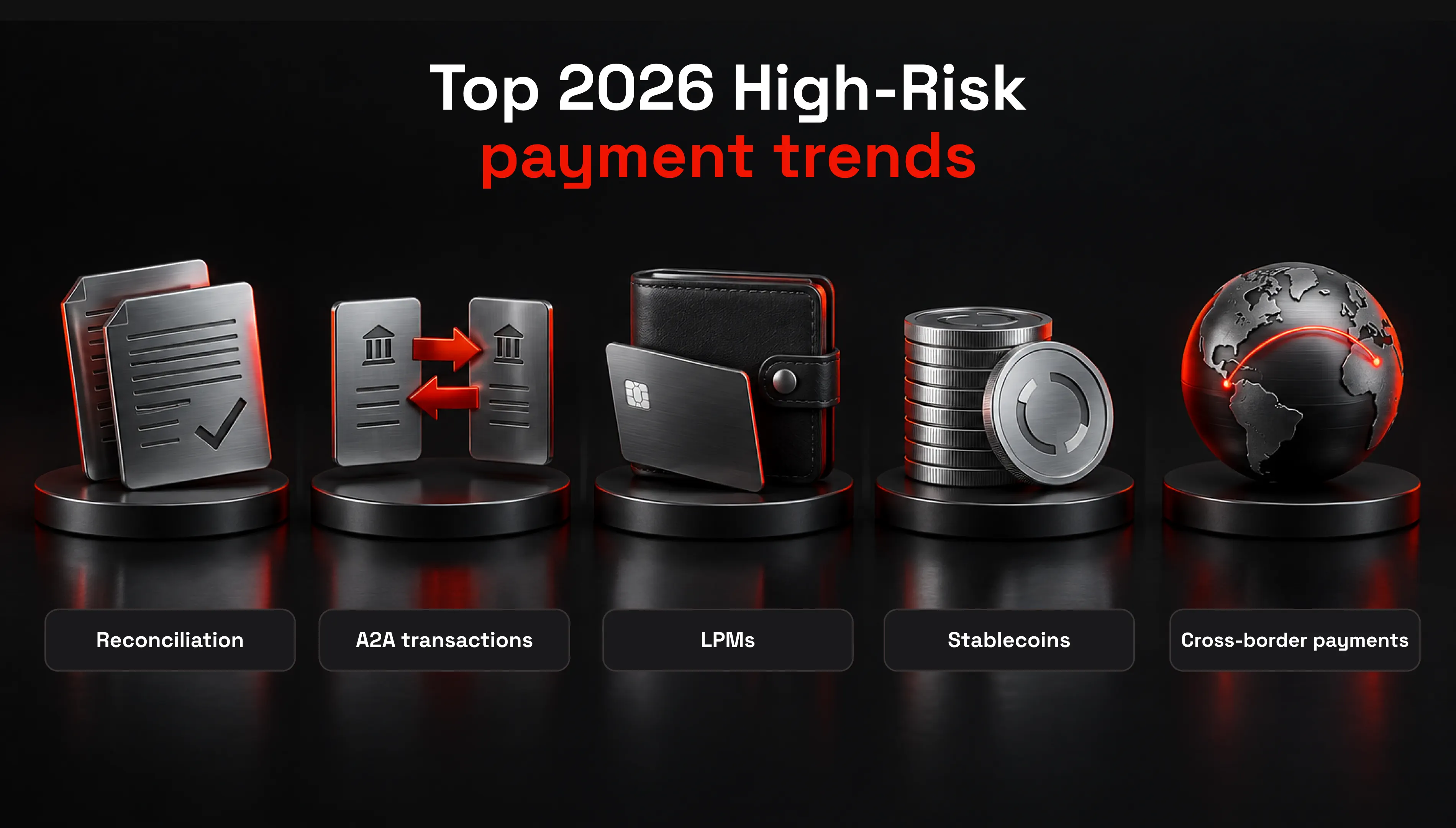
Throughout 2026, payment infrastructure continued to develop, giving businesses new opportunities to move funds between global markets. Over the past year, many bank transfer systems have expanded their geographical reach, while local payment methods and digital wallets have become the standard and most popular payment options in many countries. Stablecoins also continue to attract greater attention from High-Risk and other verticals as a payment solution and a potential settlement tool beyond the high-growth segment alone.
For businesses operating in High-Risk sectors, these developments have raised several practical questions about what happens after a payment is made. Forex traders and iGaming operators need to know whether funds have arrived, when they will become available for use, and whether transaction records match the amounts ultimately credited. As the number of available payment options grows, maintaining transparency and control over transactions across different systems becomes increasingly important.
Key takeaways
- Payment data published in 2026 confirmed the growing importance of mobile money and digital wallets, particularly in emerging markets.
- Faster bank transfers and the emergence of new cross-border payment rails have opened up additional opportunities, although access still depends on the policies of participating financial institutions and permitted business activities.
- Stablecoins are increasingly seen as a more promising settlement tool, with research highlighting the importance of conversion costs and local liquidity.
- Regulatory changes have placed greater emphasis on payment transparency and the completeness of the information accompanying transactions.
- For High-Risk merchants, reliable payment reconciliation remains critical, as transactions may involve different currencies and payment providers.
Localisation is a part of payment rails
We've discussed the importance of payment localisation on several occasions in 2026. However, with the regulatory and economic changes affecting many countries and regions this year, focusing on local payment methods and understanding how users choose to pay has become particularly important.
According to the GSMA's State of the Industry Report on Mobile Money 2026, more than $2 trillion in payments were processed through mobile money services worldwide in 2025. Most of the growth in the mobile payments market came from Sub-Saharan Africa, where mobile money continues to play a key role in everyday financial transactions.
Meanwhile, according to the Global Payments Report 2026, digital wallets accounted for 56% of global e-commerce transaction value in 2025. Although these figures reflect the wider payments market rather than the Forex or iGaming sectors alone, they clearly demonstrate why international businesses need to understand regional differences in payment behaviour.

The operational aspects go far beyond simply adding another payment option to the checkout page. Local digital wallets often use different transaction identification mechanisms or settlement procedures compared with conventional bank transfers. Merchants therefore need to understand how these differences affect their internal accounting before increasing transaction volumes.
In its guide to local payment methods, SPAYZ.io notes that localisation can offer businesses benefits such as a 25-40% increase in payment success rates, lower fees, and fewer chargebacks.
A2A payments
In 2026, account-to-account payments (A2A) continued to attract attention as instant bank transfer networks developed further, raising businesses' expectations for faster A2A transactions. These systems allow funds to move between participating accounts without relying on traditional card payment processing.
The development of A2A transfers highlighted the distinction between payment speed and the point at which funds are actually credited to the merchant. This directly affects Forex brokers, as traders expect their deposits to be credited as quickly as possible.
A bank may confirm a transfer almost instantly, but the merchant's payment provider may need additional time to process the transaction before the funds become available in the merchant's balance. A Forex transaction reporting system should clearly distinguish between a transfer confirmed by the bank and a transaction fully recorded in the broker's payment system.
Using faster payment rails can reduce waiting times, but their value also depends on how accurately transaction statuses are updated at every stage of the process.
Cross-border payments
Domestic instant payment systems have existed for years, but integrating them internationally remains more complex.
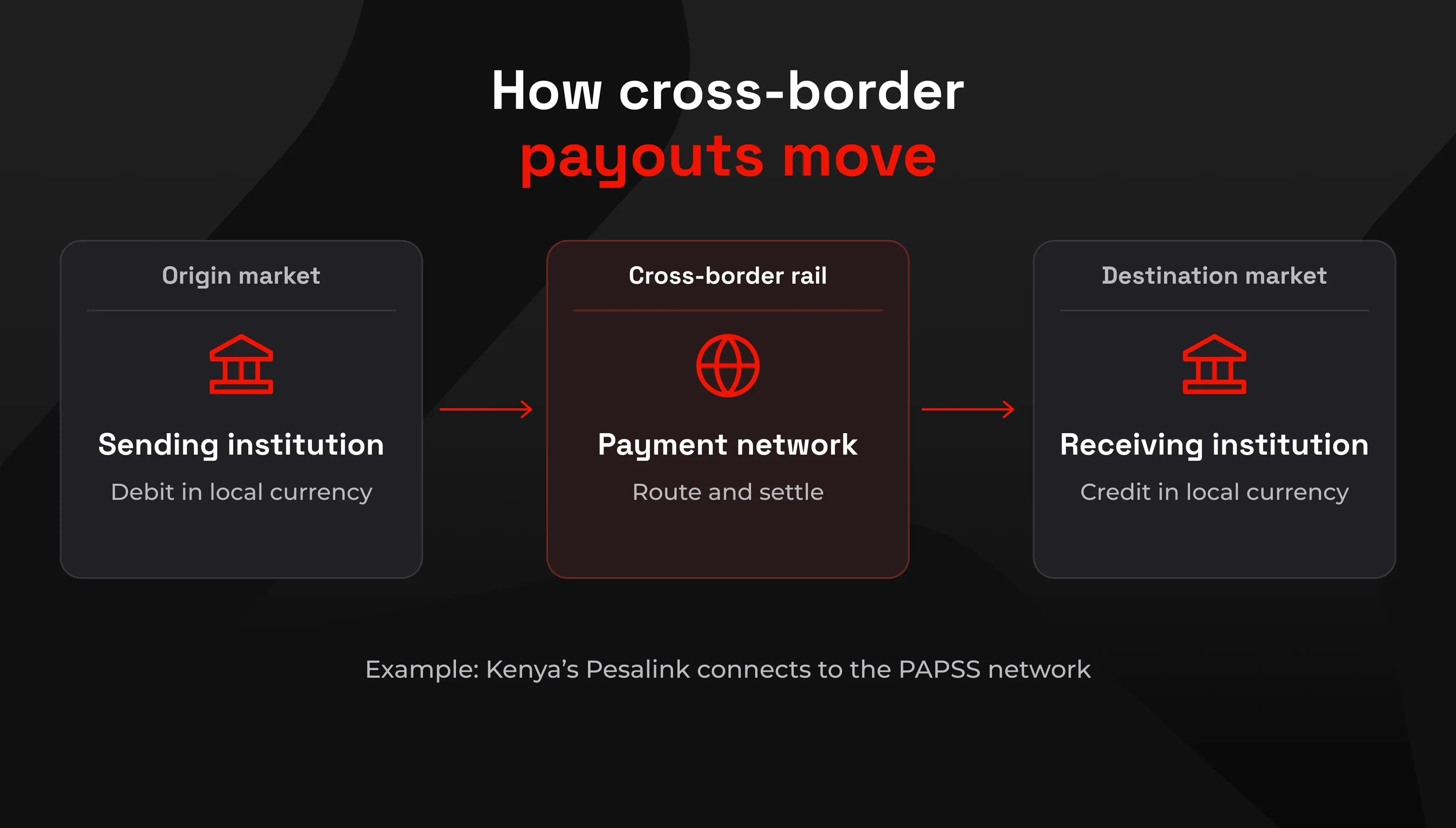
A significant development came in February 2026, when Kenya's Pesalink announced a partnership with the Pan-African Payment and Settlement System (PAPSS). The agreement connects participating Kenyan financial institutions to a wider African payment network and enables cross-border transfers in local currencies.
Research has also extended beyond traditional banking infrastructure. In May, the Bank for International Settlements (BIS) reported that Project Agorá had presented a prototype system for wholesale cross-border settlement using tokenised commercial bank deposits and central bank reserves. However, this was a successful technical experiment rather than a commercially available payment network.
Both developments point towards a shared direction for businesses and regional payment systems: building a more interconnected payment infrastructure. Nevertheless, High-Risk merchants still need to check whether their business category is supported and whether the relevant payment rail is available for commercial transactions, as technical connectivity alone does not guarantee merchant access.
Stablecoins solutions
Throughout 2026, stablecoins remained a controversial payment solution for many cross-border transactions, particularly because the regulatory framework governing these payments varies in complexity from country to country.
The main advantage of stablecoins is the ability to make payments or transfer funds outside banking hours, which is especially useful for businesses working across different regions and time zones. This also helps reduce the overall transaction time for counterparties. But this is only part of the picture: recipients often need to convert stablecoins into local currency before they can use the funds.
A study published by the Bank for International Settlements (BIS) in October 2026 compared traditional banks, money transfer services, and stablecoin-based payment rails. It found that stablecoins can be a more cost-effective solution in some payment corridors, but conversion fees and limited liquidity often outweigh this advantage. In approximately one-third of the cases examined, traditional financial services ultimately proved cheaper and faster.
An IMF report published in October 2026 also notes that stablecoins for payments remain in an early stage and have yet to become an established practice within the global financial system.
For businesses operating in High-Risk sectors, an important practical takeaway is the need to assess the entire settlement process. Conversion and withdrawal fees should also be considered when evaluating stablecoin settlement costs.
Regulatory changes: payment transparency
In June 2026, the Financial Action Task Force (FATF) launched a consultation on guidance supporting its revised Recommendation 16. These changes aim to improve the quality of information accompanying cross-border payments and help financial institutions prevent fraud or funds being mistakenly transferred to the wrong recipients. Countries are expected to implement the updated standards by the end of 2030.
Crypto-asset regulation in Europe also reached an important milestone. By 1 July 2026, the transitional period under the Markets in Crypto-Assets Regulation (MiCA) had ended for eligible crypto-asset service providers. Obtaining official authorisation has now become a mandatory requirement for businesses providing these services to clients in the EU.
These changes do not impose the same obligations on everyone. Requirements depend on the nature of the business, its jurisdiction and the activities of individual organisations, such as Forex brokers or iGaming operators. This only reinforces the need for transaction reporting and monitoring among payment providers.
What these trends mean for payment reconciliation
On the one hand, a wider range of payment options and local payment methods allows businesses to work with more contractors and merchants and expand into new markets. On the other hand, this adds complexity for finance and legal teams, which need to oversee payment rails and settlement while addressing payout-related issues in line with regional regulations.
Consider a situation in which a Forex broker or iGaming operator accepts deposits through a local digital wallet. The payment provider confirms receipt of the trader's transfer, allowing the broker to credit the funds to the trading account. Later, the provider issues a settlement report showing the amount payable to the broker after currency conversion and applicable fees.
Payment reconciliation helps brokers verify that an incoming transaction matches the amount credited to the trader's account.
Settlement reconciliation serves a different purpose: determining whether the amount recorded in the settlement report matches the funds actually transferred by the payment provider.

These checks become more complicated when payment records use different identifiers or display inconsistent transaction statuses. Effective payment reconciliation for brokers therefore requires retaining sufficient data to trace the connection between the original customer payment and its subsequent final settlement.
What should High-Risk merchants take away from 2026?
The developments of 2026 expanded opportunities to move funds between markets, but they also increased the need to understand exactly how each payment reaches its final recipient. New payment methods and faster networks lose their practical value if merchants struggle to confirm transactions or reconcile final settlement amounts.
Businesses reviewing their payment infrastructure should first assess the effectiveness of their existing payment methods and ensure that payment records remain consistent as transaction volumes grow.
If you're optimising the payment infrastructure for your Forex brokerage or iGaming business, contact the SPAYZ.io team. We'll discuss the markets you operate in and the payment flows you need to support.