Key takeaways
- iGaming operators and Forex brokers have different requirements for account crediting, withdrawals and transaction records, even when using the same payment methods.
- A successful payment doesn't guarantee that the customer's balance has been updated. Missing callbacks and duplicate requests require reliable transaction tracking.
- Payment providers should offer clear withdrawal statuses and procedures for handling unavailable payment routes.
- SPAYZ.io supports both sectors with local payment methods, transaction monitoring and reporting through the Merchant Account, plus additional P2P management tools.
A payment provider may confirm a deposit while the customer's account balance remains unchanged. For an iGaming operator, that means a player can't access funds they've already deposited. For Forex brokers, the same delay can prevent a trader from adding margin to an open position.
Both problems start with the same payment event, but resolving them requires different account records and operational checks. These differences shape how each business builds its payment stack, handles payouts, organises reporting, and responds to failed transactions. They also determine what operators and brokers should test before choosing a payment provider.
Where iGaming and Forex payment requirements differ
Two providers can offer the same payment methods but give merchants very different levels of control over transactions.
For example, knowing that a deposit was successful is one thing. Being able to trace it to a specific customer account, investigate a missing credit or explain why a withdrawal is still pending is another. Payment and finance teams need that visibility in both sectors, although their priorities differ.
The comparison below shows where those differences affect daily payment operations.

Most of these tasks involve two separate systems: the payment provider's transaction records and the merchant's internal account records. When they don't match, payment teams need to identify where the problem occurred and who should resolve it.
That's why transaction status visibility, reliable callbacks, and accurate records deserve as much attention as payment acceptance rates. The differences become especially clear when a payment succeeds, but the customer's account balance doesn't change.
When payment confirmation fails
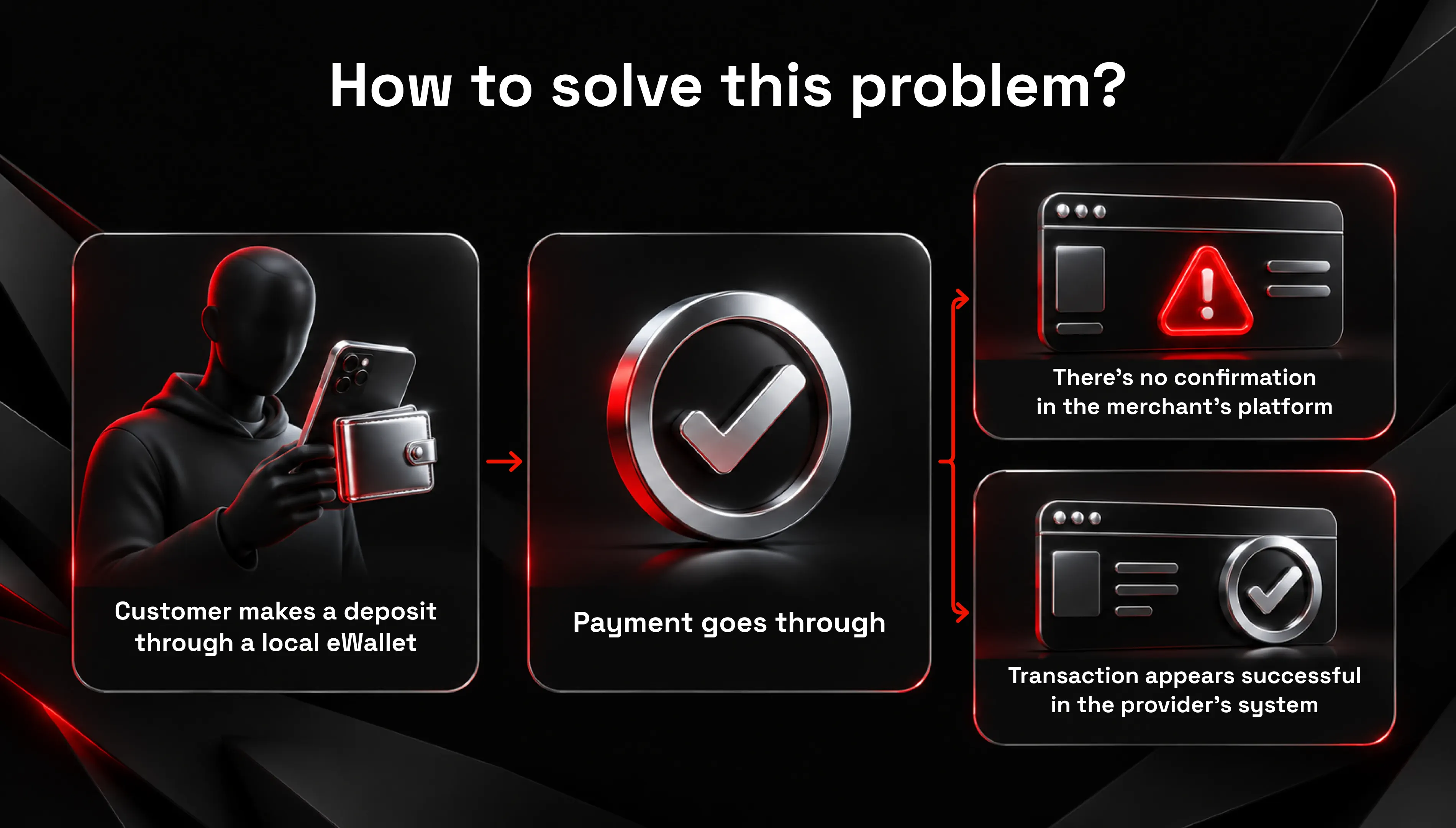
For an iGaming operator, this means a player can't access the funds they've deposited.
A Forex broker faces a similar problem when a client waits for money to appear in their trading account, especially if they need it to maintain an open position.
In either case, the merchant needs to establish what happened to the payment. A High-Risk payment provider should give operations teams access to the original transaction reference, its status history, and confirmation of whether the funds were received. This lets them investigate without asking the customer to deposit again.
Accurate payment reconciliation is equally important. Finance teams need to match incoming transfers with the amounts credited to customer accounts, including payments where confirmation was delayed or lost. Otherwise, a valid deposit might remain uncredited, or the same transaction could be recorded twice.
Similar problems can arise with payment routing. If the first payment attempt times out and a customer switches to another method, the merchant needs to track both attempts independently. A delayed confirmation from the original transaction shouldn't result in a duplicate credit.
When evaluating a provider, ask how its system handles missing callbacks, duplicate payment requests and transactions that remain pending. Request a demonstration with actual transaction records to understand how much information your team will have when something goes wrong.
Withdrawal approval and processing
A payment provider can process a transfer. However, the merchant often decides whether to release the funds.
For iGaming, withdrawals may require identity checks and other reviews under the operator's licence. The UK Gambling Commission's guidance on withdrawal limits, for example, restricts using maximum withdrawal limits on deposit balances while allowing necessary regulatory checks.
Forex has its own requirements. A broker needs to verify the withdrawal request against the client's account and available funds. Depending on the jurisdiction, client-money rules may also apply. The FCA's client money requirements are one example of how record-keeping and reconciliation obligations affect regulated firms.
For both sectors, payouts should have a clear status history. Payment teams need to know whether a request is still awaiting approval, has reached the payment provider or has failed at the destination.
Risk controls depend on how customers use their accounts
An iGaming payment provider needs to help operators identify suspicious payment patterns. The FATF's September 2026 findings on gaming and gambling describe risks involving repeated small transactions, multiple identities, and funds moving through gambling accounts without meaningful play.
For a Forex payment provider, risk controls focus on verifying that the funding account belongs to the trader and checking for changes to withdrawal details. Unusual transaction patterns may also require further investigation, particularly when deposits or withdrawals don't match the client's previous activity.
Both sectors need transaction monitoring, but the information available to the payment provider won't always explain what a customer does on the merchant's platform.
That distinction matters. Payment providers can flag unusual transactions and support investigations. But operators and brokers still need their own controls for account activity and regulatory obligations.
How payment providers handle failed transactions
Even with a successful integration, payment failures can still occur. A local payment method may become unavailable, or a transaction may complete without the merchant receiving confirmation. Testing these situations before launch helps establish how quickly the provider can identify the problem and what information the merchant will receive.
Scenario 1. Deposit confirmed but not credited
A customer completes a deposit through an eWallet, and the payment provider records it as successful. However, the merchant's platform still shows the transaction as pending.
The provider should be able to locate the payment using its transaction reference, review the status history and recover the missing confirmation. The process must also prevent the customer's account from being credited twice if the original callback arrives later.
For the merchant, the main requirement is access to transaction records that can be checked against internal balances. This lets the finance team reconcile the deposit and resolve the discrepancy without relying on manual customer confirmation.
Scenario 2. Withdrawal approved but payment route unavailable
A merchant approves a withdrawal, but the selected local payment channel becomes unavailable before the transfer is completed.
The provider needs to determine whether the funds were sent, remain pending, or were returned. If another payout route is available, the merchant should understand how to resubmit the transfer and whether it requires additional approval.
Clear status updates and a clear escalation process help the merchant manage delays and give the customer accurate information about their withdrawal.
Both scenarios should be tested against the local payment methods planned for each market. Deposit and withdrawal availability can differ by country, as can processing times and transaction limits. Confirming these conditions before launch reduces the risk of discovering operational restrictions after customers have started making payments.
How SPAYZ.io supports both iGaming and Forex
SPAYZ.io provides payment infrastructure for High-Risk businesses across 35+ countries in Africa, Asia, and the MENA.
Through a single API integration, merchants can access 55+ payment solutions. These include bank transfers, online banking, eWallets, QR payments, and mobile payment methods. Availability depends on the market and payment direction.
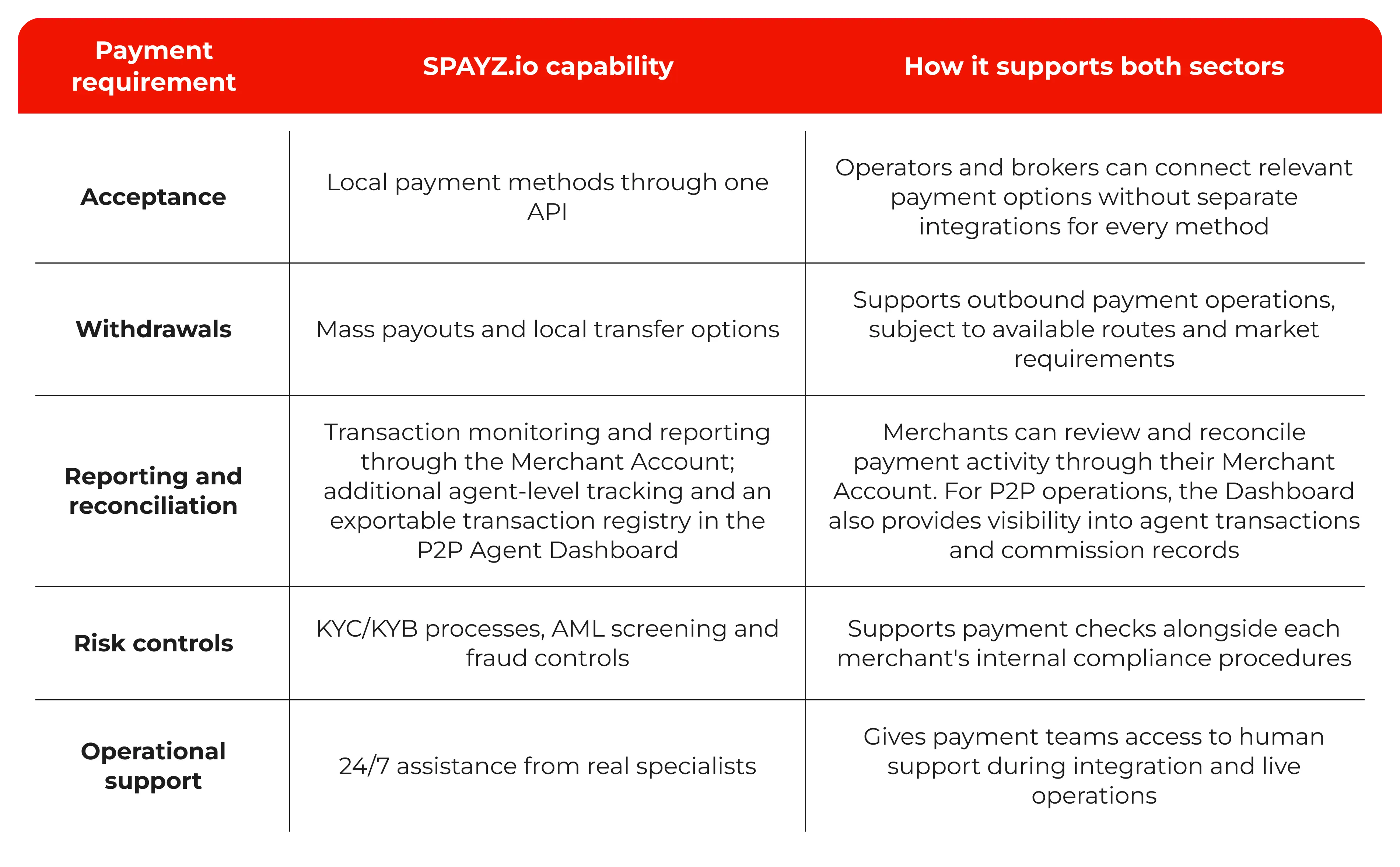
Choosing a payment provider comes down to how well its infrastructure supports your business's transaction processes. For iGaming operators, that means keeping player balances accurate and withdrawals traceable. Forex brokers need the same visibility across trading accounts, with reliable records of deposits and outgoing transfers.
In both sectors, the provider should give payment teams enough information to investigate delays, reconcile transactions and resolve issues without relying on manual checks or guesswork.
Discuss your payment requirements with SPAYZ.io to check available methods and integration options for your target markets.