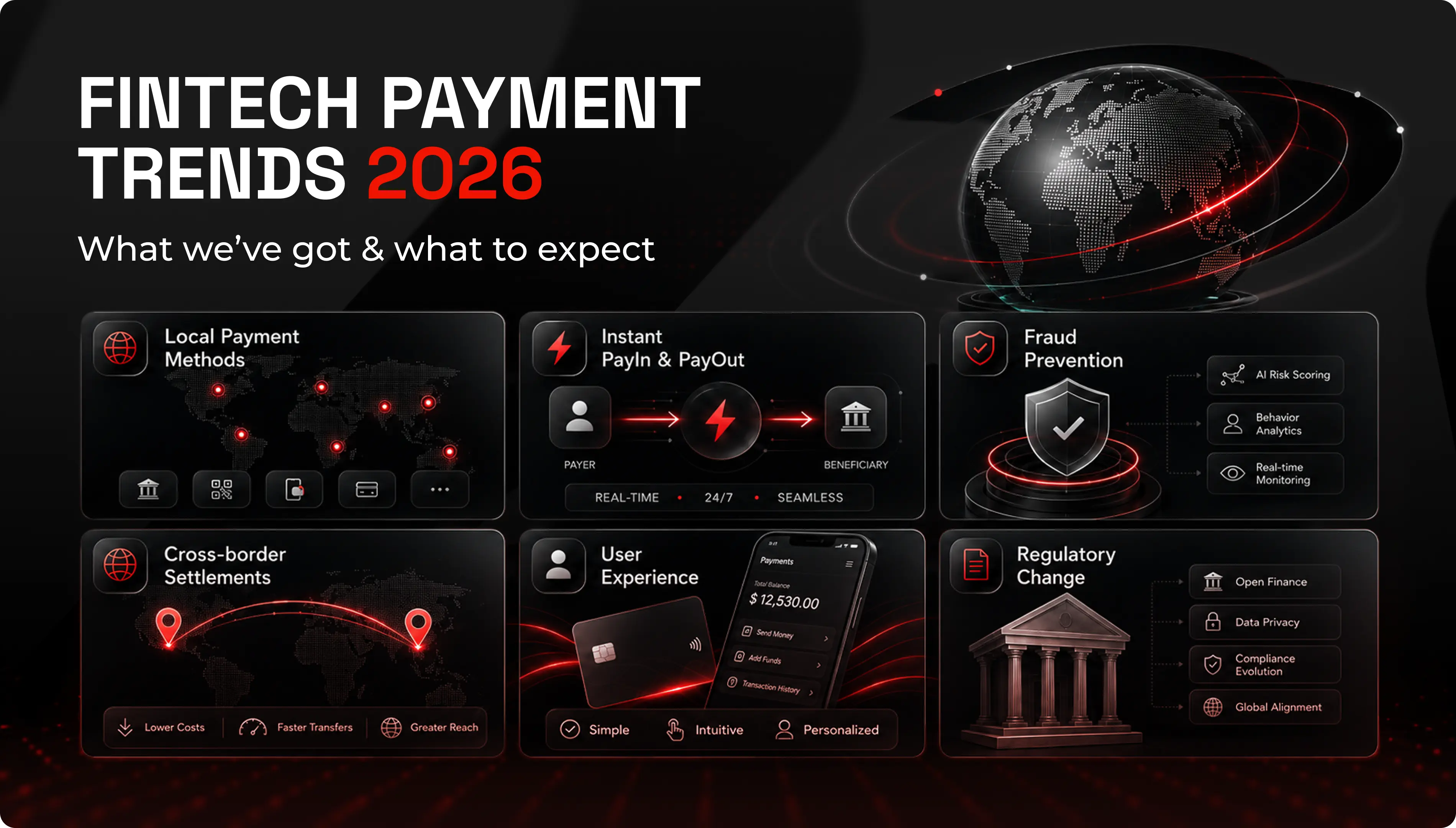
The first half of 2026 confirmed what many merchants and payment providers had already begun to see. Success in payments now depends on 3 main issues — how businesses:
- adapt to local customer behaviour
- optimise transaction flows
- resolve operational issues without revenue impact
That is what FinTech trends 2026 look like in practice. The conversation has moved well beyond cards versus digital wallets. Today, the real challenge is delivering consistent payment performance across multiple markets while responding quickly to changing customer expectations.
If you've been wondering which payment trends in 2026 have actually taken hold, the first six months of the year have already provided some clear answers.
What happened in H1 2026
Localisation became the baseline
Expanding into emerging markets now requires much more than supporting local currencies or translating a checkout page. Customers want familiar domestic settlement and payment flows that match the way they already pay.
That is why merchants introducing local payment methods such as account-to-account payments (A2A), UPI, M-Pesa, local bank transfers, ewallets, mobile wallets, and instant bank transfers continue to report higher approval rates and lower cart abandonment. In many markets, cards have become just one option rather than the default.
Successful payment localisation requires the right combination of local payment methods, settlement capabilities, regulatory compliance, and operational flexibility.
There's also an important distinction between supporting a market and operating successfully within it. Providers may technically offer local coverage, but consistent performance depends on much more than availability alone.
As one of the defining payment trends in emerging markets, localisation is fundamentally changing the way merchants approach cross-border payments.
Payment orchestration moved into the mainstream
During the first half of the year, payment orchestration shifted from a premium capability to a core part of modern payment infrastructure.
Merchants expect routing decisions, retries, failover, and intelligent payment selection to happen automatically. If one acquirer starts underperforming or approval rates decline, transactions should move seamlessly to another provider without disrupting the customer experience.
This is particularly valuable for High-Risk payments, where processor performance often varies by geography and industry.
We can now say precisely that modern payment platforms increasingly rely on:
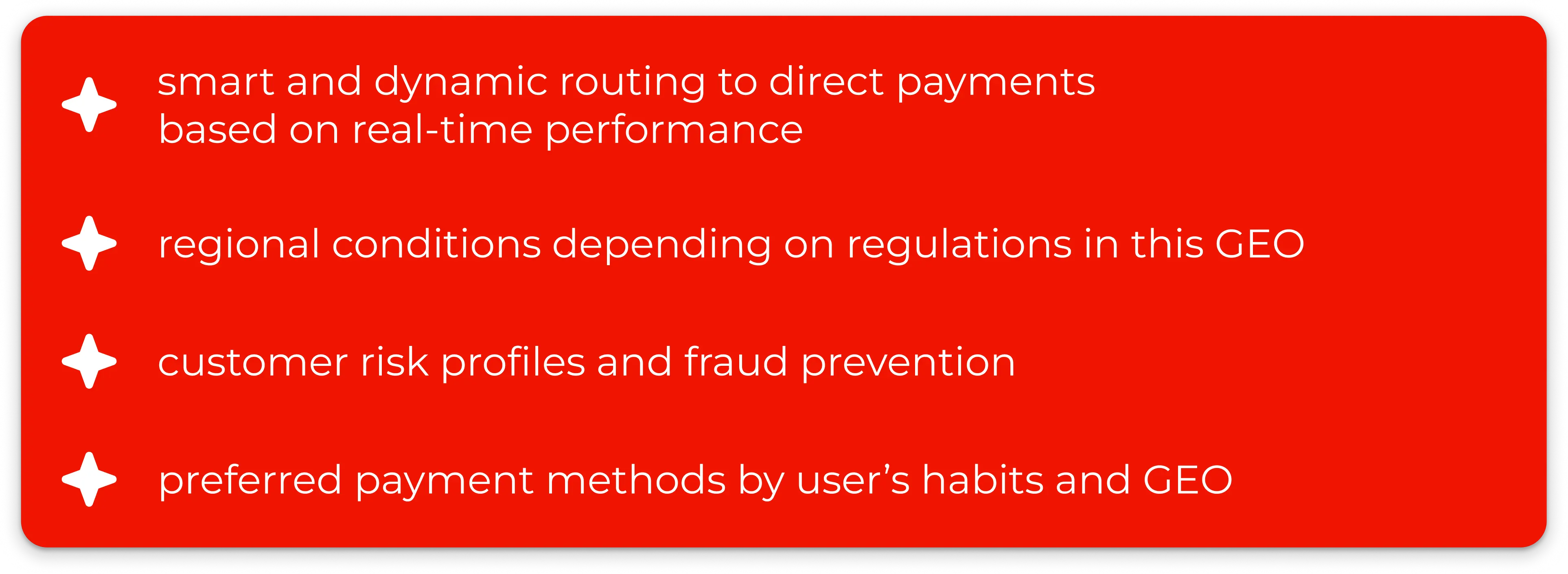
A flexible payment stack helps merchants keep approval rates stable while reducing avoidable payment failures.
Expectations around reporting have evolved as well. Merchant dashboards are no longer viewed as simple reporting tools. Businesses expect real-time payment visibility that gives merchants full control of payment operations and shows practical insights which help optimise payment methods and settlement flows.
AI became part of everyday payment operations
Artificial intelligence continued to expand across the payments ecosystem throughout H1, especially in AI fraud detection.
Automation enables businesses to process payments faster and reduce manual reviews, which strengthens fraud detection by identifying suspicious patterns at scale.

The strongest payment teams combine payment automation with skilled risk specialists who can investigate exceptions and make informed decisions whenever automated systems reach their limits. For example, SPAYZ.io automates many operations as a payment provider, but support and fraud control are still a human prerogative, because this helps to learn the problem better and solve it faster.
Better data became a competitive advantage
Today, merchants want data that helps them make faster, better operational decisions instead of simply generating reports.
That shift explains why ISO 20022 continues to gain traction. Structured payment data simplifies reconciliation, streamlines compliance processes, and gives businesses a much clearer picture of payment performance across providers and markets.
It also makes troubleshooting significantly easier.
Instead of manually tracing individual transactions, payment teams can quickly determine whether an issue originated with a processor, local rails, settlement infrastructure, or the checkout experience itself.
What comes next
Payment localisation will move beyond payment methods
Supporting local payment methods alone won't be enough in H2 2026.
Merchants will increasingly need these TOP-5 solutions from a payment provider:

The next stage of payment localisation is about creating a payment experience that feels fully local from checkout to settlement rather than simply adding regional payment options.
Smarter payment orchestration
The next generation of payment orchestration will focus on additional routing automation.
The most significant part is improving approval rates to build resilient failover strategies, and gaining greater control over how transactions move between processors, payment methods, and geographic regions.
As payment routing, smart routing, and dynamic routing continue to mature, merchants will be able to improve resilience without repeatedly rebuilding integrations or expanding technical complexity.
That flexibility is becoming increasingly important for businesses evaluating how to choose a payment provider or selecting the right payment partner for High-Risk businesses.
Better visibility across the payment lifecycle
Payment teams want greater transparency throughout the entire payment lifecycle.
That means clearer reporting and better visibility into operational data that strengthens payment processing from authorisation through settlement.
For merchants operating across multiple countries, visibility is much more than a reporting feature. It helps explain why payments fail, highlights operational issues before they escalate, and makes it easier to distinguish local payment disruptions from broader infrastructure problems.
What should merchants do now?
As payment expectations continue to evolve, merchants should focus on strengthening the foundations of their payment infrastructure rather than reacting to every new industry trend.
- Review the markets where card payments still dominate and introduce local payment methods where customer demand and regional preferences justify the investment.
- Assess whether payment routing, smart routing, and dynamic routing are genuinely improving approval rates, rather than simply redistributing transaction volume between providers.
- Expand automation in payments where it delivers measurable operational benefits, while keeping experienced risk teams responsible for complex fraud investigations and exceptional cases.
- Strengthen structured payment data, reconciliation processes, and data visibility to support faster, better-informed operational decisions.
- Build a resilient payment stack that delivers consistent local payment experiences across multiple regions without adding unnecessary operational complexity.
- Develop a multi-rail payment strategy that combines cards, open banking, account-to-account payments, real-time payments, and local rails to match the payment preferences of different markets.
Final thoughts
Many of the predictions made at the start of 2026 have already become everyday business practice.
Whether your business is evaluating payment processing for Forex brokers or iGaming products, or payment infrastructure for High-Risk merchants, the priorities remain remarkably consistent. The businesses seeing the strongest results are those that optimise approval rates and strengthen payment resilience rather than relying on a one-size-fits-all global model.
SPAYZ.io watches these trends and can help you build a fully optimised payment ecosystem in 35+ countries across Asia, Africa, and the MENA region. Let’s expand your business with smart solutions! Contact the SPAYZ.io manager now.