
Forex brokers operate in a high-risk FinTech space where payments drive acquisition, retention, and compliance. In 2026, trends like A2A/open banking, AI fraud detection, AI routing, PSD3, and crypto will dominate, with global cross-border volumes hitting $250 trillion amid regulatory shifts.
Why payments matter for Forex brokers now
High decline rates (up to 20% in emerging markets), fragmented local options, and rising fraud erode margins — 64% of merchants cite local methods as top challenges. SPAYZ.io's 2026 Forecast notes wallet-to-wallet dominance in Africa/Asia, where forex thrives among mobile-first traders.
Brokers ignoring these face liquidity traps; adopters see 25% lower abandonment via instant rails like PIX/SEPA. Question: How can forex firms turn payments into growth levers? By localising and automating.
A2A and Open Banking: the shift from cards
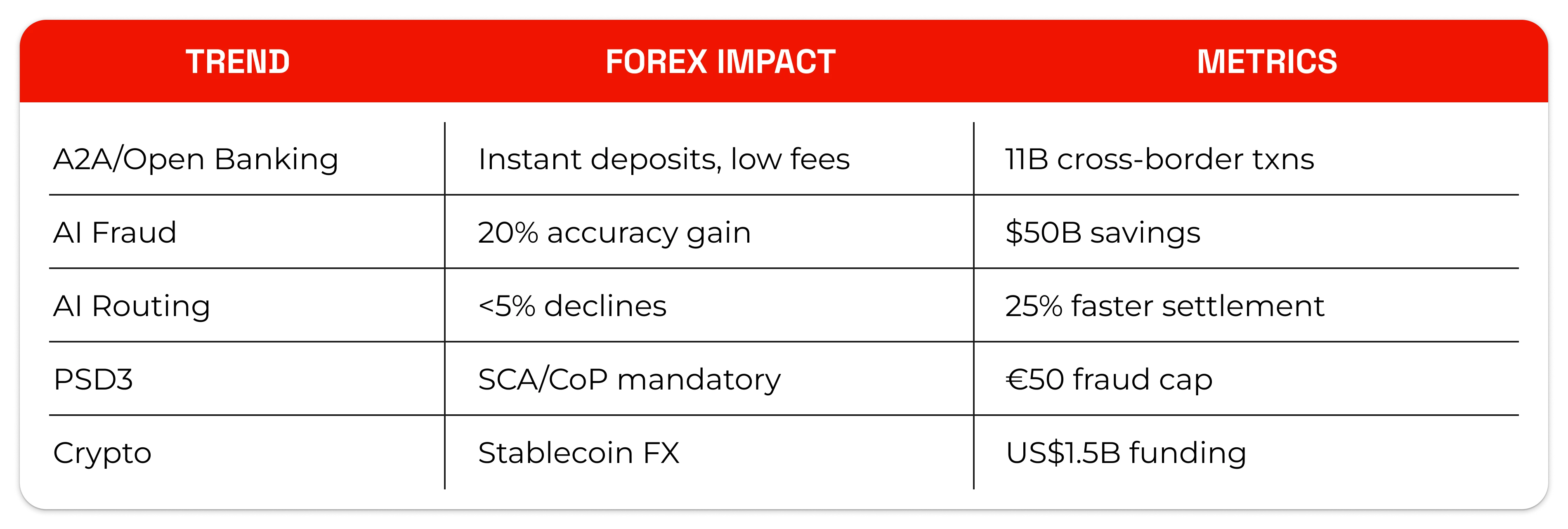
Account-to-Account (A2A) payments via open banking enable direct bank transfers, slashing fees to 0.1% and enabling real-time settlements. Juniper predicts cross-border A2A surpassing 11 billion transactions in 2026, fueled by platforms like Standard Chartered’s Marketplace.
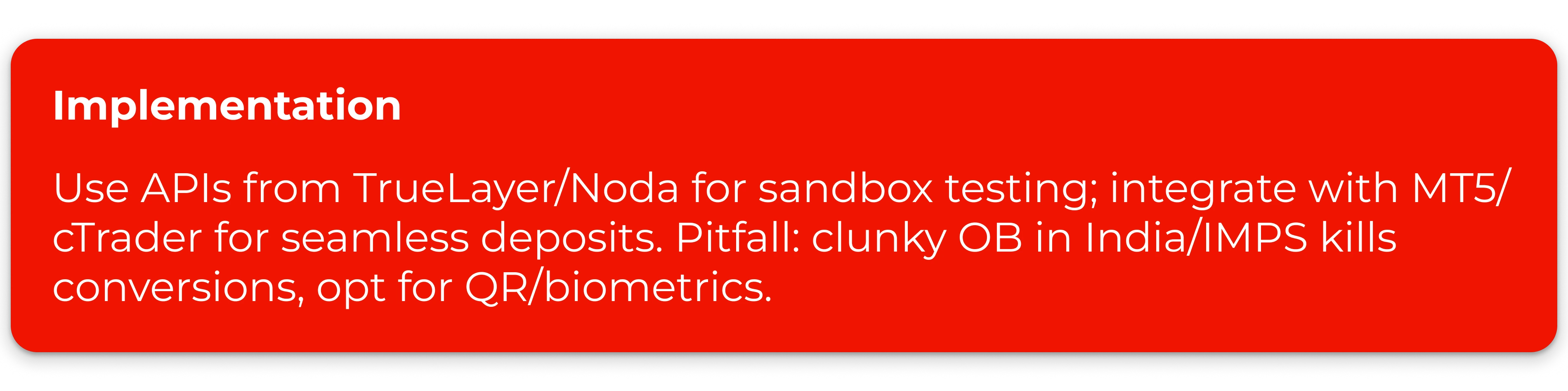
For high-risk Forex in 2026, the real growth driver is not clunky open banking, but alternative payment methods that match how traders actually pay. SPAYZ.io focuses on local eWallets and mobile money rails across Asia and Africa, giving brokers access to methods like GCash, PayNow, UPI-like bank transfers, M-Pesa, and other region-specific options that convert far better than cards in these GEOs.
These APMs reduce chargebacks, support strong customer authentication by design, and resonate with Gen Z and mobile-first traders, who increasingly expect one-tap or QR-based deposits. As analysts forecast A2A and digital wallets taking a larger share of global e-commerce by 2026, brokers that prioritise localised wallets and bank transfers will see higher approval rates and more stable cash flows.
AI Fraud detection: proactive defence
AI fraud detection and payment processes process billions of signals in milliseconds, using ML for anomaly spotting (e.g., unusual FX volumes) and behavioural biometrics. Fraud costs hit $50B in 2025; AI cuts false positives by 20% and flags 63% of merchant concerns.
In Forex, AI simulates threats and verifies identities against user patterns, like flagging rapid, large trades as potential manipulation. SPAYZ.io's real-time tools shine in Africa/MENA, countering triangle scams in P2P flows and other high-risk vectors. PSD3 mandates predictive monitoring, with IBM highlighting unsupervised learning to detect novel attacks before they hit.
AI Routing and Orchestration
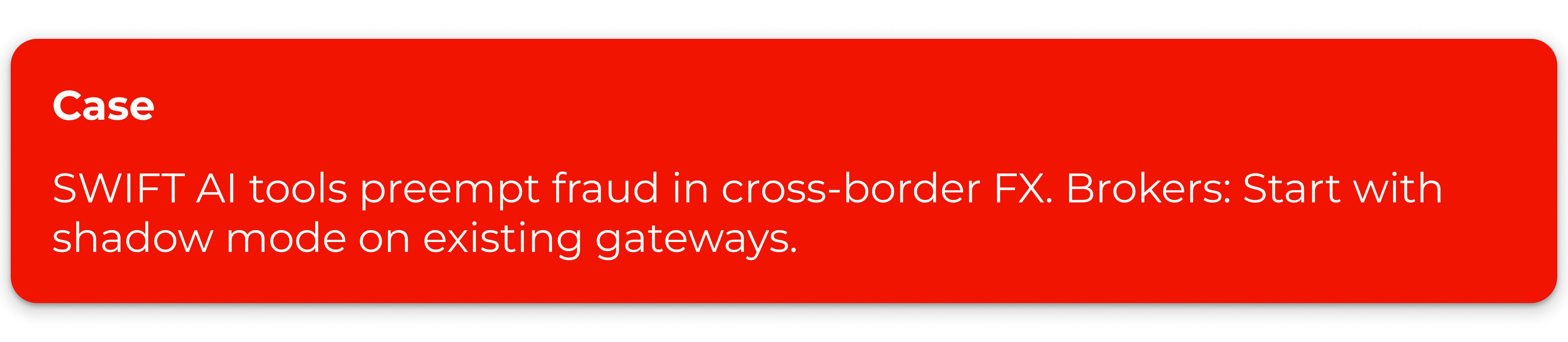
AI routing dynamically selects optimal paths (SWIFT vs local rails), balancing cost/speed: for example, Xe routes cut errors by 30%. In high-risk forex, orchestration handles multi-provider failsafe, RTP via UPI/PIX.
J.P. Morgan forecasts "always-on treasury" with AI personalising (instalments/loyalty). SPAYZ.io scales for 30+ GEOs, learning from declines. 2026 trend: Agentic payments — autonomous logic for FX hedging.
PSD3: Compliance overhaul ahead
PSD3 ushers in a major upgrade to EU payments, with full rollout in 2027, but 2026 is your prep year to stay compliant and competitive. Expect stronger fraud defences such as mandatory Confirmation of Payee (CoP), a €50 liability cap for payers, and 48-hour automatic refunds for authorised push payment (APP) scams.
The UK's Payment Systems Regulator (PSR) will enforce these from summer 2026, alongside dynamic KYC/AML requirements that will hit forex brokers hard, especially in cross-border flows. Add DORA's operational resilience rules; non-EU players face heightened scrutiny and risk payment blocks if pipelines aren't audited.
What it means for high-risk Forex: Tighter authentication (SCA evolution), real-time monitoring, and API transparency from PSPs. Proactive steps include pipeline audits, flagging upgrades, and stress-testing for failures. Brokers adapting now cut compliance costs by 15-20% while boosting trust.
Crypto and Stablecoins in Forex
Stablecoins are going mainstream in FX trading, with 19 key players securing $1.5B in funding last year alone. Clearer regulations in the EU and UAE are paving the way for enterprise adoption, making crypto a reliable bridge for high-risk forex brokers.
Brokers like XM already leverage crypto for hedging, while Africa and MENA regions benefit from seamless crypto-to-fiat conversions and settlements in local currencies. SPAYZ.io handles these privately at the merchant's request across 35+ GEOs, paired with mass payouts and robust anti-fraud safeguards to support stable, high-risk flows.
Mastercard forecasts that fiat-crypto bridges will revolutionise payouts, with USD stablecoins leading the charge. To counter volatility risks, pair them with our AI routing for smarter, resilient paths. The big trend: programmable payments through APIs, unlocking next-level efficiency for your forex operations.
Regional breakdown for High-Risk GEO
Navigating payments in high-risk regions means going local. Here's your 2026 roadmap, powered by SPAYZ.io's coverage across 35+ GEOs, mass payouts, and eWallets.
- Africa: Mobile money hits $611B by 2029. Leverage EFT in South Africa/Egypt and M-Pesa for unbanked forex traders; our solutions make it seamless and fraud-proof.
- Asia: GCash powers 94M users; UPI enables cross-border speed while skipping IMPS friction. We optimise for Japan/Korea rails, boosting your conversions.
- UAE/EU: Blend cards + wallets under GCGRA/PSD3 rules, prioritising data privacy. SPAYZ.io ensures compliant, low-decline flows every time.
Tailor these to your forex audience, and watch liquidity soar.
Future outlook
By 2026, payments will evolve into programmable, AI-led ecosystems — forex brokers prioritising these will thrive amid $250T in flows. Learn the full information from SPAYZ 2026 Forecast for GEO plans.