There are several reasons High-Risk businesses fail. It occurs when payments are:
- too slow
- too local
- too fragile to support growth
In 2026, that gap is even more evident across iGaming and Forex, where merchants must balance conversion, compliance, fraud control, and market expansion simultaneously.
What does High-Risk processing mean
High-risk processing is the payment infrastructure used by merchants operating in sectors that face higher chargeback rates, stricter compliance requirements, or more frequent provider restrictions. Typical examples include iGaming, where approval quality, settlement reliability, and fraud monitoring matter as much as raw acceptance rates.
In practice, this means a processor has to do more than move money. It must:

Why 2026 is different
The biggest change in 2026 is that High-Risk merchants can no longer rely on a single regional setup. Customer behaviour is also shifting. SPAYZ’s 2026 Forecast points to friction-laden methods such as manual bank transfers and clunky open banking flows losing ground to faster, more local options like eWallets, QR codes, biometrics, NFC, and real-time rails.
At the same time, the research in a Whitepaper notes that 64% of merchants struggle with operational failures and a lack of local payment options, while 57% cite high fees and poor conversion rates.
What a strong stack includes
A strong High-Risk payment stack in 2026 should be built around four layers.
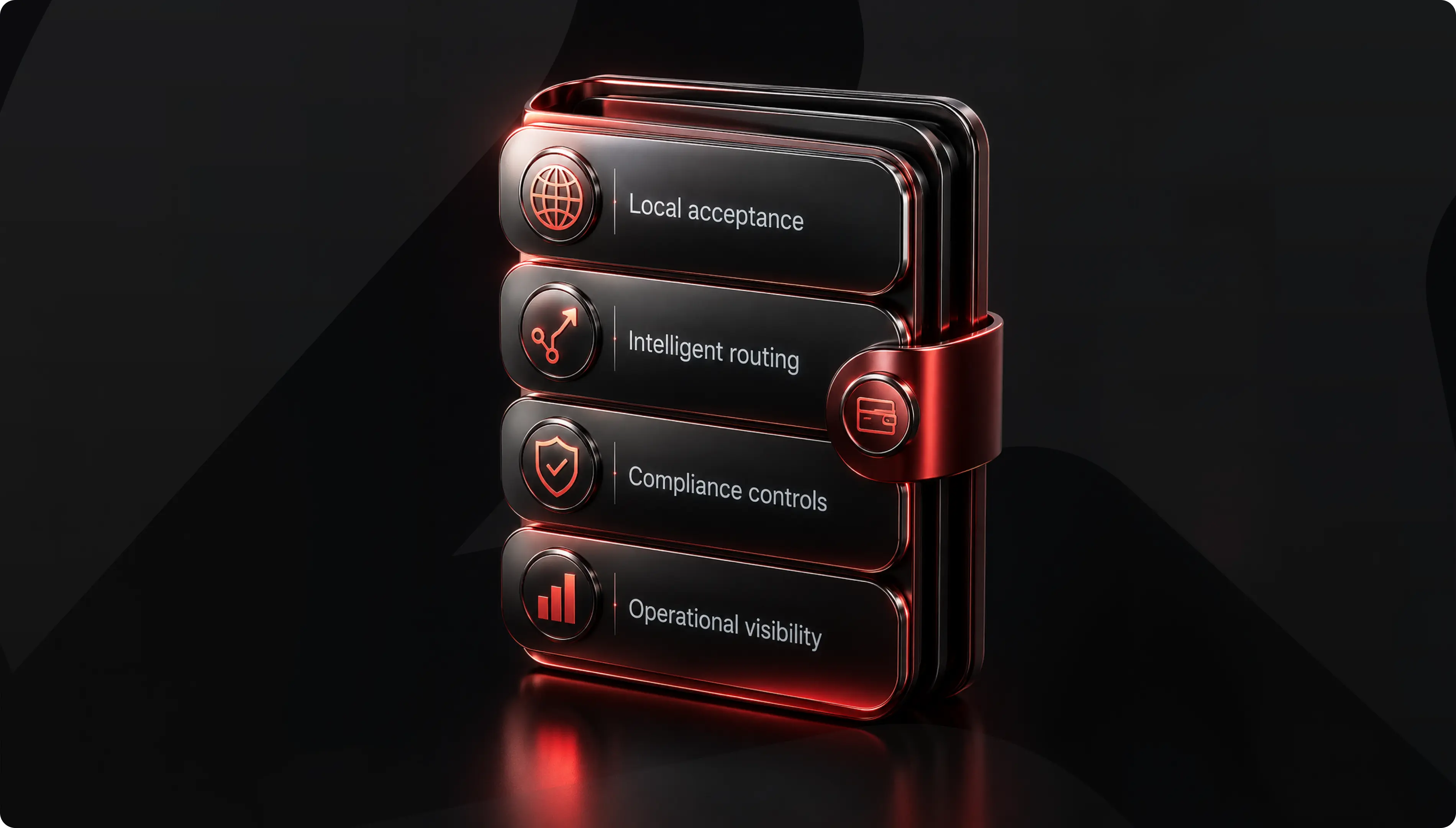
1. Local acceptance
Start with the methods your users actually trust in each market, including eWallets, Bank transfers, QR code payments, and cards where they still perform well, plus region-specific methods such as UPI, IMPS, PayNow, GCash, M-Pesa, and others, depending on the GEO.
2. Intelligent routing
Routing is what keeps the stack alive when a single method starts failing. Instead of sending every transaction down the same path, orchestration spreads traffic across multiple providers and payment rails to reduce false declines and preserve conversion.
3. Compliance controls
Compliance should be embedded in the payment journey. A mature stack should support transaction screening, configurable risk scoring, and compliance with PCI DSS, GDPR, AML, and KYC requirements without adding unnecessary friction for good customers.
The goal is not to approve everything, but to approve the right transactions quickly while filtering out risky ones with minimal impact on conversion.
4. Operational visibility
High-Risk payments create operational complexity, especially when teams manage multiple GEOs, methods, and partner flows simultaneously. That is why centralised dashboards, reconciliation tools, and clear reporting matter just as much as the payment rails themselves.
How to choose a PSP
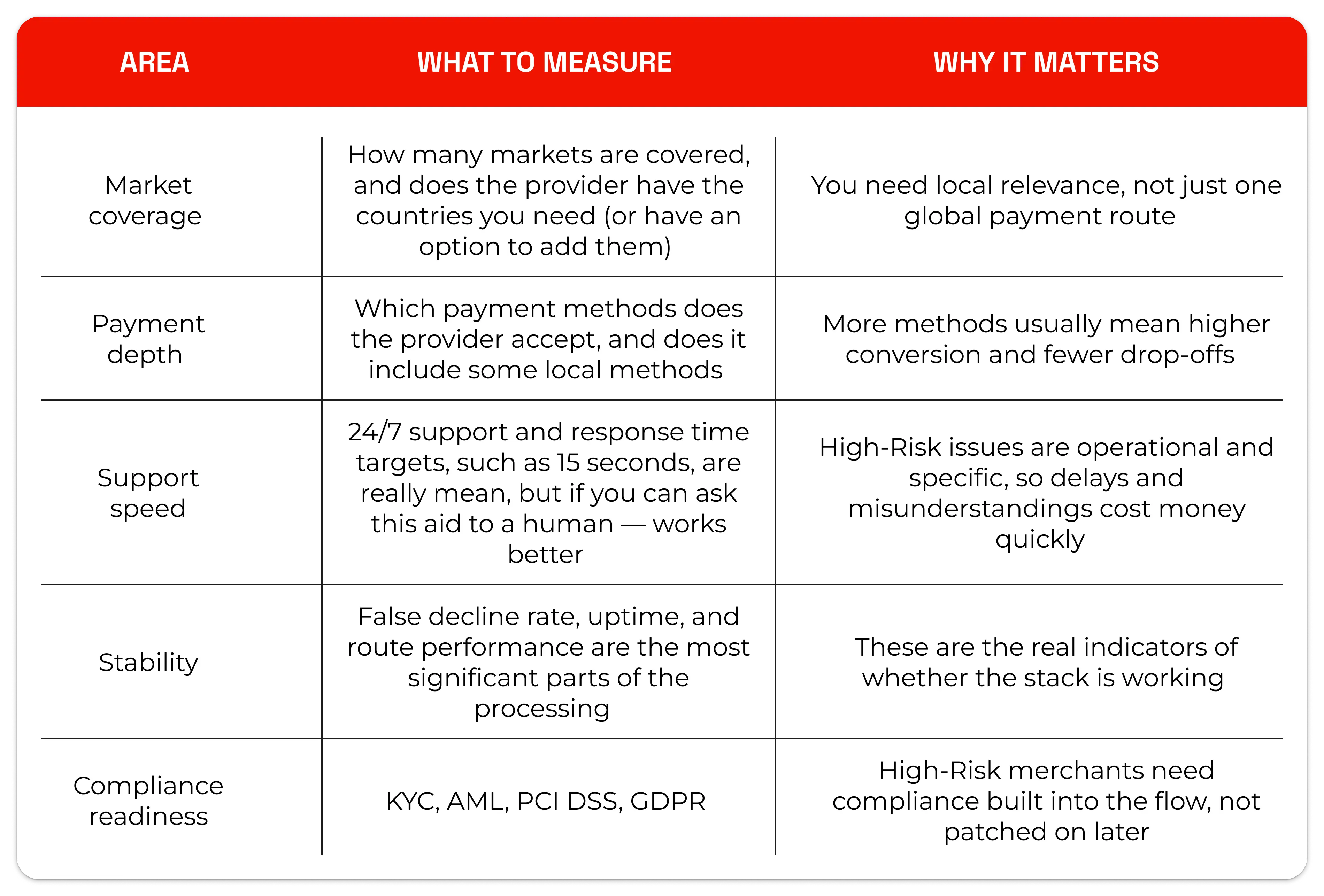
SPAYZ.io has everything you need in 2026
Why SPAYZ.io fits High-Risk businesses:
- 35+ markets and 30+ countries covered
- 55+ payment methods, including eWallets, Bank transfers, QR code payments, and mass payouts
- 24/7 support with real specialists
- Localised PayIn/PayOut flows
- Compliance-first setup with support for KYC, AML, PCI DSS, and 3-D Secure
- P2P Agent Dashboard for clearer control, reporting, and operational visibility
Ready to scale your High-Risk payments? Contact SPAYZ.io today.